Business
IndiGo Is No Longer Just India’s Budget Airline: The Quiet Premium Strategy That Could Change Everything…
India’s biggest airline is keeping its low-cost DNA intact while quietly building a premium travel business through IndiGoStretch cabins, flexible fares, long-haul international routes and AI-powered digital services.


For years, IndiGo has been synonymous with one thing in Indian aviation: affordable air travel.
The airline built its reputation on competitive fares, a vast domestic network, operational efficiency and the familiar promise of getting passengers from one city to another without unnecessary complications.
But the IndiGo of 2026 is beginning to look different.
Behind the scenes, India’s largest airline is gradually building something much bigger than a traditional low-cost carrier.
It is moving into premium travel.
Not by abandoning its low-cost roots, but by adding layers of comfort, flexibility, technology and international connectivity to the model that made it successful in the first place.
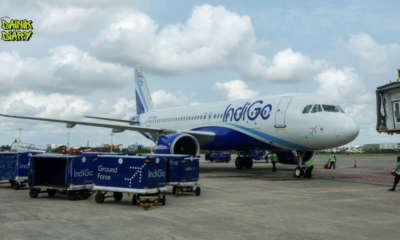
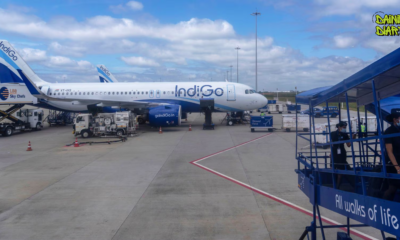
The transformation is significant because IndiGo is not a small player experimenting with a new business idea. Operated by InterGlobe Aviation, the airline has established itself as India’s dominant domestic carrier, with more than 60 per cent domestic market share, a fleet of hundreds of aircraft and a network stretching well beyond India’s borders.
The question now is no longer whether IndiGo can dominate India’s low-cost aviation market.
It is whether the airline can use that dominance as a launchpad to become a more premium, globally connected airline.
IndiGo’s Premium Push Begins With More Choice
Perhaps the clearest sign of IndiGo’s changing strategy is its new ‘6E Ways to Fly’ fare structure.
The idea is simple but important.
Instead of treating every passenger as a low-cost traveller looking only for the cheapest available ticket, IndiGo is offering different levels of service to different types of customers.
The fare options include Saver, Flexi, UpFront, IndiGoStretch and IndiGoStretch+.
That means a passenger who wants the lowest possible fare can continue to choose a basic product, while someone willing to spend more can pay for greater flexibility, convenience and comfort.
Read More- Elon Musk’s Investor ‘Honeymoon’ Ends? SpaceX Shares Tumble, Tesla Slides as Profitability Concerns Mount
It is a strategy that allows IndiGo to move upmarket without completely changing its identity.
The airline can still compete aggressively on price while simultaneously attracting business travellers and customers who might otherwise choose a traditional full-service carrier.
In other words, IndiGo isn’t throwing away the low-cost model.
It is building a premium layer on top of it.
IndiGoStretch Could Be the Biggest Piece of the Puzzle
The expansion of IndiGoStretch represents perhaps the most visible part of the airline’s premium ambitions.
The product is designed to offer passengers a more comfortable experience, particularly those who are willing to pay extra for a better journey.
The airline has also introduced UpFront seats, giving customers additional options to upgrade their experience.
For business travellers, frequent flyers and passengers travelling on longer routes, this could make IndiGo a more attractive alternative to traditional full-service airlines.
The long-haul strategy makes the premium approach even more important.
On extended international flights, passengers typically expect more than simply a seat and a basic meal.
IndiGo has therefore been adding upgraded onboard services, including premium meals, comfort items such as eye masks and sleep kits, streaming-based inflight entertainment and dedicated IndiGoStretch cabins featuring a 2-2 seating configuration.
That is a significant shift from the image of the strictly no-frills budget carrier.
The airline is effectively asking customers a new question:
What if you could get a more premium flying experience without leaving IndiGo’s ecosystem?
The Long-Haul Gamble Could Change IndiGo’s Future
IndiGo’s premium ambitions are closely connected to its international expansion.
The airline has increasingly looked beyond the traditional short-haul routes that powered its rise in India.

Its international network has expanded to destinations across Europe, Asia and the Middle East, while the arrival of the Airbus A321XLR has opened up the possibility of longer non-stop routes.
The aircraft is particularly important because it allows airlines to serve longer international markets with a narrow-body aircraft.
For IndiGo, that creates an opportunity to connect Indian cities directly with more international destinations without relying entirely on traditional wide-body operations.
The airline has expanded its international footprint with routes and services involving destinations such as Athens, Siem Reap, Shanghai, Colombo, Krabi and Fujairah, among others.
The return to mainland China operations is also strategically significant as demand for international connectivity continues to evolve.
IndiGo’s management has indicated that the coming decade could represent one of the airline’s most ambitious phases of international expansion.
The goal is clear: build a global network that originates from India.
India’s Aviation Boom Is Creating the Opportunity
The timing of IndiGo’s strategy is no accident.
India’s aviation market is expanding rapidly as rising incomes, greater air connectivity and increased business and leisure travel bring more passengers into the skies.
That growth gives India’s largest airline an enormous opportunity.
IndiGo already has the scale.
It carried around 123 million passengers during FY26 and operated across more than 140 destinations, including a large domestic network and an expanding international footprint.
The airline’s fleet has also grown significantly.
Scale matters in aviation because a larger network can create more connecting opportunities, while a larger fleet can allow airlines to spread costs across more routes and passengers.
IndiGo is now trying to use that scale to move into markets where customers are willing to pay more.
That could potentially increase revenue per passenger without abandoning the cost discipline that has historically been at the heart of its business.
Technology Is Becoming Another Premium Advantage
IndiGo’s transformation isn’t limited to seats and aircraft.
The airline is also investing heavily in technology.
Its AI-powered assistant, 6Eskai, handled more than 1.54 million customer interactions in May 2026 across web, IVR and WhatsApp channels, according to the company’s disclosures.
The system reportedly achieved a 96 per cent containment rate, meaning a large majority of customer interactions could be handled without requiring human intervention.
For passengers, the real value of such technology comes during stressful moments.
Flight delays.
Cancellations.
Rebooking.
Travel disruptions.
These are situations where passengers want quick answers, not long waits.
IndiGo has therefore also introduced digital disruption-management tools such as 6E Rebook and Plan B, designed to make it easier for passengers to manage changes when flights are disrupted.
The airline has also expanded its BluChip loyalty programme to more than 11 million members.
This is another important piece of the premium strategy.
A strong loyalty programme can help turn occasional passengers into repeat customers while giving frequent travellers more reasons to stay within the airline’s ecosystem.
But the Numbers Show the Road Won’t Be Easy
The transformation comes with financial challenges.
InterGlobe Aviation reported a consolidated net loss of ₹238 crore in the first quarter of FY27, compared with a profit of ₹2,176 crore in the same period a year earlier.
The airline’s revenue from operations nevertheless rose 20 per cent year-on-year to ₹24,584 crore, supported by strong travel demand.
The problem was rising costs.
Total expenses increased 34 per cent to ₹25,853 crore, while aircraft fuel expenses surged 86 per cent to ₹10,833 crore.
The result was a significant squeeze on profitability, with the EBITDAR margin narrowing to 15.6 per cent from 28 per cent.
These figures highlight one of the biggest realities of the airline business.
Even the strongest carriers remain vulnerable to fuel prices, currency movements, geopolitical disruptions and other external pressures.
IndiGo’s premium strategy may help diversify its revenue mix, but it will not eliminate the fundamental risks associated with aviation.
A Strong Financial Position Gives IndiGo Room to Invest
Despite the short-term pressure on profitability, IndiGo has significant financial muscle behind its expansion plans.
The airline reported total income of around ₹89,500 crore during FY26, while revenue from operations reached approximately ₹85,000 crore.
Liquidity also stood at more than ₹51,600 crore, giving the airline substantial flexibility to invest in aircraft, technology, infrastructure and customer experience.
The company’s long-term fleet strategy is equally ambitious.
IndiGo plans to increase the share of owned and finance-leased aircraft from around 20 per cent of its current fleet to approximately 30-40 per cent of a projected 600-aircraft fleet by 2030.
That would represent a major shift in the structure of the airline’s fleet.
It also reflects the scale of IndiGo’s ambitions.
The company isn’t simply planning to add more aircraft.
It is preparing for a much larger role in global aviation.
IndiGo’s Biggest Challenge: Growing Without Losing Its Identity
The most interesting part of IndiGo’s strategy is that the airline doesn’t appear to be trying to become a traditional full-service carrier overnight.
Instead, it is attempting something more subtle.
Keep the low-cost DNA.
Add premium options.
Expand internationally.
Build loyalty.
Improve digital services.
And gradually attract customers across a much wider range of travel needs.
That strategy could prove highly effective if executed well.
A passenger travelling on a budget can still choose the cheapest fare.
A business traveller can select a more comfortable seat.
A long-haul passenger can opt for premium services.
A frequent flyer can use the loyalty programme.
And a customer facing a disruption can turn to digital tools for faster assistance.
All of these passengers can still fly with the same airline.
That is the real opportunity.
The Next IndiGo May Look Very Different
IndiGo’s evolution is still underway, and the airline will face plenty of challenges along the way.
Fuel prices remain unpredictable.
International expansion requires significant investment.
Long-haul operations are more complex than domestic short-haul flying.
Premium customers have higher expectations.
And the airline must maintain its famous operational efficiency even as the business becomes more complicated.
But the direction is becoming increasingly clear.
IndiGo is no longer content to be defined only by cheap tickets and a blue-and-white aircraft.
It is building a broader aviation ecosystem—one that combines low-cost efficiency, premium seating, long-haul connectivity, loyalty programmes and technology.
The airline’s biggest advantage may be that it can attempt this transformation from a position of enormous scale.
If the strategy works, IndiGo could end up doing something few low-cost carriers manage successfully: moving upmarket without losing the cost discipline that made it successful in the first place.
And that could be the real story of India’s biggest airline over the next decade.
Not a low-cost carrier becoming a full-service airline.
But a low-cost giant quietly becoming something much bigger.