Business
LIC Shares Sink Over 8% as Government’s OFS Opens: Is This a Buying Opportunity or a Warning Sign for Investors?
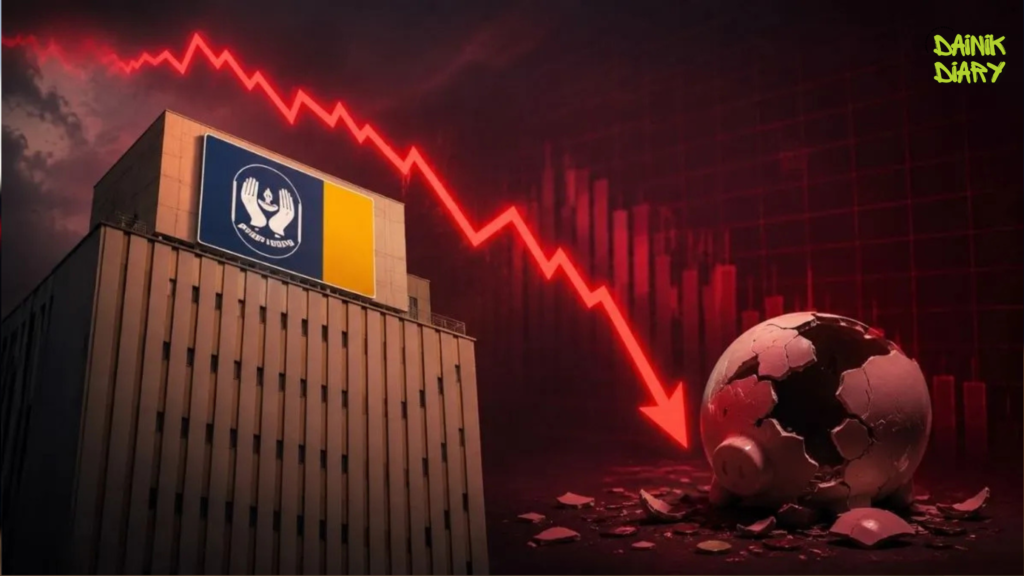
Life Insurance Corporation of India stock came under heavy selling pressure after the Centre launched its Offer-for-Sale at a discounted floor price, triggering concerns over increased share supply despite stable business fundamentals.


Shares of Life Insurance Corporation of India (LIC) witnessed sharp selling pressure on Tuesday, falling more than 8 percent in early trade after the Government of India launched its much-anticipated Offer-for-Sale (OFS) to reduce its stake in the country’s largest insurer.
The stock opened at ₹392, significantly lower than its previous closing price of ₹428.50, and slipped further to an intraday low of ₹390.50 as investors reacted to the government’s divestment plan.
Why Did LIC Shares Fall Today?
The primary trigger behind the decline is the government’s decision to sell a 2.5 percent stake in LIC through an OFS. Additionally, the Centre has kept open a green shoe option that could allow it to offload another 4 percent stake if investor demand remains strong.
If the additional shares are sold under the green shoe option, the government’s total divestment could rise to 6.5 percent, bringing its ownership in LIC down from around 96.5 percent to nearly 90 percent.
The Department of Investment and Public Asset Management (DIPAM) has fixed the OFS floor price at ₹382 per share, a noticeable discount compared to LIC’s recent market price.
Discounted OFS Creates Short-Term Pressure
Market participants say the discounted pricing has prompted investors to reassess the stock’s near-term valuation.
A lower OFS price often creates selling pressure because traders anticipate additional supply entering the market. As a result, existing shareholders sometimes choose to sell their holdings before the discounted shares become available.
The OFS opened first for non-retail investors, while retail investors will be able to place their bids on Wednesday.
Read More- Petrol, Diesel Prices Today: OPEC+ Decision Raises Fresh Concerns, Check August 3 Fuel Rates in Delhi, Mumbai, Bengaluru & More
What Is the Green Shoe Option?
The green shoe option gives the government the flexibility to sell more shares than originally planned if the OFS receives strong investor demand.
In LIC’s case, the government has initially offered a 2.5 percent stake, but it can increase the total sale to 6.5 percent by exercising the additional option.
This mechanism allows the government to maximise proceeds while helping increase the company’s public shareholding.
Experts Say Fundamentals Remain Unchanged
Despite the sharp decline in the share price, several market experts believe the sell-off is largely driven by technical factors related to the OFS rather than any deterioration in LIC’s core business.
According to analysts, the increased supply of shares and the discounted offer price have temporarily weighed on investor sentiment. However, the insurer’s operational performance and long-term business outlook remain largely unchanged.
The government’s stake sale is also aimed at improving LIC’s minimum public shareholding (MPS), an important regulatory requirement for listed companies.
What Investors Should Watch
While the current correction has unsettled investors, market participants will closely monitor the response to the OFS over the next few days.
Strong subscription levels could indicate healthy investor confidence despite the temporary weakness in the stock. At the same time, analysts expect LIC shares to remain volatile until the stake sale process is completed.
For long-term investors, the focus is likely to remain on LIC’s earnings performance, insurance business growth, and future government stake reduction plans rather than the short-term impact of the OFS.

