Business
IndiGo’s Next Big Leap: Rahul Bhatia Reveals Ambitious Global Plan to Bring Indian Diaspora Closer Home… But Says ‘We’re Not There Yet’
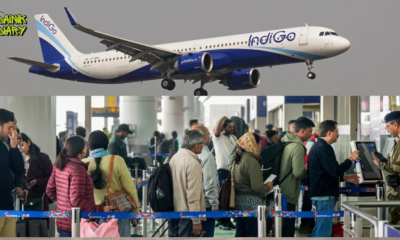
As IndiGo completes 20 years of operations, the airline is preparing for its biggest international expansion with Airbus A321XLR jets and future Airbus A350 aircraft, aiming to strengthen India’s position in global aviation while challenging Gulf carriers.


NEW DELHI: After revolutionising domestic air travel for millions of Indians over the last two decades, IndiGo is now preparing for an even bigger journey beyond India’s borders.
As the country’s largest airline approaches its 20th anniversary on August 4, the company has unveiled an ambitious roadmap to significantly expand its international footprint. The strategy revolves around connecting more overseas destinations, serving the growing Indian diaspora worldwide, and gradually making India a stronger global aviation hub.
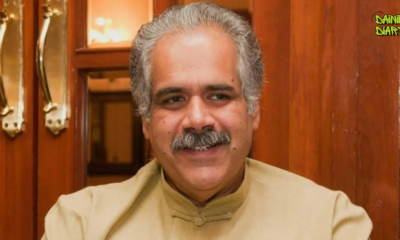
According to Rahul Bhatia, Co-founder and Managing Director of IndiGo, the airline is ready for what he described as a “longer leap of flying.”
From India’s Largest Airline to a Bigger Global Presence
With a domestic market share of more than 66%, IndiGo has already established itself as India’s dominant airline. Now, its focus is shifting toward long-haul international operations.
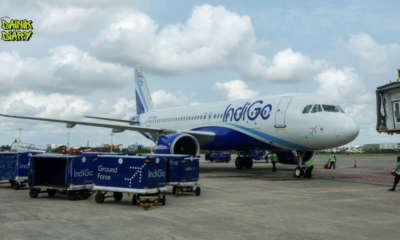
The airline is preparing to induct the advanced Airbus A321XLR aircraft, designed specifically for longer routes with improved fuel efficiency. Later, beginning in 2028, IndiGo expects deliveries of the wide-body Airbus A350, a major milestone that will allow it to operate nonstop flights on even longer international sectors.
Read More- ATF Price Jumps ₹5 Per Litre While Commercial LPG Gets Cheaper… Will Your Flight Tickets Become More Expensive?
Rahul Bhatia believes these aircraft will enable the airline to reach destinations that were previously beyond its operational range.
‘We Aspire to Be Global, But We’re Not There Yet’
Despite the ambitious expansion, Bhatia acknowledged that IndiGo still considers itself fundamentally a domestic airline.
He explained that while international services are growing steadily, the airline’s strongest foundation remains its vast domestic network across India.
Rather than claiming global airline status today, Bhatia said the company sees itself as being on the journey toward that goal.
Connecting the Global Indian Diaspora
A major pillar of IndiGo’s international strategy is serving the millions of Indians living overseas.
Instead of focusing primarily on international passengers travelling between foreign countries, the airline wants to connect Indian travellers with global destinations while making it easier for overseas Indians to visit home.
This includes expanding services to countries with significant Indian communities across North America, Europe, Australia, Southeast Asia, and the Middle East.
According to Bhatia, this opportunity remains one of the airline’s biggest long-term growth drivers.
Taking on Gulf Aviation Giants
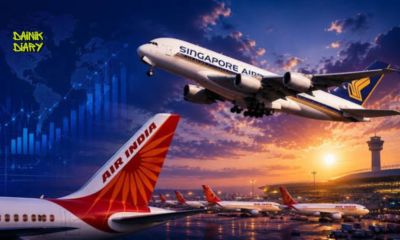
For years, major Gulf airlines such as Emirates, Qatar Airways and Etihad Airways have dominated international traffic from India by routing passengers through their Middle Eastern hubs.
Bhatia believes Indian airlines should gradually reclaim a larger share of that traffic.
He argued that when Indian passengers fly through foreign hubs, much of the economic value generated by those journeys benefits overseas carriers instead of India’s aviation ecosystem.

Along with Air India, IndiGo hopes to strengthen India’s position by offering more direct international connections through Indian airports.
Wide-Body Plans Face Temporary Pause
While IndiGo has recently operated leased Boeing 787 Dreamliner aircraft obtained through Norse Atlantic Airways, those operations will soon come to an end.
The airline has announced that its leased wide-body services will conclude later this year as geopolitical tensions and West Asia airspace restrictions continue to create operational challenges.
Several international routes have already been impacted because of changing regional security conditions.
However, the temporary pause is not expected to alter IndiGo’s long-term plans, with its future fleet centred around Airbus wide-body aircraft arriving from 2028 onwards.
India Could Become a Stronger Aviation Hub
Although Bhatia clarified that IndiGo does not intend to replicate the hub-and-spoke model followed by Emirates, he believes India possesses enormous untapped aviation potential.
The country’s rapidly growing middle class, expanding domestic market, and increasing international travel demand provide a strong foundation for future growth.
As IndiGo builds a larger international network over the coming decade, the airline expects to connect more cities with large Indian populations while strengthening India’s role in global aviation.
For India’s biggest airline, the next chapter is no longer just about flying more passengers within the country—it is about connecting Indians around the world through an increasingly global network.