Entertainment
‘Invested Rs 5 crore, ended up losing Rs 250 crore’: Rajpal Yadav tells Supreme Court as CJI says, ‘Make a good film…’
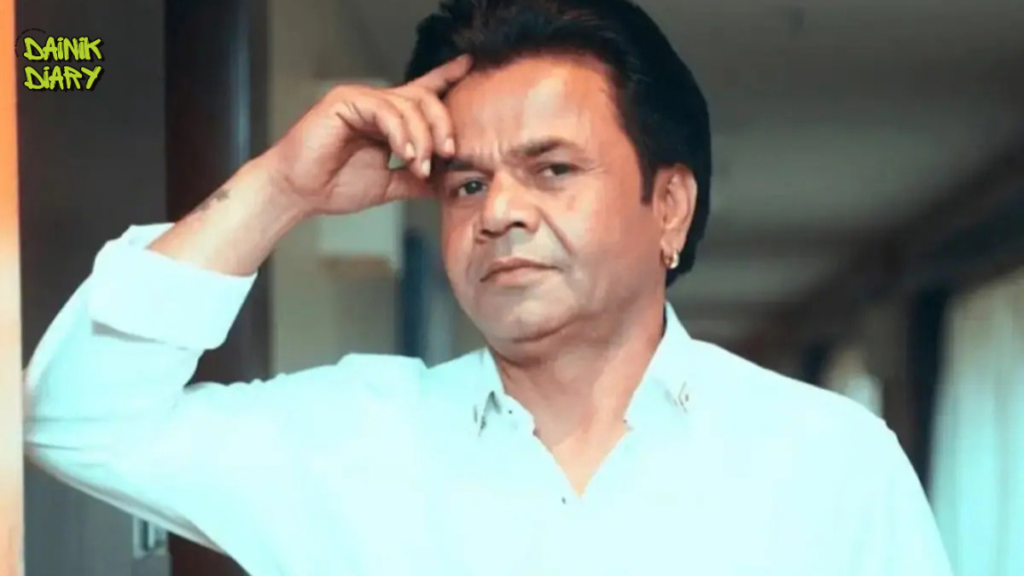
Rajpal Yadav appeared before the Supreme Court in the long-running cheque bounce dispute linked to M/s Murli Projects Pvt Ltd, telling the Bench about the financial setbacks he faced after making Ata Pata Lapata.


Actor Rajpal Yadav’s long-running cheque bounce case witnessed an unusual exchange in the Supreme Court, where the Bollywood actor spoke about his career, financial difficulties and the losses he claimed to have suffered after investing in a film project.
A Bench comprising Chief Justice of India Surya Kant, Justice Joymalya Bagchi and Justice V. Mohan was hearing the matter concerning seven cheque bounce cases linked to private firm M/s Murli Projects Pvt Ltd.
During the proceedings, the Bench questioned Yadav over compliance with its previous directions concerning payment of the outstanding amount.
But the hearing also briefly turned towards his film career.
‘I invested Rs 5 crore in this film…’
During the hearing, CJI Surya Kant reportedly asked Rajpal Yadav how many projects he was currently working on.
Yadav responded by referring to his long career in cinema.“I have done 250 films over the last 16 years. I invested Rs 5 crore in this film and ended up losing Rs 250 crore.”
The Chief Justice responded with a light-hearted observation:“Make a good film. We have several advocates here who are good actors as well.”
In another exchange, the CJI reportedly encouraged Yadav to make a good film, observing that it could help him rebuild his image.
Rajpal Yadav talks about Ata Pata Lapata losses
Yadav also spoke about the financial impact of Ata Pata Lapata, the film at the centre of his account of mounting losses.
The actor claimed that he suffered a loss of approximately Rs 17 crore on the project.
According to Yadav, around Rs 22 crore was ultimately invested in the film, but it failed to generate meaningful returns.
He told the court that he was prepared to comply with whatever directions the Bench issued.
How does the Rs 2 crore payment figure in the case?
Yadav’s counsel informed the Supreme Court that efforts were underway to raise money through the sale of property.
According to the submissions made before the Bench, Rs 1.15 crore had already been arranged.
The lawyer further stated that a buyer had been found for Yadav’s ancestral property and was willing to provide another Rs 85 lakh as an advance. Together, the two amounts would make up Rs 2 crore.
The court was informed that registration of the property was being postponed because of the Pitru Paksha period, with the parties preferring to complete the process after the beginning of Navratri.
At an earlier stage of the proceedings, the Supreme Court had expressed displeasure over Yadav’s failure to deposit money despite previous directions.
The Bench had indicated that the leniency shown to the actor was largely aimed at ensuring that the complainant was able to recover at least part of the outstanding amount.
Yadav was consequently given what the court described as a final opportunity to make the payment.
His counsel subsequently informed the Bench that Rs 1.15 crore had been arranged. The court directed that this sum be deposited and that the remaining Rs 85 lakh be transferred through RTGS.
What is the cheque bounce case against Rajpal Yadav?
The dispute stretches back to 2010.
According to the case against him, Rajpal Yadav received financial assistance of approximately Rs 5 crore from M/s Murli Projects Pvt Ltd in connection with a film project.
The complainant alleged that Yadav subsequently issued seven cheques of Rs 1.05 crore each towards settlement, but the cheques were dishonoured.
It was further alleged that under an agreement reached in 2012, Rajpal Yadav, his wife Radha Yadav and their company agreed to repay approximately Rs 11 crore, including interest.
ALSO READ : The Vvaan Box Office: Tamannaah Bhatia gets a new Bollywood milestone, but one film is still ahead…
The matter eventually resulted in multiple cheque dishonour proceedings.
Delhi High Court upheld conviction
Before the matter reached its present stage in the Supreme Court, the Delhi High Court had upheld Yadav’s conviction in the cheque bounce cases.
The High Court sentenced him to three months’ imprisonment in each case.
It also declined to condone a delay of 1,894 days more than five years in filing petitions challenging the conviction.
The High Court directed Yadav to pay more than Rs 1 crore to the complainant in each of the seven cases, while allowing approximately Rs 2 crore already paid to be adjusted against the outstanding dues.
His sentence was temporarily kept in abeyance to give him an opportunity to approach a higher court.
The High Court also issued directions concerning Radha Yadav, requiring her to pay a fine to the complainant in each case, with simple imprisonment prescribed in the event of non-payment.
The High Court proceedings arose from revision petitions filed against a 2019 sessions court order, which had upheld convictions recorded by a magistrate in 2018.
The magistrate had originally sentenced Yadav to six months in prison, which was subsequently reduced to three months.
Supreme Court had earlier sought Rs 5 crore deposit
The Supreme Court had earlier issued notice on Yadav’s plea and linked his exemption from surrendering to a proposed Rs 5 crore deposit with the court registry.
At another hearing, the Bench extended his exemption from surrender and asked him to submit a concrete payment proposal.
Senior advocate P. S. Patwalia, appearing for Yadav, sought additional time to formulate a repayment plan and informed the court that the actor would deposit Rs 2 crore as a demonstration of his bona fides.
The court was also told that Yadav had already spent around four-and-a-half months in prison and that people from the entertainment industry had extended financial assistance to him.
Counsel for the complainant, meanwhile, maintained that its principal concern was recovery of the outstanding money.
The case, which began with financing for a film more than a decade ago, has therefore evolved into a prolonged legal and financial battle.
For Rajpal Yadav, his remarks before the Supreme Court also offered a glimpse into what he says was the personal cost of the project from investing crores in a film to facing years of litigation over the resulting financial obligations.