India News
‘How Dare a Magistrate Issue Notice?’ CJI Surya Kant Questions Greater Noida Action Against Student Over CJP Protest
The Supreme Court took serious note of a notice issued to second-year law student Akshat Tripathi despite its earlier direction against punitive action linked to the CJP student protests; the notice was later withdrawn.

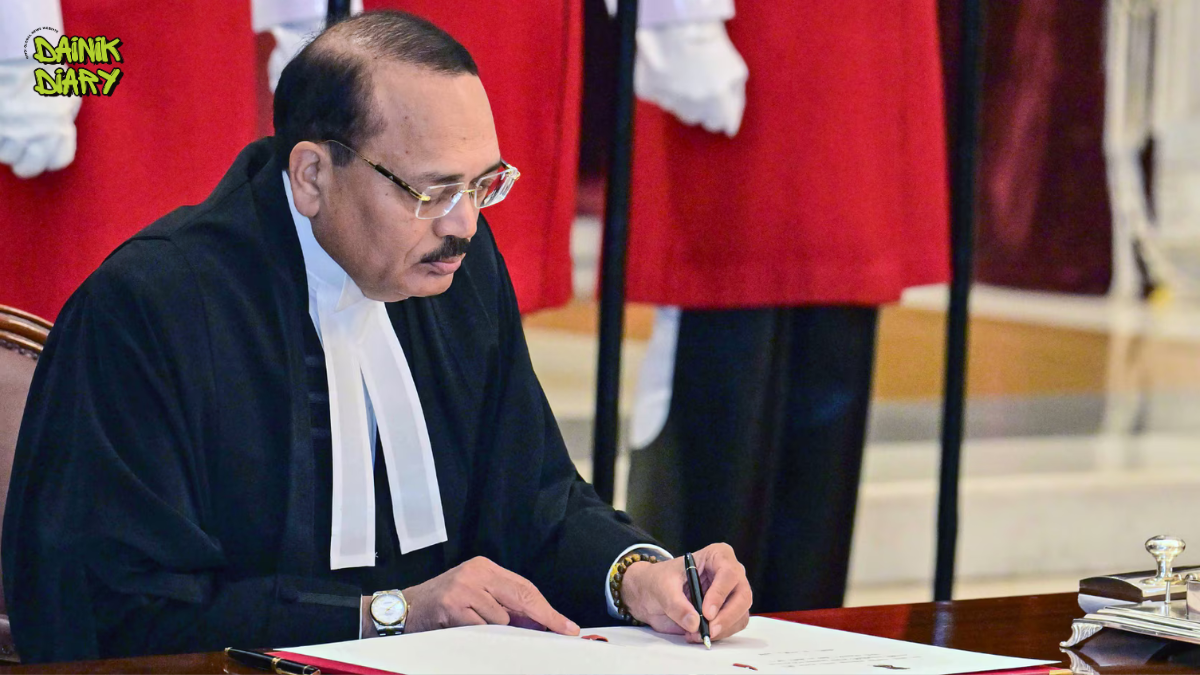
The Supreme Court on Wednesday, September 9, expressed serious concern over a notice issued by an Executive Magistrate in Greater Noida to a law student in connection with the proposed Cockroach Janata Party (CJP) protest, questioning how such action could have been initiated despite an earlier order protecting students from punitive measures.
A bench headed by Chief Justice of India Surya Kant was informed that the notice had subsequently been withdrawn. The withdrawal, however, did not immediately put the controversy to rest, with the court questioning the circumstances in which it was issued in the first place.
According to the submissions made before the bench, the Supreme Court’s September 1 direction had made it clear that students should not face punitive action in connection with the protests.
Reacting to the development, the CJI questioned the magistrate’s authority to proceed contrary to the court’s direction.
“How can a magistrate dare to issue a notice? We made it clear that there would be no punitive action against any student. No magistrate can violate that order,” the CJI observed during the hearing.
Greater Noida Notice Reaches Supreme Court
The matter was brought orally before the bench by Senior Advocate Biswajit Bhattacharya, who raised concerns about the action taken against second-year law student Akshat Tripathi.
The court was informed that the Executive Magistrate, Greater Noida, had issued the notice based on information supplied by the Noida Police.
Bhattacharya told the bench that the notice was on the verge of being acted upon before reports emerged that authorities had withdrawn it.
He argued that the episode could create fear among students and contended that the actions of the Noida and Uttar Pradesh authorities required judicial scrutiny.
Why Was the Notice Issued Despite Supreme Court Order?
At the centre of the controversy is the Supreme Court’s earlier intervention concerning the CJP student protests.
According to the submissions before the court, the previous order had quashed the FIR concerning the student protests and restrained authorities from taking further punitive action against students in connection with the demonstrations.
The fresh notice therefore prompted the bench to ask why an administrative authority had acted despite those directions.
The CJI asked the counsel to formally place the notice before the court through an appropriate petition, indicating that the concerned officer could then be asked to provide an explanation.
Notice Withdrawn, but Contempt Question Raised
Justice Joymalya Bagchi, who was part of the bench, asked what remained to be considered once the notice had already been withdrawn.
Bhattacharya responded that withdrawing the notice would not necessarily resolve the question of whether the court’s earlier direction had already been breached.
He characterised the episode as a potential issue of contempt of court and argued that the judiciary needed to examine how the notice came to be issued despite the earlier order.
The Supreme Court, however, has not made a final finding of contempt against the magistrate at this stage.
ALSO READ : ‘Even If He Ties a Bell Around a Dog, Vote for Him’: SP Leader’s Akhilesh Yadav Remark Sparks Political Firestorm in UP
What Did the Notice Against Akshat Tripathi Say?
According to the information placed before the court, the office of Executive Magistrate III, Greater Noida, had issued the notice against Akshat Tripathi under Sections 126 and 135 of the Bharatiya Nagarik Suraksha Sanhita (BNSS).
The notice, dated September 4, 2026, reportedly followed a police report concerning Tripathi’s alleged activities among university students.
Police alleged that the student was encouraging others to participate in the proposed CJP protest and was spreading what authorities described as “anti-government” and “misleading” propaganda.
These remain allegations contained in the police account and should not be treated as judicially established findings against the student.
Supreme Court Seeks Formal Record

While the disputed notice has already been withdrawn, the Supreme Court’s reaction indicates that the circumstances surrounding its issuance could still come under scrutiny.
The CJI asked the lawyer to bring the document formally on record through a petition, after which the court could seek an explanation from the officer concerned.
The episode has consequently moved beyond the individual notice and raised a broader question: can local authorities initiate preventive proceedings when the Supreme Court has already directed that students should not face punitive action over the same protest?
The answer may become clearer if the issue returns before the bench through a formal petition.