Sports
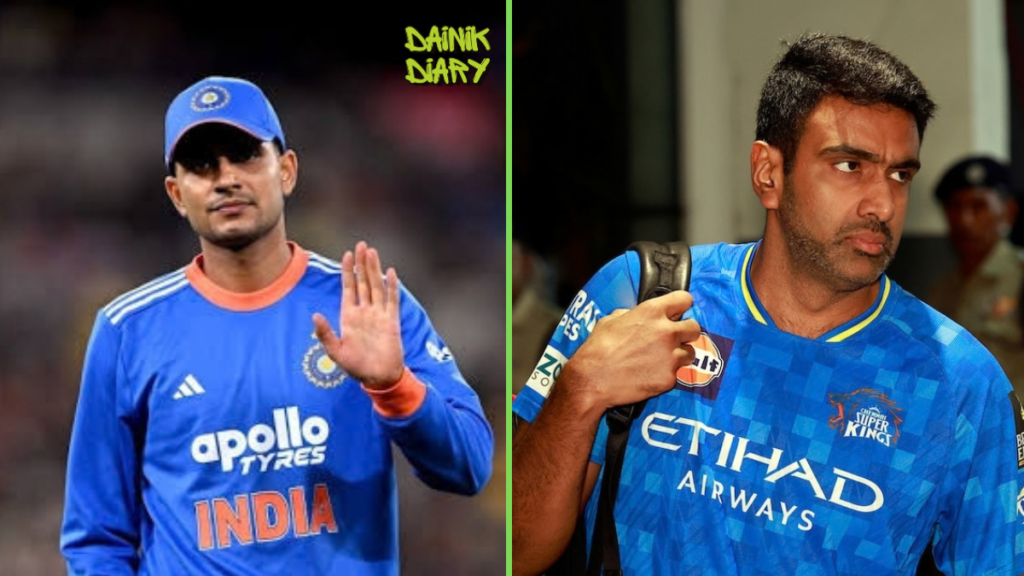
Shubman Gill Is Smashing ODI Records, So Why Does R Ashwin Call Him ‘Unlucky’? The Reason Has Nothing to Do With Form
Shubman Gill has raced to 10 ODI centuries and continues to produce remarkable numbers for India, but Ravichandran Ashwin believes the Indian captain faces one disadvantage that even his talent cannot overcome — the shrinking number of ODI matches.


Shubman Gill is building an ODI record that would be remarkable in any era.
Another century against the West Indies, a batting average hovering around 60 and 10 hundreds already on the board have strengthened his reputation as one of India’s leading modern-day ODI batters.
Yet former India spinner Ravichandran Ashwin believes Gill is actually “unlucky.”
At first glance, that description sounds strange.
What could possibly be unlucky about a batter accumulating runs and centuries at such a rapid rate?
According to Ashwin, the problem isn’t Gill’s batting at all.
It’s the era in which he is playing.
Why Ashwin believes Gill is ‘unlucky’
Ashwin’s argument centres on the changing international cricket calendar.
Previous generations of elite ODI players had considerably more opportunities to play the 50-over format across long careers. With international schedules increasingly divided between Tests, T20Is, franchise cricket and major tournaments, bilateral ODI cricket no longer occupies the same volume of the calendar.
That could leave Gill with fewer opportunities to accumulate the enormous career totals associated with players such as Virat Kohli.
In other words, Ashwin’s point is not that Gill lacks the ability to chase historic records.
It is that he may not get enough matches to do so.
Another century against West Indies
Gill further strengthened his ODI record during India’s opening match against the West Indies, scoring an impressive 110 off 108 deliveries.
He struck 13 fours and a six during the innings and played an important role in India’s successful chase.
The highlight was his partnership with Kohli.
Gill and Kohli added 151 runs from 132 balls for the second wicket, putting India firmly in control of the contest.
Kohli went on to finish unbeaten on 139 from 88 balls, while India completed an emphatic eight-wicket victory.
For Gill, however, the hundred also brought another significant career milestone.
Gill reaches 10 ODI hundreds at extraordinary speed
Gill has now registered 10 ODI centuries, reaching the landmark in only 67 innings.
That makes him the fastest Indian batter to reach 10 ODI hundreds.
Only two players have reached the milestone in fewer innings overall: South African stars Quinton de Kock and Hashim Amla.
De Kock reached 10 ODI centuries in 55 innings, while Amla required 57.
Gill’s achievement places him among some of the quickest century accumulators the format has seen.
Gill’s ODI numbers explain Ashwin’s excitement
The broader statistics make Ashwin’s assessment of Gill’s ability easier to understand.
After 68 ODI appearances, Gill has accumulated 3,489 runs at an average of 60.16, alongside a strike rate of around 101.
His record includes:
10 centuries
20 half-centuries
3,489 runs
60.16 batting average
Strike rate of approximately 101
Those numbers are particularly notable because Gill is still relatively early in his international career.
Maintaining them across a much larger sample will be the challenge, but his start has given him a strong foundation.
Ashwin sees something special in Gill’s technique
Ashwin’s admiration for Gill goes beyond the numbers.
The former India spinner has highlighted Gill’s shot selection and batting technique, qualities that have helped the right-hander become particularly effective in the ODI format.
Gill can score quickly without appearing to abandon conventional batting technique, while his ability to build long innings has made him suited to the demands of 50-over cricket.
It is that combination which has led to comparisons with Kohli’s ODI consistency.
ALSO READ: Rohit Sharma Sends Strong Fitness Warning Ahead of England ODIs… India Captain Begins Batting Grind After Family Break
Can Gill really chase Virat Kohli’s records?
Comparisons with Virat Kohli inevitably bring enormous expectations.
Kohli has spent years accumulating runs and centuries while establishing himself among the most prolific ODI batters in cricket history.
Gill’s early-career numbers demonstrate exceptional consistency, but projecting them across an entire career is much more complicated.
Form can change. Injuries happen. Roles within teams evolve. And, crucially in Ashwin’s argument, the number of ODIs available to play is not entirely in Gill’s control.
Even if Gill maintains an elite scoring rate, fewer matches would naturally make enormous career aggregates harder to reach.
The ‘unlucky’ part Gill cannot control
That is what makes Ashwin’s observation interesting.
Gill can work on his fitness. He can improve his technique. He can adapt his strike rate and continue turning starts into centuries.
What he cannot control is how many ODI matches India play during the remainder of his career.
The cricketing calendar Gill inherited is different from the one available during much of Kohli’s rise.
So while his numbers invite comparisons with the great ODI careers that came before him, his eventual totals will also need to be viewed in the context of opportunity.
For now, Gill continues to make the most of the matches he does get.
Ten ODI centuries in 67 innings is already evidence of that.
And perhaps that’s exactly what Ashwin means when he calls him unlucky: Gill may possess the batting ability to chase some of ODI cricket’s biggest records, but he is playing in an era that may give him fewer chances to reach them.