India News
‘India is not a dharamshala’: Amit Shah draws red line on illegal infiltration, says ‘only citizens have the right to live here’
Subtitle: Union Home Minister Amit Shah said the Centre is working with border states on a four-pronged security strategy, warning that illegal infiltration could affect India’s security, economy and demographic balance.

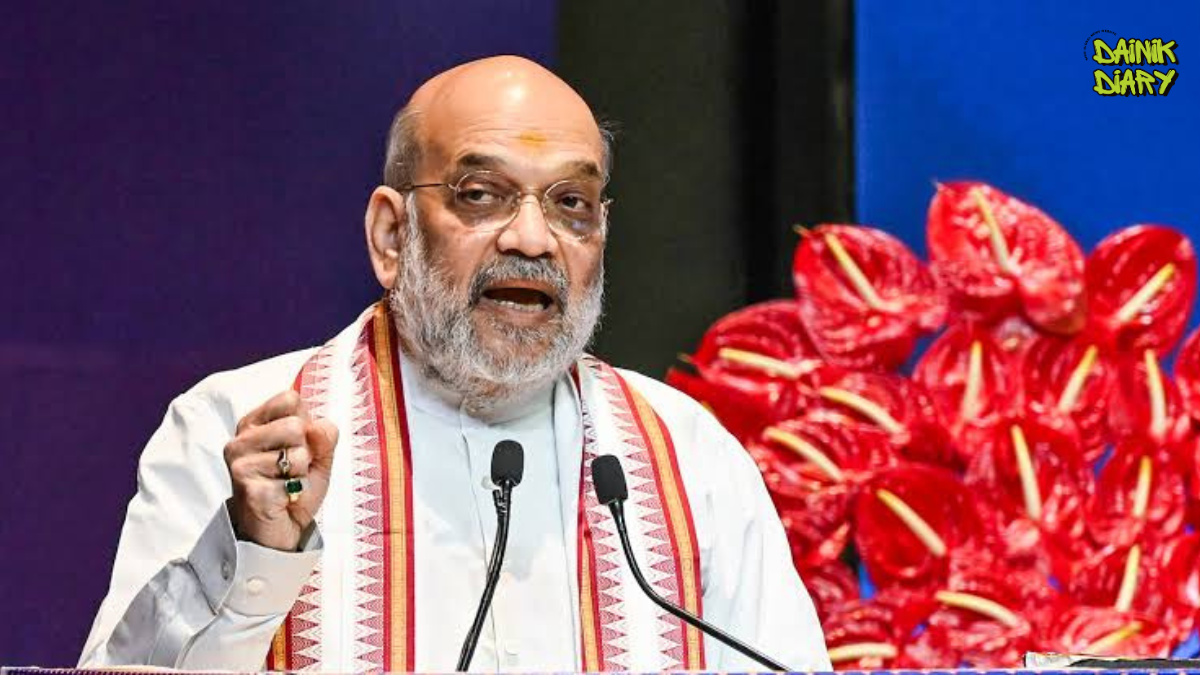
Union Home Minister Amit Shah has delivered a sharp message on illegal immigration, declaring that India is “not a dharamshala” and saying that only Indian citizens have the right to live in the country.
Addressing the closing session of the Intelligence Bureau’s National Security Strategy (NSS) Conference in New Delhi, Shah argued that illegal infiltration must be viewed as more than a border-management problem because of its potential impact on the country’s national security, economy and demographics.
“This country is not a dharamshala; only citizens of the country have the right to live here,” Shah said.
The remarks came during a two-day security conference attended by heads of central security agencies and senior police officials from across the states.
‘Goal is to make the country free of infiltrators’
Shah said the Central government has been working closely with states that share India’s land borders to strengthen security and develop a coordinated response to infiltration.
According to the Home Minister, consultations have taken place with all land-border states over the past eight months.
Following those discussions, the Centre has shared a document outlining a four-pronged approach to border security.
“Our goal is to make the country free of infiltrators in a very short period,” Shah said.
His remarks signal that illegal immigration and border infiltration are expected to remain major priorities in the government’s internal-security strategy.
Why does Shah consider infiltration a national security issue?
The Home Minister identified three areas where he believes illegal infiltration can have a significant impact security, the economy and demographics.
Shah argued that stronger internal security would be essential if India wants to strengthen its position globally.
“If India is to emerge at the forefront in every field, its internal security will have to be further strengthened,” he said.
The government has repeatedly linked border management and immigration enforcement with broader national-security concerns, particularly regarding cross-border crime, terrorism and trafficking.
At the same time, immigration enforcement remains a sensitive issue because questions of citizenship and deportation require adherence to Indian law, due process and applicable international obligations.
Security agencies discuss terror networks and intelligence sharing
Illegal infiltration was only one part of the wider agenda at the NSS Conference.
Senior officials also discussed ways to improve real-time intelligence sharing between agencies to counter terrorist organisations.
Disrupting the funding and logistics networks of terror groups was another key area of discussion.
Better coordination between state police forces and central security agencies is increasingly important as security threats become more interconnected and technology-driven.
Shah urged officials not to focus exclusively on existing threats but to anticipate challenges that could emerge over the next 15 to 20 years.
The objective, he said, should be to develop strategies before such risks evolve into serious national-security problems.
Cyber misinformation and radicalisation among emerging challenges
Shah also highlighted a changing global security environment.
He pointed to geopolitical instability, uncertainty over energy and resources, supply-chain disruptions, radicalisation and cyber misinformation as areas that could create new challenges for India.
Modern national security, therefore, cannot be limited to conventional policing or physical borders.
Cyber networks, online radicalisation, financial flows and misinformation campaigns can increasingly create security problems without traditional geographical boundaries.
Shah’s remarks suggest that intelligence agencies and police forces will be expected to build capabilities for both conventional and emerging threats.
‘Detect, Disrupt and Destroy’ strategy against narcotics
The Home Minister also placed considerable emphasis on India’s fight against narcotics.
He asked state police forces to implement the Narcotics Control Vision Document 2026-2029 and follow what he described as a three-pronged strategy:
“Detect, Disrupt and Destroy.”
The approach is aimed at identifying drug networks, disrupting their operations and ultimately dismantling the organisations behind narcotics trafficking.
Shah said the broader objective remains creating a drug-free India.
Shah targets previous governments over security threats
During his address, Shah also criticised previous governments for what he described as their failure to recognise certain internal-security challenges early enough.
ALSO READ : UP Polls 2027: Yogi, Akhilesh Among 52 Leaders Given Bulletproof Jackets Ahead of Election
He referred specifically to narcotics, Naxalism and insurgency in the Northeast, arguing that earlier identification and intervention could have reduced the long-term consequences.
According to Shah, the country had to deal with these problems for decades because they were not confronted adequately at an earlier stage.
He credited state police forces, central security agencies and Central Armed Police Forces (CAPFs) for progress in tackling major internal-security threats.
Such claims, particularly regarding the extent to which individual security challenges have been “eliminated”, are likely to remain part of the wider political debate over the government’s security record.
Not the first time Shah has used ‘dharamshala’ remark
This is not the first time the Home Minister has used the “dharamshala” analogy while discussing immigration.
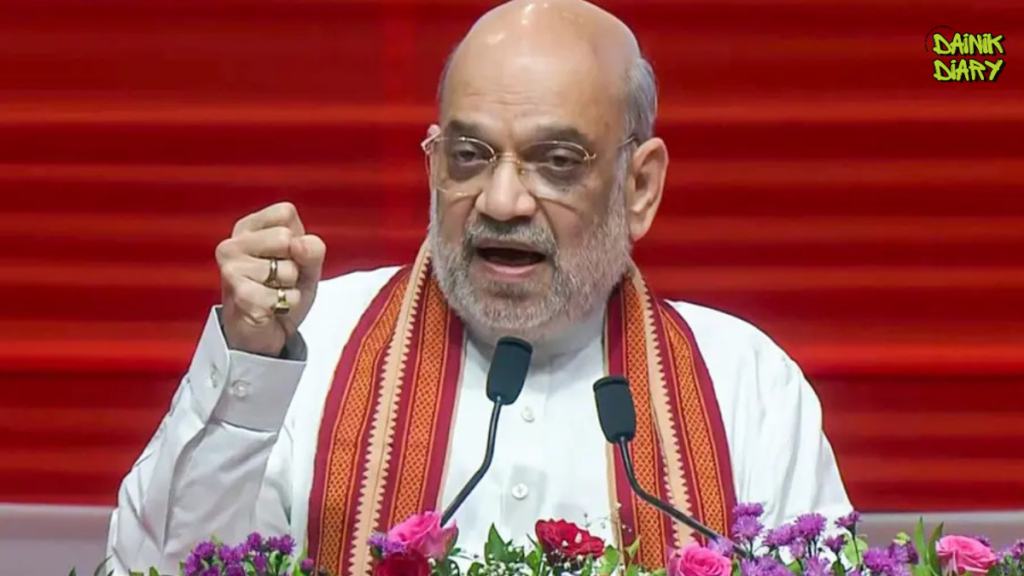
During a Lok Sabha debate on the Immigration and Foreigners Bill, 2025, on March 27, Shah similarly argued that India could not operate as a place where anyone could enter and stay regardless of the purpose of their visit.
He maintained that Parliament has the authority to establish restrictions preventing individuals considered a threat to national security from entering the country.
Shah also drew a distinction between legal and illegal immigration.
According to his stated position, foreigners who enter India through legal channels and contribute to the country’s development are welcome, while those entering illegally should face action under the law.
Border security set to remain a major government priority
The latest comments indicate that illegal infiltration, counter-terrorism, narcotics and emerging cyber threats will remain central elements of the government’s internal-security agenda.
The proposed four-pronged border strategy also suggests greater coordination between the Centre and states sharing international boundaries.
But Shah’s most memorable message from the conference was unmistakable.
By declaring that “India is not a dharamshala,” the Home Minister has once again framed illegal immigration as a question of national sovereignty and security while signalling that the government intends to intensify its efforts against unlawful entry into the country.