Business
E20 Petrol Row: CEA V Anantha Nageswaran Backs E10 Option Alongside E20 ‘Would Calm Most Public Concern’
Chief Economic Adviser V Anantha Nageswaran has called for lower-ethanol petrol to be made available alongside E20, citing concerns over older vehicles and ethanol-sensitive components.

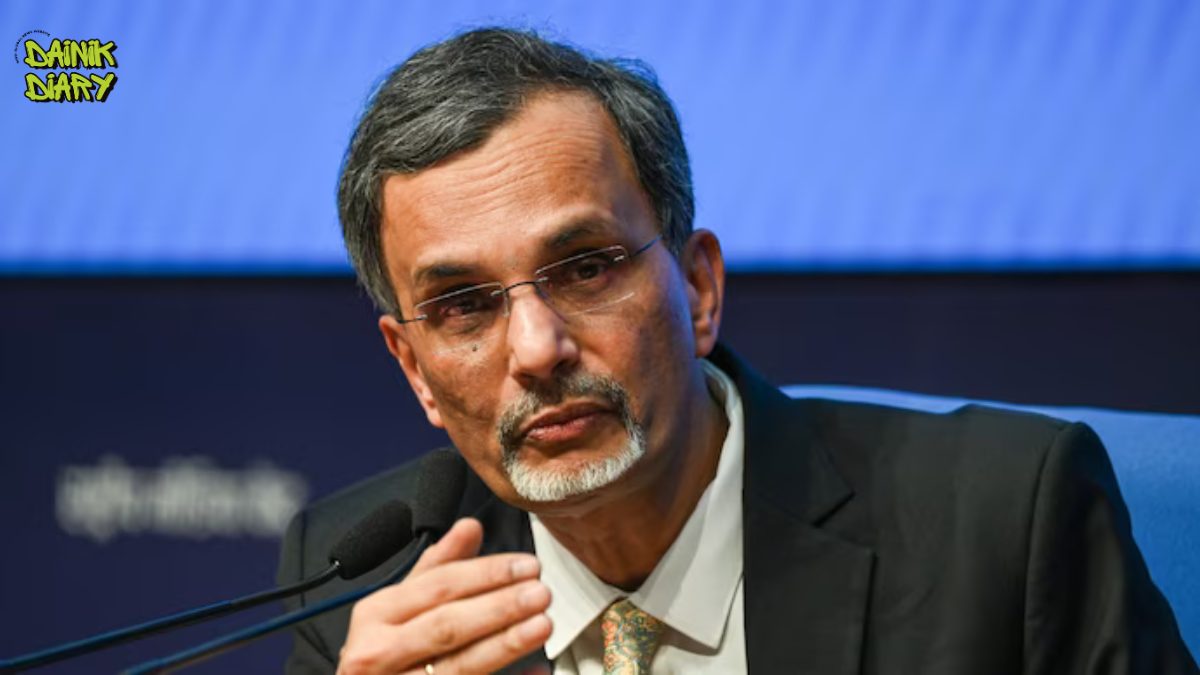
India’s controversial E20 petrol policy has received an unexpected push for greater consumer choice, with Chief Economic Adviser V Anantha Nageswaran suggesting that fuel stations should consider offering an E10 petrol option alongside E20.
E20 petrol contains 20% ethanol blended with gasoline and has become the only petrol blend available for sale at fuel stations across India since April 1. The policy is part of the government’s broader effort to reduce dependence on imported crude oil, increase the use of domestically produced ethanol and address environmental concerns.
However, the move has triggered considerable debate among vehicle owners, particularly those using older cars and two-wheelers. Concerns have focused on fuel efficiency, vehicle performance and the possible impact of higher ethanol content on certain components.
In an opinion article published in The Indian Express, Nageswaran, along with Akash Poojari, a consultant with the Department of Economic Affairs, argued that restoring access to a lower ethanol blend could help address much of the public anxiety surrounding E20.“Restoring a lower blend at the pumps, say, E10, alongside the option to buy E20, would calm most public concern,” Nageswaran and Poojari wrote.
The authors also clarified that the views expressed in the article were personal.
Why E10 alongside E20 could matter
The debate is not simply about whether E20 damages modern engines. It also involves the large number of older vehicles still operating on Indian roads.
The opinion piece pointed to an estimated 75 million to 80 million older two-wheelers in India. Some older vehicles may have rubber seals and other components that were not designed to handle higher concentrations of ethanol.
The authors argued that these older vehicles need to be protected while manufacturers and owners gradually adapt the existing fleet.
ALSO READ : Who Is Air India’s New CEO Tewolde Gebremariam? The Aviation Veteran Who Turned Ethiopian Airlines Into a Global Success Story
They noted that replacing or retrofitting ethanol-sensitive components across such a large vehicle population could take years. Making E10 available again could therefore provide an alternative for owners whose vehicles are not well suited to higher ethanol blends.
Government position on E10 remains unchanged
Nageswaran’s comments are notable because the government has previously maintained that there is no proposal to bring back lower-blended petrol such as E0 or E10.
The E20 rollout is closely linked to India’s ethanol-blending programme, which aims to reduce the country’s dependence on imported crude oil while creating additional demand for domestically produced ethanol.
The government has also maintained that modern vehicles compatible with E20 can operate on the fuel without the widespread engine-damage concerns raised by some consumers.
The latest opinion, therefore, does not represent an announced policy reversal. Instead, it adds weight to the argument that consumers should potentially have more than one fuel option, particularly during the transition period.

E20 debate gains fresh attention
The latest comments come amid growing public discussion around E20 petrol and its impact on vehicles.
Concerns have been particularly visible among owners of older two-wheelers and cars, with questions being raised over fuel economy, compatibility and long-term maintenance.
A recent Reuters report also highlighted concerns reportedly discussed privately by leading automakers regarding E20-related issues. Those developments added another layer to an already sensitive debate between the government’s ethanol-blending ambitions and consumer concerns.
At the same time, the Nageswaran-Poojari opinion piece argued that available evidence does not support the broad claim that E20 necessarily causes engine damage. Their concern is more specifically focused on the existing older vehicle fleet and components that may not have been designed for higher ethanol concentrations.
What could happen next?
For now, motorists should not interpret the Chief Economic Adviser’s comments as confirmation that E10 petrol is returning to fuel stations.
There is no indication in the report that the government has formally changed its E20 policy. However, the suggestion is significant because it comes from one of the country’s senior economic officials at a time when public concern over fuel choice remains high.
Offering both E10 and E20 could potentially give vehicle owners greater flexibility while India continues its transition towards higher ethanol blending.
For millions of motorists, the bigger question is now whether the government will consider such an option — or continue with a single E20 standard across the country.