Automobile
10-Year-Old Volvo Clears Emission Test but Is Denied PUC Certificate: Supreme Court to Examine Key Delhi-NCR Vehicle Rule
A Volvo XC60 owner has moved the Supreme Court after allegedly being denied a Pollution Under Control (PUC) certificate despite passing the emission test, raising questions over software-based restrictions on older vehicles.


A legal challenge involving a 10-year-old Volvo XC60 could have far-reaching consequences for thousands of vehicle owners in Delhi-NCR.
The owner of the luxury diesel SUV has approached the Supreme Court, claiming that authorities refused to issue a Pollution Under Control (PUC) certificate even after the vehicle successfully cleared the mandatory emission test. Without a valid PUC certificate, the vehicle cannot legally be refuelled, effectively leaving it off the road.
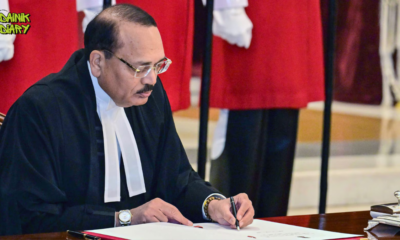
The matter was mentioned before a Bench headed by Chief Justice Surya Kant, which agreed to list the case for hearing.
Why Was the PUC Certificate Denied?
According to the petitioner’s counsel, the issue was not related to the vehicle’s pollution levels.
The owner’s legal team argued that the SUV met the prescribed emission standards during testing at a certified PUC centre. However, the certificate was allegedly not issued because the software used by PUC centres automatically blocks vehicles that have crossed the prescribed age limit.
The petitioner claims that the system does not allow operators to override the restriction, even when a vehicle passes the emission test.
As a result, the owner cannot obtain fuel for the vehicle despite it being mechanically fit and emission compliant.
Reference to Earlier Supreme Court Order
The petitioner has relied on a December 2024 order of the Supreme Court, which modified an earlier direction concerning end-of-life vehicles in Delhi-NCR.
According to the legal submissions, the court had directed that no coercive action should be taken against BS-IV and BS-VI compliant vehicles solely because of their age. Since the Volvo XC60 falls under one of these emission categories, the petitioner argues that denying a PUC certificate is inconsistent with the court’s earlier directions.
ALSO READ : Mercedes-AMG Unveils Electric GT 53 4-Door Coupe With a Twist It Sounds Like an Inline-Six Sports Car
Why the Case Matters
The case goes beyond a single vehicle.
If the petitioner’s claims regarding the PUC software are found to be correct, the issue could potentially affect many owners of BS-IV and BS-VI compliant vehicles approaching the age threshold in Delhi-NCR.
The petition raises an important legal question: should a vehicle that meets emission norms be denied a PUC certificate solely because it has crossed a specified age limit?

A ruling from the Supreme Court could provide clarity on how existing pollution-control rules should be implemented alongside earlier judicial orders.
Background of the Vehicle Policy
Restrictions on older vehicles in Delhi-NCR stem from earlier judicial directions aimed at improving air quality in the region.
In recent years, authorities have enforced rules affecting diesel and petrol vehicles beyond certain age limits as part of pollution-control measures.
At the same time, government agencies have also sought broader scientific studies to assess whether vehicle age alone should remain the primary criterion or whether actual emission performance should play a greater role in policy decisions.
Hearing Awaited
The Supreme Court has agreed to hear the matter, although a date for detailed proceedings has not yet been announced.
The outcome could help determine whether software-driven restrictions at PUC centres require changes, particularly for vehicles that continue to comply with prescribed emission standards despite their age.