Business
Air India Transformation Is a ‘Five- to Ten-Year Journey’, Says N Chandrasekaran: ‘A Nation of 1.4 Billion Deserves…’
Tata Sons Chairman N Chandrasekaran says Air India has made significant progress despite a difficult FY26, but rebuilding the national carrier will take years of work across fleet renewal, technology, training, service and network expansion.

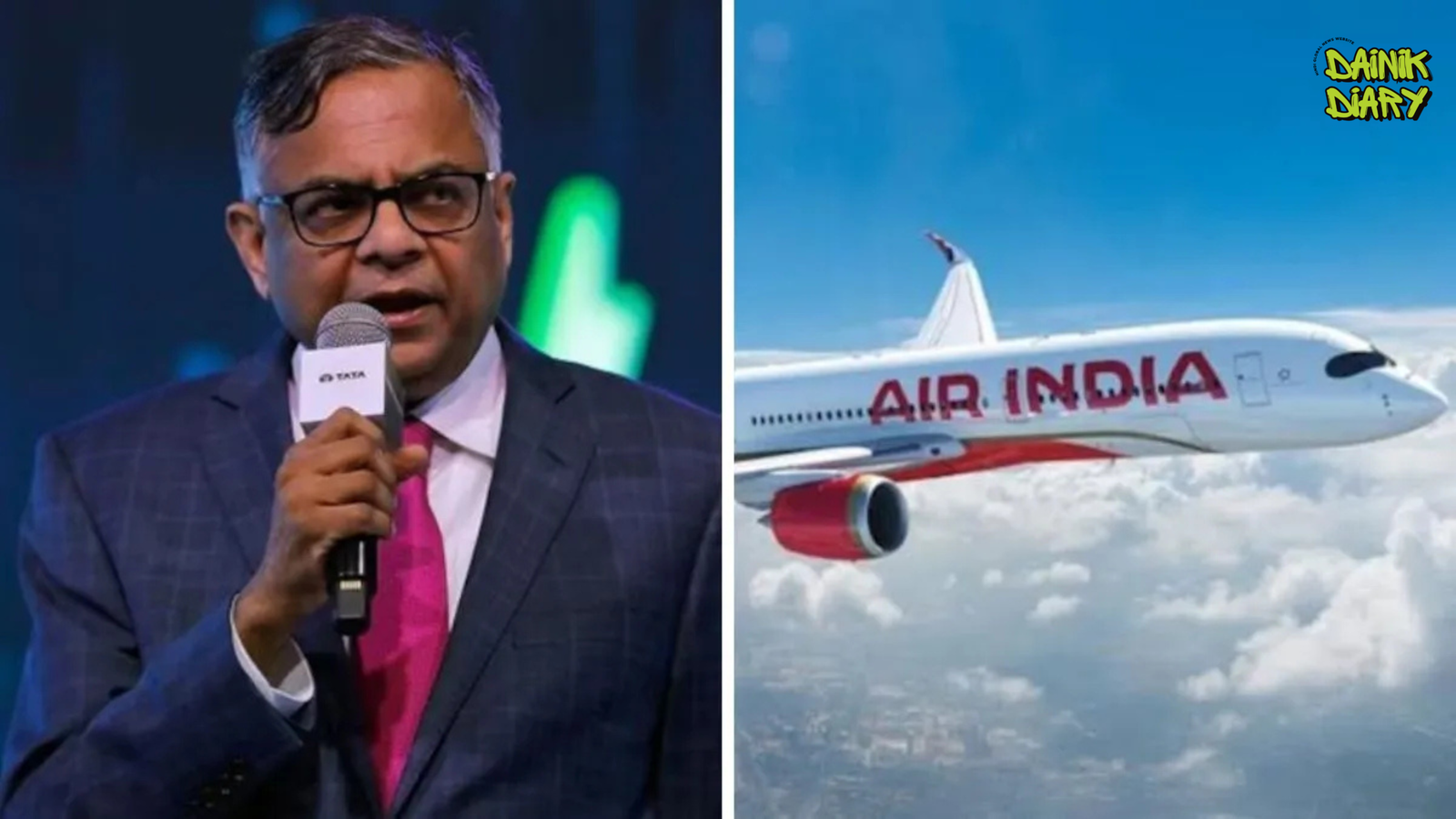
The transformation of Air India is moving forward, but Tata Sons Chairman N Chandrasekaran has made it clear that rebuilding India’s national carrier is not a quick turnaround story.
In his letter to shareholders, Chandrasekaran described the airline’s transformation as a long-term journey, arguing that a country of India’s size and economic ambition deserves an airline capable of connecting it confidently with the rest of the world.
“A nation of 1.4 billion people, with one of the world’s fastest growing economies, deserves a world-class flag carrier,” Chandrasekaran said, highlighting the scale of the challenge ahead.
His message comes after what has been an exceptionally difficult period for Air India. The airline faced multiple external pressures during FY26, including airspace closures, fuel-price volatility linked to the West Asia conflict, foreign exchange fluctuations and the devastating AI171 accident in June 2025.
Despite those challenges, Chandrasekaran believes the airline has continued to make meaningful progress.
‘Every Great Airline Was Built Over Decades, Not Quarters’
Chandrasekaran’s assessment of Air India’s revival is built around one central idea: patience.
According to him, the rebuilding process involves much more than simply purchasing new aircraft or improving the passenger experience. It requires a complete overhaul of the airline’s fleet, systems, culture, workforce and operating processes.
“Every great airline in history was built over decades, not quarters,” he said.
That approach is particularly important for Air India, which is attempting to modernise a legacy business while simultaneously expanding its global ambitions.
The airline’s transformation programme has already involved major investments in aircraft, technology, digital systems, customer experience and training. Air India has also been working to integrate the broader aviation operations of the Tata Group following its acquisition of the airline and the subsequent merger with Vistara.
Read More- Air India Makes Delhi-Toronto Flight Non-Stop Again: New Boeing 787-9 to Cut Nearly 3 Hours From Journey…
The company’s transformation efforts have produced visible signs of progress. In May 2026, Air India announced that it had achieved a Skytrax four-star rating for both Business Class and Economy Class, while also highlighting a major improvement in customer sentiment.
Air India Faced a ‘Most Challenging Year’
The FY26 period was far from straightforward for the airline.
Chandrasekaran pointed to three major external headwinds: airspace closures, fuel-price increases triggered by geopolitical tensions in West Asia and fluctuations in foreign exchange rates.
The situation was further complicated by the AI171 crash, which became one of the most painful chapters in Air India’s recent history.
The accident involving Air India flight AI171 on June 12, 2025, led to the loss of 241 people aboard the aircraft, with one passenger surviving. The tragedy also claimed lives on the ground. Air India subsequently worked with authorities and support agencies while carrying out enhanced safety checks and operational adjustments.
Against this backdrop, Chandrasekaran praised the airline’s employees for responding with what he described as resilience and adaptability.
For a carrier undergoing a transformation of this scale, the ability of its workforce to navigate unexpected disruptions is likely to remain critical.
Passenger Experience Shows Signs of Improvement
One of the clearest indicators of Air India’s transformation is customer sentiment.

According to Chandrasekaran, the airline’s Net Promoter Score (NPS) improved from -35 in FY23 to +42 in June 2026.
NPS is commonly used to measure customer loyalty and willingness to recommend a company. The improvement suggests that passengers’ perception of Air India’s service has changed significantly during the transformation period.
Air India has also highlighted improvements across its fleet and passenger experience. Its narrow-body aircraft have undergone refurbishment, while the airline expects its wide-body fleet refurbishment programme to be completed by the end of FY28.
The airline has separately reported that its customer experience transformation has helped it move from a three-star to a four-star Skytrax rating, another milestone in its attempt to rebuild its reputation.
Technology and Fleet Renewal Remain at the Heart of the Plan
The Air India transformation is not limited to aircraft interiors.
The airline has been rebuilding its technology infrastructure, modernising legacy systems and investing in digital tools designed to improve both passenger services and internal operations.
Air India has said that more than 140 IT and digital systems have been modernised as part of a wider digital programme, with technology increasingly being used to support operations, customer service and employee workflows.
Fleet renewal is another major pillar.
The airline is working towards a more modern fleet while also refurbishing legacy aircraft. The aim is to create a carrier that can compete more effectively in India’s rapidly expanding aviation market and serve a much larger international network.
For passengers, however, the transformation will ultimately be judged by the basics: better aircraft, reliable schedules, improved service and a smoother travel experience.
Why Chandrasekaran Says the Transformation Could Take 5 to 10 Years
Perhaps the most important part of Chandrasekaran’s message is his timeline.
He believes Air India’s transformation should be viewed as a five- to ten-year journey.
That may sound like a long wait, but rebuilding an airline of Air India’s size involves challenges that cannot be solved overnight. Supply-chain disruptions, aircraft deliveries, workforce training, technology upgrades and cultural change all require time.
The airline also needs to create a large pool of skilled professionals across aviation, including pilots, cabin crew, engineers and other technical specialists.
Chandrasekaran’s argument is that the goal is not simply to make Air India look better today. It is to build an institution that can remain competitive for decades.
The Bigger Ambition: Making India a Global Aviation Hub
The Tata Group’s ambitions for Air India go beyond restoring the airline’s former position.
Chandrasekaran said the long-term commitment is to create a carrier that connects India with the world, supports employment across aviation, tourism and logistics, and helps turn India into a global aviation hub.
That ambition comes at a time when India’s aviation market is expanding rapidly, creating an opportunity for a strong national carrier to play a much larger role in international travel.
Air India’s commercial transformation has already focused on rebuilding connectivity, expanding international-to-international connections, growing long-haul presence and increasing its premium offering.
The challenge now is to convert those investments into a consistently reliable and profitable airline.
Air India’s Long Road Ahead
The message from Chandrasekaran is optimistic, but it is also realistic.
Air India has made progress, and passengers are beginning to see changes in aircraft interiors, technology, service and connectivity. But the transformation remains a work in progress.
The airline still has years of fleet refurbishment, workforce development, technology upgrades and operational improvements ahead.
For Chandrasekaran and the Tata Group, the ultimate test will be whether Air India can emerge as more than just a revived national carrier.
The bigger goal is to build an airline that can stand confidently alongside the world’s leading carriers—and give a fast-growing India a flag carrier worthy of its global ambitions.
As Chandrasekaran’s message makes clear, this is not a transformation designed for the next quarter. It is a bet on the next decade.