
Automobile
Tata Motors Hits New EV Milestone! July Sales Surge 59% as Electric Vehicle Deliveries Cross 15,000 for the First Time
Tata Motors recorded its strongest-ever July performance with passenger vehicle sales soaring 59% year-on-year, while electric vehicles accounted for nearly a quarter of total sales in a major boost for India’s EV market.

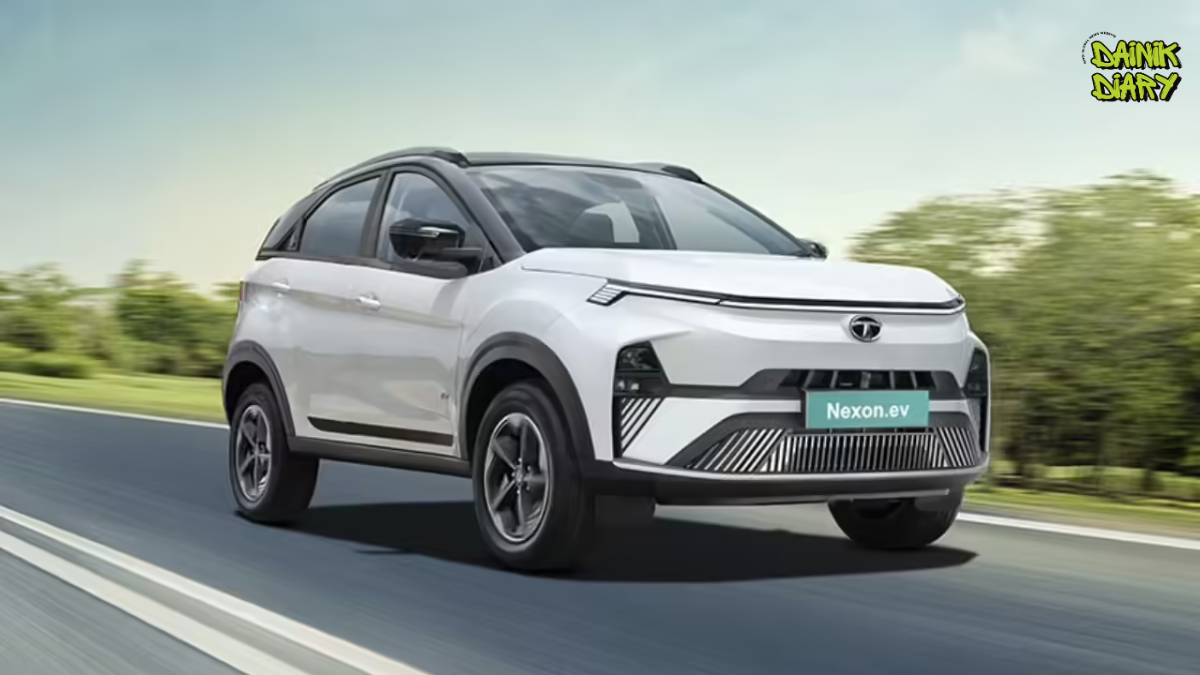
Tata Motors has reported an impressive performance for July 2026, with its passenger vehicle business posting a 59% year-on-year growth. The company sold 63,760 passenger vehicles during the month, driven by strong customer demand and record-breaking sales of its electric vehicle (EV) portfolio.
One of the biggest highlights of the month was Tata’s electric vehicle business, which crossed the 15,000-unit monthly sales mark for the first time in the company’s history. The achievement further strengthens Tata Motors’ position as one of India’s leading EV manufacturers.
Electric Vehicle Sales More Than Double
Tata Motors sold 15,217 electric vehicles in July 2026, compared to 7,124 units during the same month last year, representing a remarkable 114% year-on-year growth.
Electric vehicles now contribute approximately 24% of Tata’s total passenger vehicle sales, a significant increase from 18% recorded in July 2025. The growing contribution indicates that customer acceptance of electric mobility continues to accelerate across multiple vehicle segments.
The company also achieved its highest-ever VAHAN registrations during the month, suggesting that the sales numbers were supported by genuine customer deliveries rather than inventory buildup at dealerships.
Strong Domestic and International Performance
The growth was visible across both domestic and overseas markets.
Domestic passenger vehicle sales climbed 58% to 62,611 units, up from 39,521 units in July 2025. Meanwhile, Tata Motors’ international passenger vehicle business recorded an even stronger 76% growth, with exports increasing to 1,149 units from 654 units a year earlier.
July also became Tata Motors’ second consecutive month of crossing the 60,000-unit passenger vehicle sales milestone, reflecting sustained demand rather than a temporary spike.
Punch Continues to Drive Demand
Alongside its expanding EV portfolio, Tata Punch emerged as another major success story for the company.
ALSO READ : GIIAS 2026: 5 Cars That Stole the Spotlight… and Could Soon Change India’s Auto Market
The compact SUV registered its highest-ever monthly sales, underlining the continued popularity of the model among Indian buyers. Strong demand for the Punch is believed to have contributed significantly to Tata Motors’ overall passenger vehicle performance.
Expanded EV Portfolio Fuels Growth
Unlike previous years, when the company’s EV sales largely depended on models such as the Nexon EV and Tiago EV, Tata Motors now offers a much broader electric vehicle lineup.

Its current portfolio includes the Tiago EV, Tigor EV, Punch EV, Curvv EV, Harrier EV, and the recently introduced Sierra EV, enabling the company to cater to buyers across entry-level, compact SUV and premium SUV categories.
The broader product range appears to be encouraging wider EV adoption, reducing dependence on a single best-selling model.
What This Means for Car Buyers
The strong sales performance suggests healthy consumer demand and improved vehicle availability across Tata’s dealer network.
Higher production volumes often translate into better inventory levels and, in many cases, shorter waiting periods for customers planning to purchase a Tata EV. However, buyers should note that these figures represent wholesale dispatches covering both domestic and export markets.
Customers interested in a specific model are advised to check delivery timelines with their nearest dealership, as availability may differ across cities depending on local demand.