World News
‘Hormuz Control Is a Must’: Iran Walks Away From US Deal After Fresh Blockade… Is the Middle East Heading Back to War?
Tehran has withdrawn from its ceasefire understanding with the United States, accusing Washington of violating the agreement after reimposing a naval blockade on Iranian ports and escalating tensions around the Strait of Hormuz.


The fragile diplomatic understanding between Iran and the United States has collapsed after Tehran officially announced its withdrawal from the recently signed memorandum of understanding (MoU), citing what it called repeated violations by Washington. The decision marks a major setback for peace efforts and raises fresh concerns over the future of security in the Middle East.
According to Iran’s Foreign Ministry, the agreement reached last month to reduce hostilities has effectively become meaningless after the United States reimposed a naval blockade on Iranian ports. Iranian officials claimed the move not only breached the terms of the understanding but also dismantled the foundation of the temporary truce.
ALSO READ : ‘Will Hit Iran Again, Only Harder’: Trump’s Stark Warning During Peace Talks… What Message Is Washington Sending?
The renewed tensions come amid escalating military activity around the strategically vital Strait of Hormuz, one of the world’s busiest energy corridors. Nearly 20% of global oil and natural gas shipments pass through the narrow waterway during normal times, making any disruption a matter of international concern.
The US military reinstated the blockade after accusing Iran of attacking vessels attempting to navigate through the Strait of Hormuz. The latest action has triggered another round of military exchanges, with reports of fresh strikes targeting countries hosting American military bases in the region.
For several days, both sides have exchanged attacks while simultaneously attempting to strengthen their presence around the Strait. Defence experts warn that the continued military build-up significantly increases the risk of a wider regional conflict, potentially affecting global energy supplies, shipping routes, and financial markets.
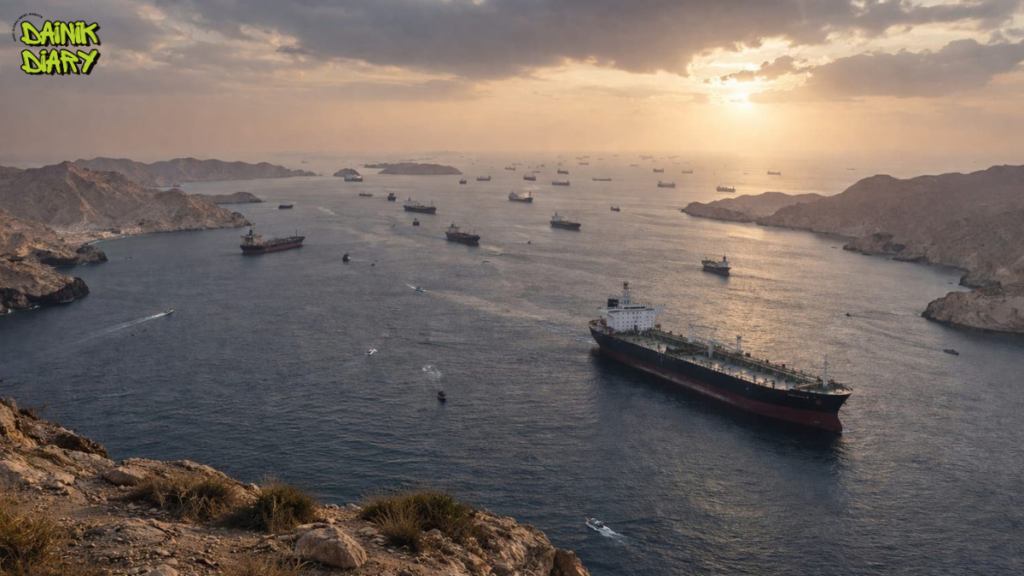
Adding to the tension, Iran’s Deputy Foreign Minister Kazem Gharibabadi declared that Tehran would exercise “full sovereignty over the Strait of Hormuz, no matter the costs.” His statement also referenced Iran’s claim over areas bordering Oman’s side of the strategically important waterway, underlining Tehran’s determination to maintain influence over one of the world’s most critical maritime routes.
The Strait of Hormuz has long been considered a geopolitical flashpoint. Any confrontation in the region has the potential to disrupt international oil trade, trigger sharp increases in crude prices, and impact economies far beyond the Middle East. Countries heavily dependent on imported energy, including India, are closely monitoring developments as uncertainty grows.
Diplomatic observers believe the collapse of the agreement could make future negotiations even more difficult. With both sides hardening their positions and military operations continuing, fears are mounting that the region could slide back into a prolonged and broader conflict unless fresh diplomatic efforts succeed.
As the situation unfolds, governments across the world are urging restraint while keeping a close watch on developments in the Gulf. The coming days are expected to be crucial in determining whether diplomacy can return to the table or whether the crisis will deepen further.