World News
100-year-old US manufacturer shuts down as owner blames Trump tariffs for ‘final nail in the coffin’…
Subtitle: Connecticut-based Leed-Himmel Industries is winding down operations after more than a century in manufacturing, with owner Howard Goldfarb saying soaring energy, insurance and material costs had already squeezed the business before tariffs delivered the final blow.


A Connecticut manufacturing company with roots stretching back more than a century is winding down operations, highlighting the mounting cost pressures facing some American manufacturers.
Leed-Himmel Industries, a custom aluminium manufacturing company based in Hamden, Connecticut, is closing after years of rising operating expenses.
Owner Howard Goldfarb says the decision was not triggered by a single problem. Electricity, health insurance, property costs and other expenses had been steadily eroding the company’s ability to operate profitably.
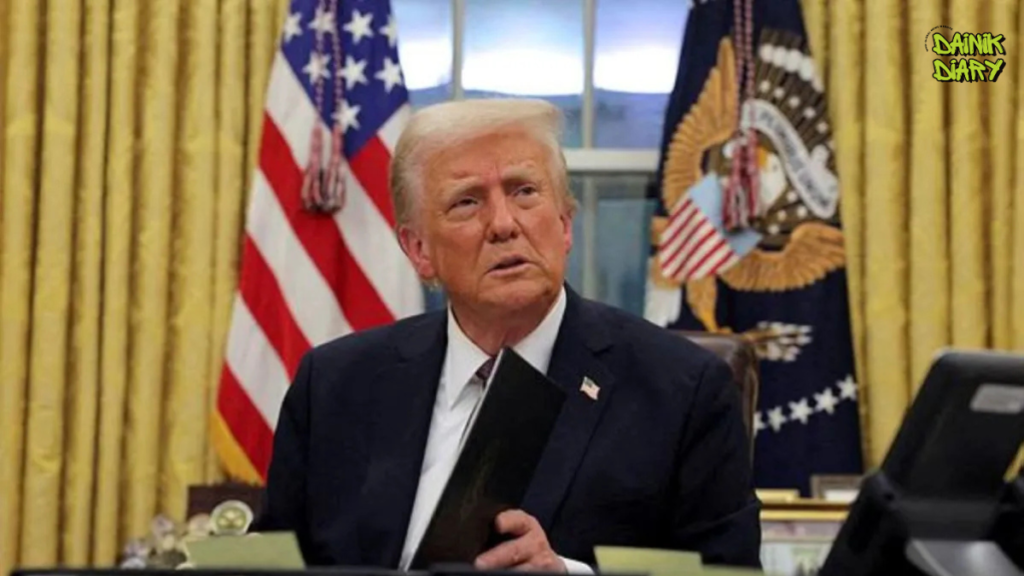
But according to Goldfarb, the pressure created by US President Donald Trump’s tariffs ultimately pushed the company beyond the point where continuing made financial sense.
“Tariffs was the final nail in the coffin, if you will,” Goldfarb told NBC Connecticut.
Owner had warned about rising costs two years ago
The shutdown did not come without warning.
When NBC Connecticut visited the manufacturing facility in 2024, Goldfarb was already speaking publicly about the rapidly increasing cost of keeping the factory running.
At the time, he warned that expenses could eventually reach a level where operating the business was no longer worthwhile.
Two years later, walking through a largely empty factory, Goldfarb said the situation he feared had become reality.
“If our costs were where they were, say, eight years ago, I wouldn’t have shut it down,” he said.
His comments underline how several years of accumulated cost increases rather than tariffs alone contributed to the company’s closure.
Electricity bill crossed $500,000
Energy expenses were among the biggest pressures.
Despite operating at reduced levels, Goldfarb said the company’s electricity bill exceeded $500,000.
The manufacturer was also dealing with higher employee health insurance costs, along with increasingly expensive insurance for its buildings, vehicles and workers’ compensation.
The closure will have an impact beyond the company’s employees.
Leed-Himmel reportedly paid approximately $160,000 every year in local property taxes, meaning the shutdown will also remove a notable source of revenue for the local community.
Why did Trump’s tariffs become the ‘final nail’?
For a manufacturer working heavily with aluminium and other industrial materials, changes in input costs can quickly affect margins.
Goldfarb said tariffs raised the price of aluminium and other materials needed by the company.
But the problem went beyond simply paying more for raw materials.
Higher material prices also meant the company had to commit more working capital when purchasing inventory, leaving significant amounts of cash tied up before customers eventually paid their invoices.
For a business already facing steep energy and insurance bills, that additional financial burden proved difficult to absorb.
Goldfarb consequently described tariffs as the “final nail in the coffin” rather than the sole cause of the company’s troubles.
Trump tariffs remain at centre of US economic debate
The closure comes as the Trump administration’s tariff policies remain a major source of political and economic debate in the United States.
Supporters of tariffs argue that they can protect domestic industries from foreign competition, encourage companies to manufacture more goods inside the US and strengthen strategically important supply chains.
Critics, however, argue that companies relying on imported raw materials can face higher input costs, which may then be absorbed by businesses or passed on to customers through higher prices.
ALSO READ : Donald Trump’s ‘winning shot’ sparks fresh golf cheating debate as viral video divides social media
Manufacturers can therefore experience the policy differently depending on their industry, supply chains and exposure to imported materials.
For Leed-Himmel, Goldfarb says the consequences were negative because of the higher costs associated with materials such as aluminium.
European buyer could have saved some jobs then deal collapsed
Goldfarb had attempted another route before completely winding down the company.
He said negotiations were underway to sell the business to a European buyer, a transaction that could potentially have preserved some manufacturing jobs.
However, according to Goldfarb, the prospective buyer ultimately withdrew amid heightened geopolitical uncertainty surrounding the US-Iran conflict.
That left the company without the rescue deal its owner had hoped could provide another future for the operation.
Goldfarb still hopes the factory remains a manufacturing site
Although Leed-Himmel’s own operations are winding down, Goldfarb has not completely given up on manufacturing continuing at the Hamden facility.
He is reportedly still searching for a buyer for the property.
His preference is for another manufacturer to take over the site rather than seeing the industrial facility converted into warehouse or storage space.
Such a deal would not undo Leed-Himmel’s closure, but it could preserve the property’s manufacturing role and potentially bring industrial jobs back to the location.
A century of manufacturing comes to an end
The story of Leed-Himmel Industries is also a reminder that major economic policies can have very different consequences at the individual-business level.
The company was already struggling with enormous electricity bills, insurance expenses and other operating costs before tariffs entered the equation.
For Goldfarb, however, higher costs linked to tariffs were ultimately one burden too many.
After surviving economic downturns, changing technologies and generations of industrial transformation, the century-old manufacturer is now winding down.
And Goldfarb’s description of what finally pushed it over the edge is likely to become part of the wider American debate over tariffs and whether they are ultimately helping or hurting US manufacturers.