World News
Asim Munir’s Iran trip ends in a day as mediation faces questions Tehran’s ‘Gambler’s Hand’ headline sends a message…
Subtitle: Pakistan Field Marshal Asim Munir returned after a day of high-level talks in Tehran, as conflicting accounts emerged over the success of Islamabad’s mediation effort between Iran and the United States.


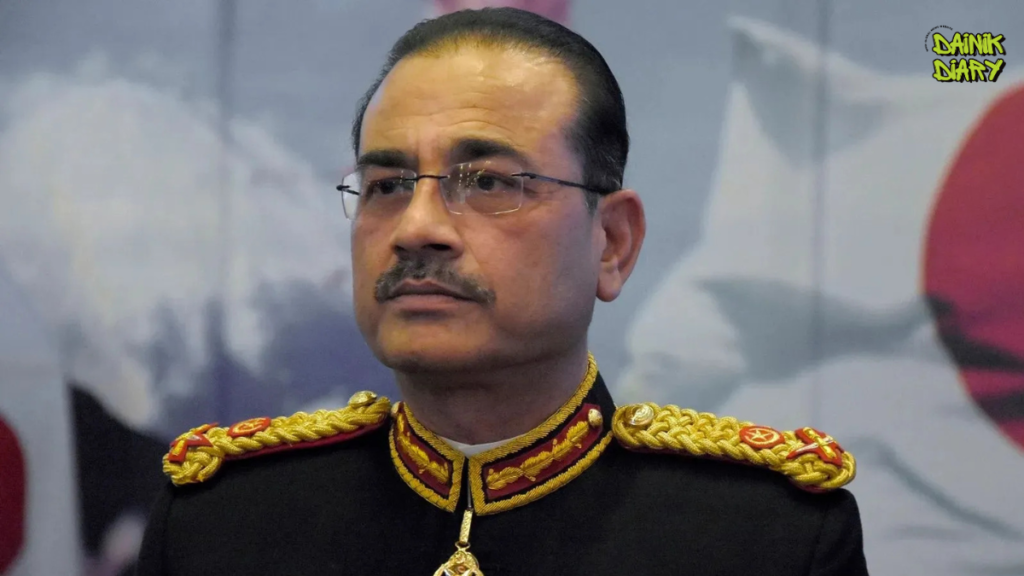
Pakistan Field Marshal Asim Munir’s high-profile visit to Iran has drawn attention not only for what happened during his meetings in Tehran, but also for what followed.
Munir travelled to the Iranian capital for consultations aimed at easing tensions between Iran and the United States and reviving diplomatic momentum in the region. Iranian reports confirm that the Pakistani delegation wrapped up a day-long official visit after meeting senior political and security officials.
However, an Indian media report, citing a top security source, claimed that the trip had initially been expected to last two days and that Munir returned after just one day without securing the breakthrough Pakistan had sought.
That claim has not been publicly confirmed by either government.
Did Munir fail to meet Iran’s Supreme Leader?
One of the most significant claims surrounding the visit concerns Iran’s Supreme Leader Ayatollah Mojtaba Khamenei.
According to the security source cited in the Indian media report, Munir sought a meeting with the Supreme Leader, but it did not materialise.
Iranian reporting on the visit lists meetings with President Masoud Pezeshkian, Parliament Speaker Mohammad Baqer Qalibaf, Foreign Minister Abbas Araghchi, Supreme National Security Council Secretary Mohsen Rezaei and Interior Minister Eskandar Momeni. The reports reviewed by Dainik Diary do not list a meeting with the Supreme Leader.
If such a meeting was sought but not granted, it would carry diplomatic significance because Iran’s highest leadership has decisive influence over the country’s strategic and national-security policy.
What did Munir discuss with Iranian leaders?
The Pakistani delegation’s discussions centred on the Iran-US confrontation, wider tensions in West Asia and efforts to restore the Islamabad MoU.
Pakistan’s Interior Minister Mohsin Naqvi, who was part of the delegation, publicly described the discussions as constructive and claimed that “significant progress” had been achieved. Iranian presidential official Seyed Mehdi Tabatabaei also pushed back against negative speculation, describing Munir’s trip as “highly productive”.
That public assessment stands in contrast to the Indian media report, which said Munir carried “special and confidential” proposals but failed to persuade Tehran to soften its conditions.
The competing accounts make one point clear: Islamabad and Tehran are publicly presenting the talks positively, while other reporting suggests Pakistan’s mediation did not produce the immediate breakthrough it was seeking.
Iran sends a clear message on the United States
Whatever diplomatic proposals were discussed behind closed doors, Iran’s public position remained firm.
During his meeting with the Pakistani delegation, President Pezeshkian said the United States needed to change its approach towards Iran and warned that reliance on coercion would make implementation of diplomatic agreements more difficult.
Iranian Parliament Speaker Mohammad Baqer Qalibaf similarly blamed Washington for failing to honour commitments under the memorandum of understanding, arguing that US actions had further damaged Tehran’s trust in Washington.
The statements indicate that Pakistan’s diplomatic outreach has not publicly shifted Tehran away from its insistence that Washington must change its conduct before meaningful progress can be made.
‘Gambler’s Hand Revealed to Iran’ headline grabs attention
Perhaps the most striking development came not from a closed-door meeting but from the front page of Iran’s English-language Tehran Times.
Its August 26 edition prominently featured Munir’s Tehran visit under the headline “Gambler’s Hand Revealed to Iran”.
The accompanying framing portrayed US President Donald Trump as pursuing economic pressure against Iran while sending Munir in search of a “face-saving exit” from the confrontation.
The language is significant because it presents Munir’s mission less as an independent Pakistani peace initiative and more through the prism of Washington’s strategy towards Tehran.
However, describing the headline as an official Iranian “insult” to Munir would go beyond the available evidence. The newspaper’s framing was certainly sharp, but Iranian officials themselves publicly described Pakistan’s diplomatic engagement in positive terms.
Oman emerges in the Strait of Hormuz discussions
There was another development taking place in Tehran that could prove equally important.
Iranian Foreign Minister Abbas Araghchi met his Omani counterpart Sayyid Badr bin Hamad bin Hamood Al-Busaidi, with discussions focusing on safe navigation through the Strait of Hormuz.
ALSO READ : Donald Trump Says He’d Be ‘Happy’ to Run for Third Term… Then Warns What Could Happen If GOP Loses Midterms
The two sides examined proposals including a temporary joint maritime corridor and a joint project for mine clearance, with further technical negotiations expected over a possible permanent arrangement.
The development highlights Oman’s established role as a diplomatic intermediary in regional disputes.
While Pakistan is attempting to facilitate broader Iran-US de-escalation, Oman’s discussions with Tehran appear focused on concrete maritime arrangements surrounding one of the world’s most strategically important waterways.
Was Pakistan’s Iran mission a failure?
It may be too early to make such a definitive judgment.
Iranian and Pakistani officials have publicly characterised the discussions as productive, while the security-source account cited by Indian media presents a very different picture one in which Pakistan failed to convince Tehran to alter its negotiating conditions.
There is, however, no publicly announced agreement or dramatic policy shift following Munir’s meetings.
The absence of an immediate breakthrough means questions will remain over how much leverage Islamabad actually has over Tehran and Washington, particularly as both sides continue to hold firm positions.
A diplomatic test for Islamabad
Munir’s Tehran mission was ultimately about more than a single meeting.
Pakistan is attempting to position itself as a meaningful intermediary at a moment when confrontation between Iran and the United States has major implications for energy markets, maritime trade and security across West Asia.
For Tehran, the public message remains consistent: diplomatic engagement may continue, but economic and military pressure will not dictate Iran’s negotiating position. Iranian officials have repeatedly argued that engagement must be based on respect rather than coercion.
For Pakistan, meanwhile, the next developments will determine whether Munir’s brief Tehran mission created a genuine diplomatic opening or merely exposed the limits of Islamabad’s ability to bring the two sides closer.