World News
Iran War Could Drag On for 6 More Months? Ex-US Defence Chief Warns of ‘Forever War’, Reveals Trump’s 3 Options
Former US Defence Secretary Leon Panetta says Washington and Tehran are trapped in a “terrible stalemate”, warning that Donald Trump faces three difficult choices as the Iran conflict shows little sign of ending.

More than six months after the United States and Israel launched strikes against Iran, there is still no clear end in sight. Now, former US Defence Secretary Leon Panetta has issued a stark warning: the conflict could continue for another six months and risks turning into yet another prolonged American war in the Middle East.
Panetta, who also previously served as CIA Director, believes US President Donald Trump has been left with only a handful of difficult choices as Washington and Tehran remain locked in a military and political standoff.
‘Another six months without being resolved’
Speaking in an interview with The Guardian, Panetta described the situation between the US and Iran as a “terrible stalemate”, arguing that there are few realistic options available to bring the conflict to an end.
“I think the likelihood is this war is going to continue for another six months without being resolved,” Panetta said.
His warning raises the prospect of the confrontation developing into what he called another “forever war in the Middle East”, drawing uncomfortable comparisons with the lengthy US military campaigns in Iraq and Afghanistan.
What are Trump’s three options?
According to Panetta, Trump effectively has three paths to choose from.
The first would be for the United States to step away from the conflict and acknowledge that its strategy has failed. Panetta, however, indicated that he finds it difficult to imagine Trump choosing such a course.
The second option is to allow the current stalemate to continue. That could mean periodic strikes and counter-strikes, with Washington and Tehran exchanging military action while simultaneously trying to prevent the confrontation from escalating into an even larger regional war.
ALSO READ : Donald Trump says Iran war is ‘saving’ Britain from nuclear threat, but his Europe argument sparks fresh questions: ‘They would use it…’
Neither side, however, appears ready to make the concessions necessary for a diplomatic breakthrough. A recent UK Parliament research briefing also noted that there were no ongoing US-Iran talks aimed at ending the conflict.
Could the Strait of Hormuz change the war?
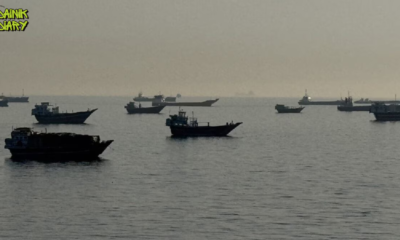
Panetta’s third scenario centres on one of the most strategically important waterways in the world the Strait of Hormuz.
He argued that Washington could make reopening the strait its primary objective and attempt to remove what he sees as one of Tehran’s strongest sources of leverage.
Iran’s ability to disrupt shipping through the waterway gives it significant influence over global energy and trade flows. Panetta suggested that a major change in US strategy focused on the strait could alter the direction of the conflict.
However, any further military escalation around the strategic waterway could also carry serious risks for regional security and international shipping.
US-Iran attacks intensify again
The warning comes as military tensions have risen again following a quieter period in July.
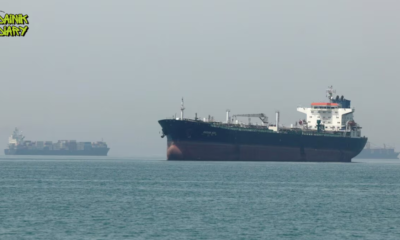
The US military recently said it struck three Iranian oil tankers after ballistic missiles targeted American warships. According to the US account, an aircraft carrier and a destroyer avoided the attacks without reported injuries. Iran has continued to threaten stronger retaliation if American attacks persist.
In another sign of the fragile situation, Iran on Sunday claimed it had struck an unmanned American vessel near the Strait of Hormuz an assertion the US military strongly denied.
Economic pressure on Iran also mounting
The battlefield is only one part of Washington’s strategy. The United States has also intensified economic pressure through sanctions and restrictions targeting Iranian oil exports and financial networks.
The measures are putting growing pressure on Iran’s economy, although Tehran has shown no indication that it is prepared to abandon its strategic position solely because of sanctions.
The Strait of Hormuz remains another critical element of the confrontation, with restrictions and security threats continuing to complicate commercial shipping through the region.
Is another ‘forever war’ taking shape?
Panetta’s warning highlights the central question facing the Trump administration: how does Washington end the conflict without either escalating it dramatically or accepting an outcome that could be portrayed as a strategic failure?
For now, neither side appears to have found a workable exit. With military exchanges continuing, economic pressure increasing and diplomacy struggling to gain traction, Panetta believes the conflict could remain unresolved well into 2027.
Whether Trump chooses escalation, accepts the existing stalemate or searches for another way out could determine whether the Iran conflict remains a limited confrontation or develops into the kind of prolonged Middle East war Panetta fears.