World News
Saudi Arabia Reportedly Turns to Israel for Houthi Intelligence as Red Sea Crisis Tests Makkah Defence Pact
Riyadh’s reported outreach to Israel comes as Houthi advances threaten the Bab el-Mandeb Strait, while Pakistan has stopped short of committing military action under the newly signed Makkah Joint Defence Agreement.


Saudi Arabia is reportedly seeking intelligence assistance from Israel as the kingdom confronts an escalating Houthi threat from Yemen, an unusual development that could reshape regional security calculations and put the recently signed Makkah Joint Defence Agreement with Pakistan and Türkiye under an early spotlight.
According to reports in Israeli and Indian media, contacts between Riyadh and Israel have been facilitated by the United States Central Command (CENTCOM). The discussions are said to focus primarily on intelligence that could help Saudi Arabia assess Houthi military positions, weapons infrastructure and possible future operations.
The development is particularly striking because Saudi Arabia and Israel do not have formal diplomatic relations. Yet the rapidly deteriorating security situation around the Red Sea appears to be creating an area where their strategic interests increasingly overlap.
Houthi advance raises alarm around Bab el-Mandeb
The immediate concern for Riyadh is the changing military situation in Yemen.
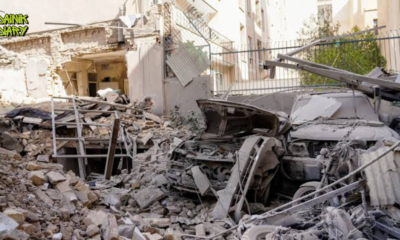
Houthi forces have made significant gains along Yemen’s Red Sea coastline, bringing them into a stronger position around the strategically crucial Bab el-Mandeb Strait. The narrow waterway connects the Red Sea with the Gulf of Aden and is one of the world’s most important maritime trade routes.
Recent reports say the Houthis have taken strategically important territory around the waterway, increasing their ability to threaten shipping passing through the region. The escalation has become particularly dangerous for Saudi Arabia because the kingdom relies heavily on secure maritime routes for its oil exports.
The renewed conflict is also exacting a growing humanitarian cost. The United Nations refugee agency says more than 100,000 people have been internally displaced in Yemen amid the latest fighting, while others have fled across the sea towards Djibouti.
Missiles, drones and airstrikes deepen the confrontation
The confrontation has moved well beyond territorial advances.
The Houthis said on September 14 that they launched dozens of ballistic missiles and drones towards Saudi military targets, including King Khalid Air Base near Khamis Mushait. Saudi Arabia, meanwhile, has intensified strikes against Houthi positions in Yemen as the conflict widens.
For Riyadh, the stakes are not limited to border security. Continued attacks on energy infrastructure, combined with Houthi pressure around Bab el-Mandeb, could affect Saudi oil exports, government revenues and the wider global energy market.
That makes intelligence on Houthi deployments and operational plans increasingly valuable and helps explain why Saudi Arabia may be willing to quietly work with a country with which it still has no formal diplomatic ties.
What about the Makkah Defence Pact?
The reported Saudi-Israeli contacts also raise questions about the effectiveness of the new defence arrangement involving Saudi Arabia, Pakistan and Türkiye.
The three countries signed the Makkah Joint Defence Agreement on August 7, 2026. According to the official joint statement, the pact is intended to strengthen collective deterrence and provides that an armed attack against one member will be regarded as an attack against all three.
However, that provision has not automatically translated into direct military intervention against the Houthis.
Pakistan said on September 10 that no military response under the agreement had been discussed over the Houthi attacks on Saudi Arabia. Islamabad has reiterated its commitment to the pact while stopping short of announcing military involvement.
That distinction matters. The agreement may establish a collective-defence principle, but exactly how that commitment will operate during complex conflicts involving non-state armed groups remains an important test for the three partners.
Britain also considering support
Israel is reportedly not the only country Riyadh has approached.
Britain is considering military assistance to Saudi Arabia amid the Houthi escalation, with a small team of British military advisers reportedly deployed to examine possible options. British support could potentially involve defensive capabilities or assistance identifying threats, although London remains cautious about deeper involvement in the conflict.
ALSO READ : Donald Trump says Iran war is ‘saving’ Britain from nuclear threat, but his Europe argument sparks fresh questions: ‘They would use it…’
The outreach suggests Riyadh is looking at several layers of external support rather than relying exclusively on a single ally or defence arrangement.
Why Israel and Saudi Arabia suddenly have common ground
Despite their diplomatic differences, Saudi Arabia and Israel share an immediate security concern: the Houthis and, more broadly, the regional influence of Iran.
Houthi attacks have threatened Saudi territory and energy infrastructure, while the group has also repeatedly targeted shipping associated with Israel and launched missiles and drones towards Israeli territory since the Gaza war began in 2023.
For Israel, weakening the Houthis would therefore serve its own security interests. For Saudi Arabia, Israeli intelligence capabilities could provide another source of information as Riyadh tries to contain a rapidly evolving battlefield.

That overlap does not mean diplomatic normalisation is imminent. Any cooperation between the two countries remains politically sensitive, particularly against the backdrop of continuing conflicts across the Middle East.
Still, reported intelligence cooperation illustrates how regional security pressures can create unexpected partnerships.
Could this revive the Abraham Accords question?
The development will inevitably revive discussion around possible future Saudi participation in the Abraham Accords.
Before the October 7, 2023 attacks and the subsequent Gaza war, there had been considerable speculation about a possible Saudi-Israeli normalisation agreement. That process was derailed as the regional political environment changed dramatically.
Security cooperation against a shared threat could rebuild limited channels between Riyadh and Jerusalem, but it would be premature to interpret the current contacts as evidence that formal diplomatic recognition is around the corner.
For now, Saudi Arabia’s priority appears much more immediate: stopping Houthi advances, protecting oil infrastructure and preventing further disruption around one of the world’s most sensitive maritime chokepoints.
The larger significance may become clearer later. If Saudi Arabia increasingly relies on intelligence or security assistance from Israel while its formal defence partners remain cautious about direct military involvement, the crisis could expose how rapidly the Middle East’s traditional alliances are being rewritten.