World News
Trump Leaves Pakistan Out of Iran Talks List; Credits Saudi Arabia, UAE and Qatar for Backing Diplomacy
US President Donald Trump said negotiations with Iran are taking place at Tehran’s request and acknowledged support from Gulf nations, while making no mention of Pakistan’s earlier mediation efforts.


US President Donald Trump has sparked fresh diplomatic discussion after omitting Pakistan from the list of countries he said are supporting ongoing negotiations between the United States and Iran.
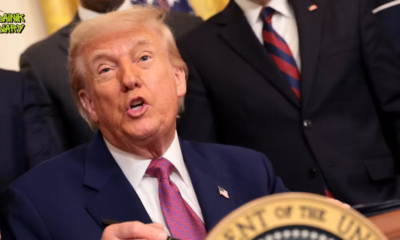
Speaking to reporters at the White House, Trump said the current diplomatic engagement with Tehran is taking place at Iran’s request and is being backed by Saudi Arabia, the United Arab Emirates (UAE) and Qatar.“We are talking at the request of Iran backed by Saudi Arabia, UAE and Qatar.”
Notably, the US President did not mention Pakistan, despite its previously reported involvement in facilitating communication between Washington and Tehran during earlier efforts to ease tensions.
Trump: ‘We’ll Know Soon’
Commenting on the progress of the discussions, Trump suggested that developments could emerge within days.“We’ll probably know today or tomorrow.”
The US President also issued a stern warning to Iran, describing the current diplomatic effort as Tehran’s “last chance before decapitation,” underscoring the high stakes surrounding the negotiations.
Conflicting Narratives Over Negotiations
Despite Trump’s comments, the status of the talks remains unclear.
While Washington maintains that discussions are underway at Iran’s request, Tehran has publicly denied that any direct negotiations with the United States are currently taking place.
Iranian officials have also stated that no official negotiating team has been dispatched for talks.
The contrasting statements highlight the uncertainty surrounding the diplomatic process, even as both sides continue to indicate that the door to dialogue remains open.
Pakistan’s Earlier Role
Pakistan has previously been viewed as an important intermediary during attempts to reduce tensions between the United States and Iran.
Leveraging its diplomatic relations with both countries, Islamabad reportedly facilitated indirect communication through engagements involving Prime Minister Shehbaz Sharif and Field Marshal Asim Munir, while also supporting broader regional efforts aimed at de-escalation.
Pakistan was also associated with diplomatic consultations that contributed to earlier ceasefire initiatives and subsequent negotiations.
ALSO READ : Trump Warns Iran ‘We Will Hit Very Hard Tonight’: Why Kharg Island Has Suddenly Become The Center Of A Dangerous New Standoff
However, Trump’s latest remarks suggest that the current phase of diplomacy is being driven primarily with the backing of Saudi Arabia, the UAE and Qatar, with Pakistan’s role appearing less prominent than during earlier mediation efforts.
Diplomatic Efforts Continue

The renewed diplomatic push comes amid ongoing concerns over regional stability, particularly around the Strait of Hormuz, a strategically vital shipping route for global energy supplies.
While public statements from Washington and Tehran continue to differ, international efforts to prevent further escalation remain active.
Whether the current discussions lead to a broader agreement or renewed tensions is expected to become clearer in the coming days as both sides continue to outline their positions.