World News
‘Without the US, Canada could not survive’: Trump escalates trade war as Ottawa hits back ‘dollar-for-dollar’
Subtitle: US President Donald Trump has called Canada America’s most “difficult and unreasonable” trading partner, while Ottawa has announced retaliatory tariffs on $27.6 billion worth of US imports from September 8.

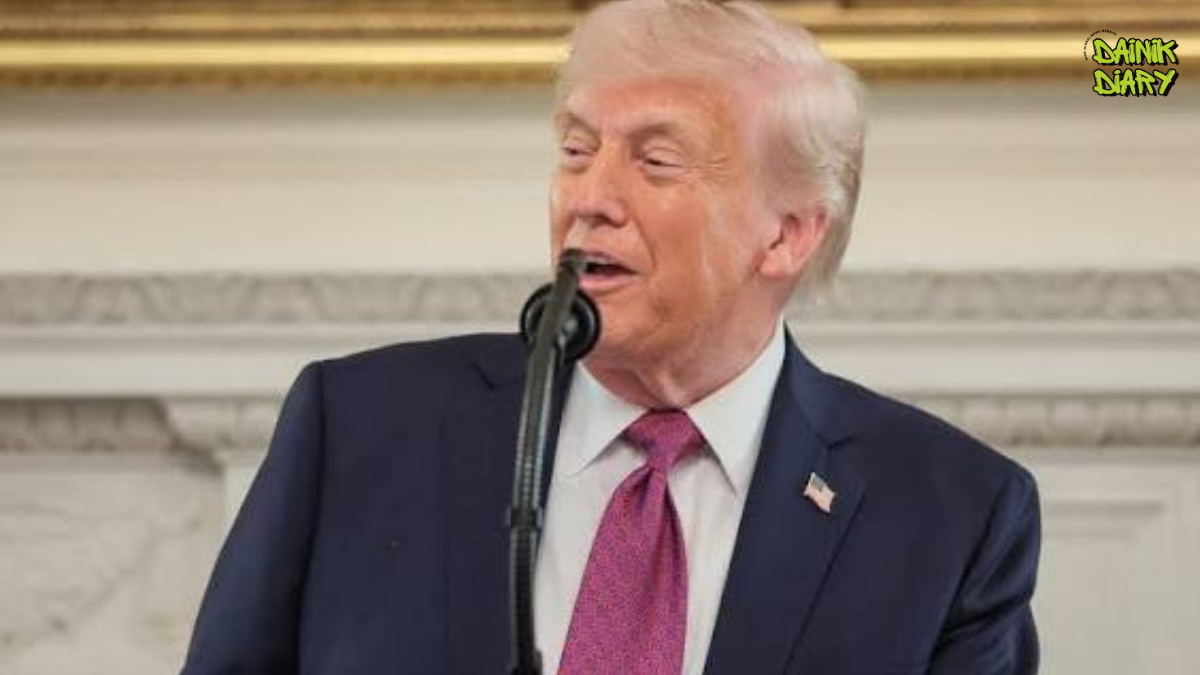
The trade confrontation between the United States and Canada has entered a considerably more hostile phase after US President Donald Trump declared that Canada could not economically survive without access to the American market.
In a strongly worded statement released by the White House, Trump accused America’s northern neighbour of benefiting unfairly from its economic relationship with the United States and described Canada as the country’s most “difficult and unreasonable” trading partner.
“Canada is easily the most difficult and unreasonable. They feel entitled, but they are not a State, and will be entitled no longer!” Trump said.
The White House went further, declaring: “Without the United States, Canada could not survive.”
The remarks came after Canada announced additional retaliatory tariffs on American products, escalating tensions between two countries whose economies have been closely connected for decades.
White House says Canada has been ‘ripping off’ America
The Trump administration accused Canada of having “been ripping off the United States for decades”, arguing that Washington would no longer provide preferential access to the world’s largest economy without receiving what it considers fair treatment in return.
According to the White House, Washington had offered Canada significant tariff reductions covering major industries including steel, aluminium, automobiles and lumber.
The administration accused Ottawa of responding with “unreasonable demands, walk-backs, and flat-out rejection.”
Trump’s position is that the enormous difference in the size of the two economies gives Washington substantial negotiating leverage.
The White House noted that the US economy is roughly 13 times larger than Canada’s, while its population is more than eight times greater.
“The United States has the clear leverage,” the administration said.
Why does Trump say Canada needs the US?
Canada’s heavy reliance on the American market sits at the centre of Trump’s argument.
Approximately three-quarters of Canada’s merchandise exports are shipped to the United States, making America by far the country’s most important export destination.
But the economic relationship runs both ways.
Canada is also one of the United States’ largest trading partners, with deeply interconnected supply chains covering energy, automobiles, agriculture and manufacturing.
Many products and components cross the US-Canada border multiple times during production, meaning tariffs can create additional costs for businesses on both sides.
Cars become another major flashpoint
The White House highlighted the automobile industry as one example of what it considers unfair Canadian trade policy.
It claimed Canada had imposed 25% tariffs and company-specific quotas on American vehicles, contributing to a 22% decline in US automobile exports to Canada over the previous year.
The auto industry is particularly vulnerable to a prolonged trade confrontation because manufacturing operations across the US and Canada are highly integrated.
Vehicles assembled in one country can contain engines, components and raw materials produced in the other, making repeated tariffs across the supply chain potentially expensive for manufacturers.
US alcohol exports to Canada down 81%, White House claims
Alcohol has also emerged as a major source of tension.
The Trump administration accused Canadian provinces and territories of restricting the sale of American wine, beer and spirits.
According to the White House, US alcohol exports to Canada declined by 81% in one year.
The administration argues that such restrictions demonstrate why Washington needs to take a tougher position in negotiations with Ottawa.
Dairy tariffs approaching 300% draw Trump administration’s anger
Then there is the long-running dispute over dairy products.
The White House accused Canada of using restrictive tariff-rate quotas and applying over-quota tariffs approaching 300% on certain American dairy products.
Washington argues that these rates are sufficiently high to effectively keep some US products out of the Canadian market.
Canada’s dairy system has repeatedly been a contentious subject in bilateral trade negotiations, including during negotiations surrounding the US-Mexico-Canada Agreement (USMCA).
Canada refuses to back down
Ottawa has rejected Washington’s characterisation of the dispute and made clear that it will retaliate.
The Canadian government announced that it would match new American tariffs “dollar-for-dollar, rate for rate.”
Canada said the terms offered by Washington were not in its national interest and that it chose to suspend negotiations rather than accept an agreement it believed could damage Canadian workers, businesses and strategic industries.
Beginning September 8, Canada plans to impose tariffs of 15%, 25% and 50% on approximately $27.6 billion worth of American imports.
The targeted products span several industries, including steel, dairy, appliances, agricultural equipment, pulp and paper, electronics, furniture and clothing.
‘US asked too much and offered too little’
Canadian Finance Minister François-Philippe Champagne defended Ottawa’s decision to retaliate.
“When the United States asked too much and offered too little, we chose to stand up for Canadians,” Champagne said.
Canada has also announced a $7.5 billion assistance package aimed at cushioning workers and companies from the effects of the escalating trade dispute.
The support is expected to include liquidity assistance, worker-retention programmes, training measures and investments designed to help Canadian companies diversify their businesses and reduce vulnerability to trade disruptions.
Trump points to $50 billion annual goods deficit
The White House also cited the US trade deficit with Canada as evidence that the relationship needs to change.
According to the administration, the United States has recorded an average annual goods trade deficit of approximately $50 billion with Canada over the past decade.
Trump has frequently treated bilateral goods deficits as evidence of an unfair trading relationship.
ALSO READ : Donald Trump’s Dramatic Hair Transformation Leaves Internet Baffled: ‘Liberace Meets Mrs Doubtfire?’ Viral Look Sparks Frenzy
Economists, however, generally note that trade balances are influenced by numerous factors, including consumer demand, energy imports, exchange rates, investment patterns and the structure of individual economies. A goods deficit alone does not necessarily establish that one country is “ripping off” another.
What happens to USMCA?
The growing dispute also raises questions about the future of trade relations under the United States-Mexico-Canada Agreement (USMCA).
The agreement has governed trade between the United States, Canada and Mexico since July 2020, when it replaced the North American Free Trade Agreement (NAFTA).
USMCA introduced updated rules covering automobiles, agriculture, labour standards, intellectual property and digital commerce.
But the latest exchange of tariffs demonstrates that having a regional trade agreement does not eliminate the possibility of major disputes between its members.
Who gets hurt if the US-Canada trade war escalates?
Despite Trump’s argument that Washington holds overwhelming leverage, a prolonged trade conflict could create costs on both sides of the border.
Canada’s reliance on the American market leaves it particularly exposed to US tariffs.
At the same time, American manufacturers that rely on Canadian metals, energy, agricultural products or industrial components could face higher costs if supply chains are disrupted.
Businesses may pass some of those costs on to consumers through higher prices, while exporters can lose market share when retaliatory tariffs make their products more expensive abroad.
That makes the latest confrontation much more than a political war of words.
From close allies to an increasingly bitter trade fight
Few international economic relationships are as closely integrated as the one between Canada and the United States.
That is precisely why the increasingly hostile rhetoric matters.
Trump is betting that America’s much larger economy and Canada’s dependence on the US market will eventually force Ottawa to accept Washington’s terms.
Canada, meanwhile, is signalling that there are limits to what it will concede even if resistance comes at a substantial economic cost.
With retaliatory Canadian tariffs scheduled to take effect on September 8, the next question is whether the two neighbours return to negotiations or move deeper into a trade war.
For now, neither side appears willing to blink.