
Entertainment
Gandhari Movie Review: Taapsee Pannu Fights Hard, but This Thriller Can’t Escape the Familiar
Gandhari gives Taapsee Pannu a determined mother, an intriguing fictional town and a potentially gripping kidnapping mystery. But despite flashes of ambition and some effective twists, the thriller struggles to build the emotional connection and narrative freshness its story demands.

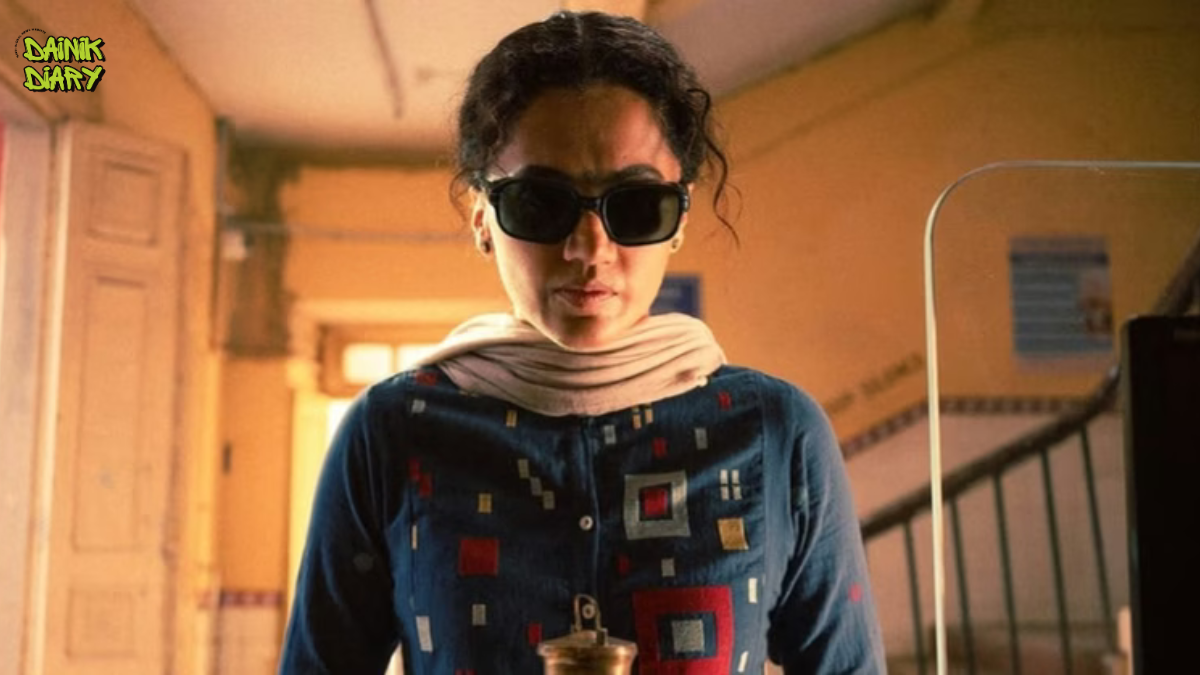
There is a familiar trick that thrillers repeatedly use: the protagonist is seconds away from being discovered, the villain is almost there and suddenly, something happens at precisely the right moment to prevent the inevitable.
Gandhari falls back on this device more than once.
The problem isn’t simply that audiences have seen such moments before. It’s that a film with such an interesting setting and emotionally powerful premise shouldn’t need to depend so heavily on familiar thriller mechanics.
Taapsee Pannu’s latest has plenty of ingredients that could have made it distinctive. Instead, it frequently feels caught between what it wants to become and the kind of thriller audiences already know too well.
A Mother Searching for Her Kidnapped Daughter
At the centre of Gandhari is Bani (Taapsee Pannu), who lives with her husband Gokul (Ishwak Singh) and their young daughter.
Their lives collapse when the child is kidnapped.
But what initially appears to be an isolated abduction gradually begins pointing towards something much larger a possible racket operating within the town.
A new police officer, played by Jatin Sarna, arrives to accelerate the investigation. Bani and Gokul, however, are unwilling to simply wait for the authorities.
They begin searching for their daughter themselves.
That decision pushes them deeper into a world they seemingly know very little about although Gandhari eventually complicates that assumption.
Joypurra Is One of ‘Gandhari’s’ Strongest Ideas
The film’s most fascinating element is arguably not a character at all.
It’s Joypurra.
The town is constructed almost like its own mysterious ecosystem, filled with performers, outsiders, hidden identities and an uneasy relationship between those operating outside conventional society and the people supposedly responsible for enforcing the law.
Then there are its tunnels.
Joypurra appears to contain a maze beneath its surface, giving the film an opportunity to create a physical representation of the mystery Bani is attempting to navigate.
There is genuine imagination in this world-building.
Unfortunately, Gandhari doesn’t always know how to turn that fascinating environment into equally fascinating storytelling.
The Biggest Problem Is the Missing Emotional Connection
For a story built around a mother desperately searching for her kidnapped child, Gandhari should hit emotionally before almost anything else.
That is where the film struggles.
The narrative jumps quickly into its central incident, leaving relatively little room for audiences to understand Bani and her family before everything falls apart.
As a result, the plot begins moving before the emotional foundation has been fully established.
The screenplay remains more interested in what happens next than in making audiences deeply understand the people experiencing those events.
That becomes a significant weakness because Bani is supposed to be the film’s emotional anchor.
Her desperation is understandable. Her determination is believable. But understanding a character’s motivation isn’t necessarily the same as becoming emotionally invested in them.
For a movie revolving around maternal love and an apparently unbreakable resolve, that distance hurts.
Some Twists Actually Work
That doesn’t mean Gandhari is completely predictable.
The film finds stronger ground around its midpoint when Bani is forced to confront someone she considered an ally.
Another unexpected development involving the death of an important character provides one of the narrative’s more effective shocks.
These moments demonstrate what Gandhari can accomplish when it stops relying on standard thriller rhythms.
The problem is that the surprises aren’t consistent enough.
Bani’s Past Could Have Been the Film’s Secret Weapon
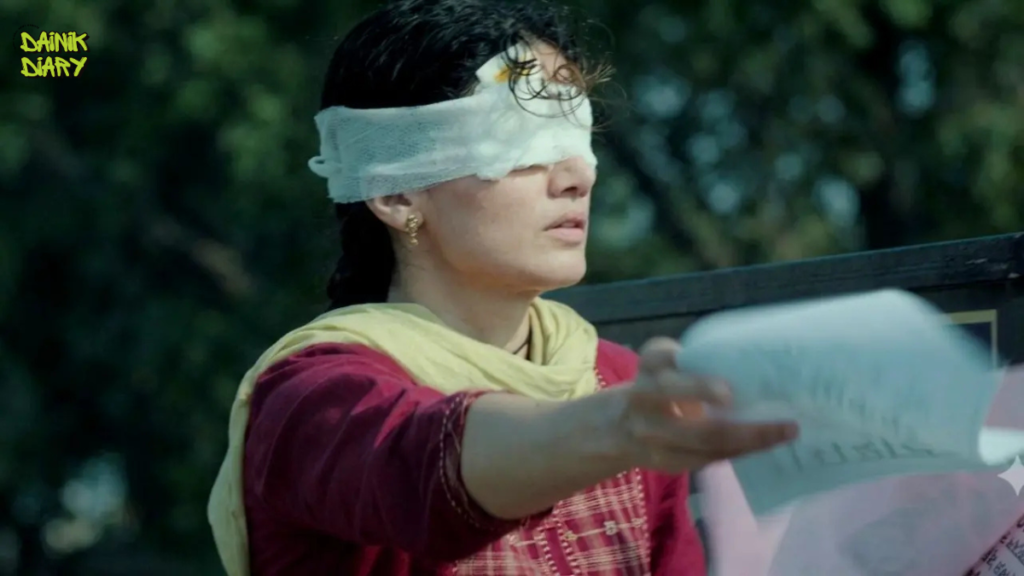
One of Gandhari’s more unusual ideas involves Bani’s temporary blindness and the eventual revelation surrounding her past as a performance artist.
Her abilities were shaped by performing within limitations.
It is an intriguing character detail because it could have transformed Bani into a genuinely unconventional thriller protagonist.
Instead of simply watching another determined parent fight through impossible circumstances, audiences could have experienced those circumstances through someone whose unusual skills and past directly shaped how she approached danger.
But the film doesn’t exploit this element as effectively as it could have.
The idea exists.
Its full storytelling potential doesn’t.
Taapsee Pannu Delivers Vulnerability, but the Role Feels Familiar
Taapsee Pannu remains committed to Bani throughout.
There are moments when she successfully exposes the character’s vulnerability beneath the determination, particularly as the scale of what she is confronting becomes increasingly apparent.
But there is also an unavoidable sense of familiarity.
Bani feels like another variation of the resilient, determined woman pushed into extraordinary circumstances that Pannu has played effectively before.
The performance itself isn’t the problem. The character simply doesn’t provide enough new material to completely separate Bani from some of the actor’s previous work.
Mita Vashisth and Chhaaya Kadam Leave an Impression
Interestingly, some of the film’s strongest supporting presence comes from its female cast.
Mita Vashisth and Chhaaya Kadam, despite having comparatively smaller roles, bring welcome grit and personality whenever the narrative gives them room.
Meanwhile, Ishwak Singh and Jatin Sarna are capable performers who feel underserved by the screenplay.
Both could have added considerably more to the drama had their characters received greater depth.
When ‘Gandhari’ Finally Makes You Feel the Stakes
There are rare moments when the film’s emotional and moral scale suddenly becomes clear.
ALSO READ : Where Is Divya Spandana Now? From Kannada Cinema Star to Politics Here’s What Ramya Is Doing Today
Bani eventually realises that the obstacles standing between her and her daughter are far greater than she initially imagined the “Magrasurs” of this world seem almost endless.
Later, before a major action sequence, two important characters face a deeply uncomfortable confrontation involving a choice that feels almost impossible to make.
These scenes work because the danger becomes more than physical.
For a brief period, the audience is forced to consider what these characters might actually sacrifice and what lines they might cross when pushed far enough.
Had Gandhari maintained that intensity throughout, it could have been a very different film.
Visually Ambitious, Tonally Confused
Director Devashish Makhija and cinematographer Amit Roy clearly aim for visual scale.
There is a cinematic ambition in how the film presents its world and action, suggesting material designed to feel bigger than a conventional streaming thriller.
Ironically, this also exposes one of Gandhari’s biggest identity problems.
The film seems trapped between a mainstream theatrical action-thriller and an unconventional OTT drama.
It wants the urgency and spectacle of the former while reaching for the strangeness and narrative freedom of the latter.
Neither side completely wins.
The background score also tends to arrive too predictably around particular dramatic cues, making moments that should feel organic seem more mechanically constructed.
Gandhari Movie Review: Final Verdict
Gandhari isn’t short of ambition.
Its fictional world has personality. Its central premise carries obvious emotional weight. There are unexpected deaths, betrayals, moral dilemmas and an unconventional protagonist whose past should have offered enormous storytelling possibilities.
But having interesting pieces isn’t the same as assembling them into an unforgettable thriller.
The film relies too often on familiar suspense devices while failing to develop the emotional bond with Bani strongly enough. Its world-building promises something unusual, only for the narrative to repeatedly return to recognisable territory.
Taapsee Pannu gives the role determination and vulnerability, while Mita Vashisth and Chhaaya Kadam make the most of their limited space.
Still, Gandhari ultimately feels like a thriller reaching for something distinctive without quite finding it.
It has the hunger of an underdog story and ambitions of a larger spectacle but not enough freshness or emotional force to make all those ambitions land.







Pingback: Manoj Bajpayee’s ‘Ghooskhor’ May Get A New Name After Legal Row, Actor Reveals What Happens Next: ‘It Will Be Out In…’ - Dainik Diary - Authentic News