
Politics
TN CM Vijay Changes Delimitation Pitch Within a Week? Assembly Demand Gives Way to ‘No State Should Lose Its Share’ Stand…
Tamil Nadu Chief Minister C Joseph Vijay’s latest formulation on delimitation appears broader than the position he took in the Assembly on August 12, raising questions over whether his stance has softened.

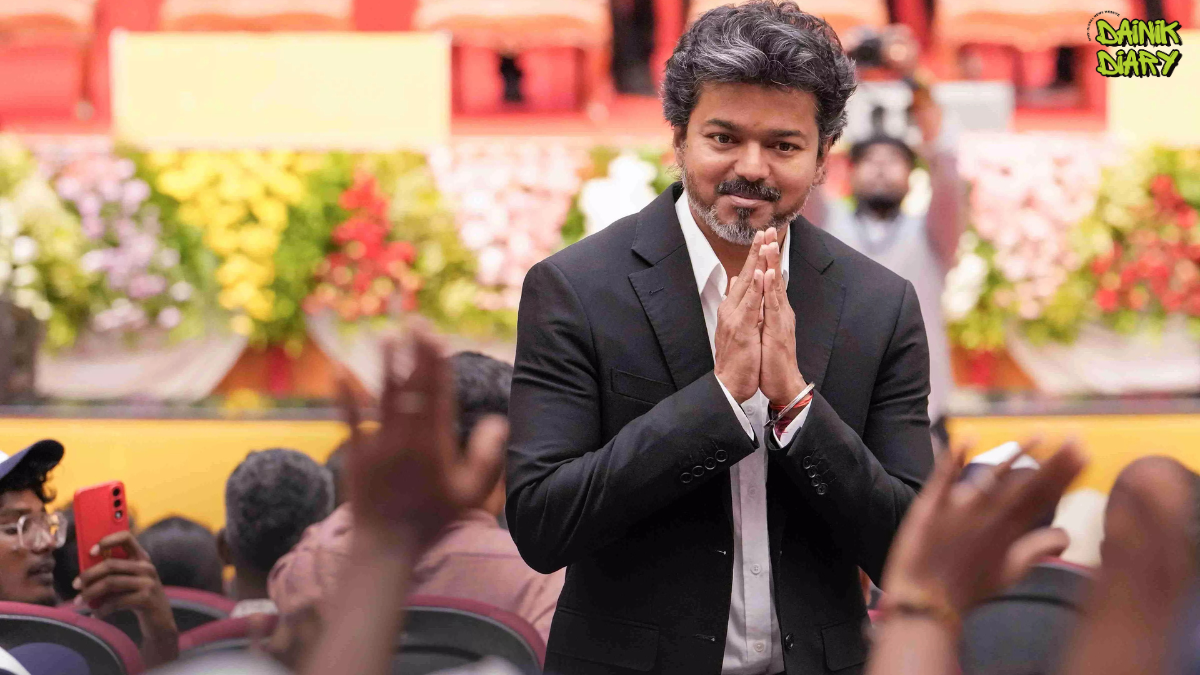
Tamil Nadu Chief Minister C Joseph Vijay appears to have changed the emphasis of his position on the politically sensitive issue of delimitation within just a week.
The shift became visible in Vijay’s remarks at the Southern Zonal Council meeting on Thursday, August 20, where he called for a clear guarantee that no state should see its percentage share of parliamentary representation reduced because of its success in population stabilisation.
The formulation differs from the much more rigid position Vijay adopted in the Tamil Nadu Assembly on August 12.
At that time, the Chief Minister’s resolution called for the Lok Sabha’s strength to remain permanently fixed at 543 seats and for the existing inter-state distribution of seats to be retained permanently.
However, in his latest remarks, Vijay did not repeat either of those specific demands.
What Did Vijay Demand on August 12?
In the resolution moved in the Tamil Nadu Assembly on August 12, Vijay sought a permanent freeze on the current strength of the Lok Sabha.
The resolution argued that the existing 543-seat strength of the House should be retained and that the present allocation of seats among states should also remain unchanged.
In effect, that position left little room for either an expansion of the Lok Sabha or a redistribution of seats between states following delimitation.
The issue is particularly sensitive for southern states, which have generally performed better in population stabilisation than several northern states.
What Has Vijay Said Now?
Speaking at the Southern Zonal Council, Vijay used a different formulation.
He urged the Union government to provide a “clear legislative assurance” that no state would suffer a reduction in its percentage of representation in Parliament because of population stabilisation.
The key difference lies in what the latest demand does not say.
Vijay did not reiterate his earlier call to permanently keep the Lok Sabha at 543 seats. He also did not specifically insist that the current state-wise distribution of seats be retained permanently.
Instead, his latest position focuses on protecting each state’s percentage share of parliamentary representation.
Why Is the Difference Significant?
The distinction could have important implications for the broader delimitation debate.
Vijay’s August 12 Assembly resolution effectively opposed any change to both the size of the Lok Sabha and its existing inter-state allocation.
The August 20 formulation is comparatively broader. It could potentially accommodate a situation in which the Lok Sabha’s overall strength is increased or its allocation is altered, as long as a state does not lose its percentage share of parliamentary representation.
That does not necessarily mean Vijay has abandoned his earlier position altogether. However, the change in wording is significant enough to invite questions about whether the Tamil Nadu government is adjusting its strategy ahead of the larger national debate on delimitation.
ALSO READ : Ravi Teja’s ‘Nickname’ for Irumudi Co-Star Nakshathra Sparks Online Debate: ‘Why Would You Say That to a Young Girl?’
Why Southern States Are Concerned About Delimitation
Delimitation is expected to become one of the major political issues surrounding the future composition of the Lok Sabha.
Southern states have raised concerns that using more recent population figures to determine parliamentary representation could reduce their relative influence because they have achieved greater success in controlling population growth.
The argument from these states is that they should not be politically penalised for successfully implementing population-control policies.
Vijay’s latest demand appears aimed at addressing precisely that concern by seeking a guarantee that population stabilisation will not result in a reduction in a state’s proportional parliamentary representation.
Vijay’s Position Comes Amid Wider Southern Coordination

The Chief Minister’s remarks come at a time when southern states are increasingly coordinating their response to the delimitation issue.
The debate is not merely about the number of Lok Sabha seats. At its core is a larger question about how population, federal representation and political weight should be balanced in India’s parliamentary system.
For Tamil Nadu, the issue has emerged as an important political and federal concern.
Vijay’s latest formulation therefore leaves an important question open: Is Tamil Nadu now prepared to accept a larger Lok Sabha, provided its percentage share is protected?
His Assembly resolution suggested one answer. His Southern Zonal Council remarks appear to suggest another.
Whether this is a genuine change in policy or simply a broader way of presenting the same concern could become clearer as the delimitation debate moves forward…