Business
IndiGo Hits Record 66.3% Market Share as Air India Cuts Flights: What’s Behind the Sudden Shift in India’s Aviation Race?
IndiGo carried 89.2 lakh passengers in June and reached its highest-ever market share, while Air India’s passenger numbers fell to their lowest level of the year amid capacity rationalisation and aircraft availability challenges.


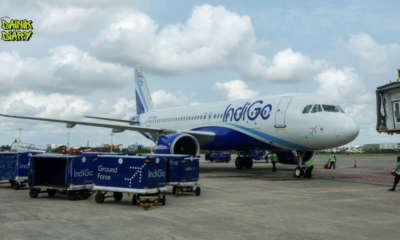
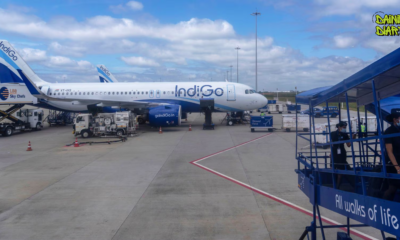
India’s aviation market is witnessing a significant reshuffle, with IndiGo emerging as the biggest beneficiary of capacity reductions by rivals. According to the latest data released by the Directorate General of Civil Aviation (DGCA), IndiGo reached an all-time high domestic market share of 66.3% in June, underlining its growing dominance in the Indian skies.
The airline carried around 89.2 lakh passengers during the month, compared with approximately 99 lakh passengers in May and 89.7 lakh in April. While the overall passenger numbers fluctuated, IndiGo’s share of the domestic market climbed to a record level as competitors faced operational and capacity-related challenges.
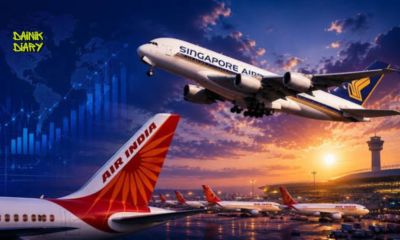
The biggest change was visible at Air India, which carried around 32 lakh passengers in June—its lowest monthly figure of the year. The airline had recorded its strongest passenger numbers in January, when it carried nearly 40 lakh passengers.
Read More- ‘Consumer Choice Must Not Be Manipulated…’: SpiceJet Fined ₹1 Lakh Over ‘Dark Patterns’ in Flight Booking Platform
The development comes at a challenging time for Air India as the airline works on a major network rationalisation exercise. The **Tata Group-owned carrier has been reducing capacity across selected routes as it deals with operational pressures, aircraft availability issues and a difficult international aviation environment.
Air India’s financial performance has also remained under pressure. The airline reported a revenue loss of more than Rs 26,000 crore in FY25, adding to the urgency around its ongoing restructuring and operational overhaul.
However, the current capacity reduction may not be permanent.
Air India has indicated that it plans to restore suspended domestic and international capacity from September, following the completion of its network rationalisation programme. The airline’s Chief Commercial and Transformation Officer, Nipun Aggarwal, has said the carrier expects operations to gradually return to normal as capacity becomes available.
Some international routes, however, could remain affected for longer. Flights to destinations such as Chicago and Washington are expected to stay suspended amid aircraft availability concerns, highlighting the continuing pressure on the airline’s long-haul network.
IndiGo’s Dominance Grows
The latest figures further strengthen IndiGo’s position as India’s leading airline. With its extensive domestic network, high-frequency operations and large fleet, the airline has been able to capture a greater share of the market at a time when other carriers are reducing capacity.

The record 66.3% market share is a major milestone for the airline and shows just how dramatically India’s competitive aviation landscape has shifted.
But IndiGo isn’t the only airline making gains.
Akasa Air Emerges as a Fast-Growing Challenger
India’s youngest major airline, Akasa Air, also recorded its strongest market share of the year in June. The airline’s share rose to 6.4%, while its passenger load factor reached an impressive 92.2%.
That figure indicates that Akasa Air is filling a large proportion of the seats available on its flights, a positive sign for an airline that continues to expand its network.
The carrier is also reportedly looking at an investment of around Rs 10,000 crore to support its growth plans, even as India’s aviation industry navigates geopolitical uncertainty and rising operational challenges.
West Asia Crisis Adds to Airline Pressure
The aviation sector’s troubles cannot be separated from the wider geopolitical situation.
The conflict and instability in West Asia have created fresh challenges for airlines operating between India and the Gulf region. Capacity on several Middle East routes was sharply reduced during March and April, affecting carriers that rely heavily on international traffic.
For airlines such as Air India Express and SpiceJet, the Gulf region remains particularly important. More than 90% of their international capacity is deployed towards Gulf destinations, making them especially vulnerable to disruptions in the region.
The situation has also raised questions about how India’s airlines will balance domestic expansion with international ambitions.
A New Chapter in India’s Airline Battle?
The June data paints a clear picture: IndiGo is strengthening its grip on India’s domestic aviation market, while Air India is temporarily stepping back to reorganise its network and address capacity constraints.
The real test, however, may come later this year.
If Air India successfully restores its suspended capacity from September, the competitive landscape could change once again. The airline’s ongoing transformation under the Tata Group is aimed at creating a stronger global carrier, but rebuilding its network while dealing with aircraft shortages and financial pressures will take time.
For passengers, the shifting market could bring both opportunities and challenges. More capacity could eventually mean greater choice and potentially competitive fares, but continued disruptions on international routes may keep the industry under pressure.
For now, though, one thing is unmistakable: IndiGo has reached a new high, and India’s aviation market is becoming a very different battlefield.