
Business
IndiGo Sounds Alarm Over Airport Operators Owning Airlines: Rahul Bhatia Warns of ‘Massive Conflict-of-Interest’ Concerns…
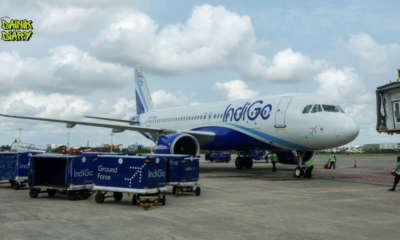
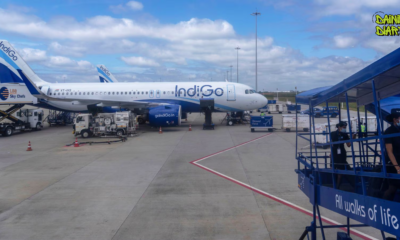
IndiGo promoter and Managing Director Rahul Bhatia has opposed a proposed policy change that could allow airport operators to take larger stakes in airlines, arguing that the move could create serious conflicts of interest and raise questions about fair competition.


A major debate is brewing over the future structure of India’s aviation industry, with IndiGo raising concerns about a proposed policy change that could allow airport operators to own a larger stake in airlines.
Rahul Bhatia, promoter and Managing Director of IndiGo’s parent company InterGlobe Aviation, has strongly opposed the idea, warning that giving airport operators the freedom to invest in airlines could create significant conflicts of interest.
Speaking during a post-earnings call, Bhatia questioned whether such a model would genuinely benefit passengers and pointed out that he was not aware of any global precedent for airport operators simultaneously owning and operating airlines.
His comments come at a time when the Indian government is reportedly considering changes to existing rules that restrict the operators of major airports in Delhi and Mumbai from holding more than a 10% stake in a scheduled airline.
If those restrictions are relaxed, India’s aviation landscape could look very different in the years ahead.
Why IndiGo Is Worried About the Proposed Change
At the heart of the controversy is the possibility that airport operators could become significant investors in airlines.
Bhatia has argued that this could create a potential conflict of interest because airport operators control critical infrastructure that airlines depend on.
Airports decide or influence access to valuable resources such as terminal facilities, parking positions and flight slots. If the same business group also has a significant financial interest in an airline, concerns could arise over whether competing carriers receive equal treatment.
According to Bhatia, the absence of a clear global precedent makes the proposal even more difficult to understand.
The IndiGo chief questioned how such a move would ultimately serve consumers’ interests, putting the spotlight on competition and passenger choice at a time when India’s aviation market is already undergoing rapid consolidation.
Read More- Tesla Shares Slide Nearly 5% After Earnings Shock: Negative Cash Flow and Profit Miss Rattle Investors
Adani Group and GMR Could Become Key Players
The proposed policy change could potentially open the door for major airport operators to enter the airline business more aggressively.
The Adani Group, which operates Mumbai’s airport, is widely expected to be among the potential first movers if the rules are changed. It could reportedly consider acquiring a stake in an existing airline or investing in a new aviation venture.
The GMR Group, operator of Delhi’s Indira Gandhi International Airport, could also potentially explore opportunities at a later stage.
Any such move would add a new dimension to India’s aviation industry, where airport infrastructure and airline operations have traditionally remained separate businesses.
For passengers, however, the question is whether increased participation by large business groups would lead to more competition — or create new challenges for airlines trying to compete for airport infrastructure.
IndiGo Shares Under Pressure
The controversy has also had an impact on the stock market.

Shares of InterGlobe Aviation, the parent company of IndiGo, reportedly declined for two consecutive trading sessions as investors assessed the possible impact of a policy change.
IndiGo currently controls roughly two-thirds of India’s domestic aviation market, making it by far the country’s largest airline.
That dominant position could potentially make the carrier more vulnerable to changes that encourage new airline investments by airport operators.
For investors, the concern is not simply about new competitors entering the market. It is also about whether rival airlines backed by airport operators could gain advantages in access to critical airport infrastructure.
The issue is particularly sensitive in major aviation hubs such as Delhi and Mumbai, where airport capacity and slots are highly valuable.
Government Wants More Airlines in the Market
While IndiGo has raised concerns about the proposal, government officials appear to have a different priority.
Senior officials in the aviation ministry have reportedly argued that a country with India’s economic potential should have a broader airline ecosystem rather than relying heavily on two major airline groups.
At present, IndiGo dominates the domestic market, while the Tata Group’s Air India Group has emerged as its primary large-scale competitor following the consolidation of Air India and Vistara and the expansion of its aviation operations.
The government’s broader objective appears to be increasing competition and ensuring that India’s rapidly growing air passenger market is served by multiple strong airlines.
The challenge, however, is finding the right balance.
Encouraging new investment could strengthen competition, but allowing airport operators to own airlines could also raise concerns about neutrality and fair access to airport infrastructure.
That is the central issue now facing policymakers.
CCI Seeks Public Comments on IndiGo’s Slot Proposal
The airport ownership debate comes at the same time as another important development involving IndiGo.
The Competition Commission of India (CCI) has invited public comments on a commitment proposal submitted by IndiGo in connection with an investigation following the airline’s widespread schedule disruptions in December.
As part of its proposal, IndiGo has reportedly offered to temporarily release certain domestic flight slots at airports.
The CCI notice stated that after such slots are handed over, the relevant airport operator or authority could decide how to reallocate the slots and dates for routes.
The proposal could potentially allow other airlines to access valuable airport capacity, depending on how the slots are eventually redistributed.
The development is significant because airport slots are among the most valuable assets in the aviation industry, particularly at airports where demand is high and capacity is limited.
A Bigger Battle Over India’s Aviation Future
The two developments — the proposed relaxation of airport operator investment rules and the CCI’s review of IndiGo’s slot commitment — highlight a larger question facing Indian aviation.
India’s air travel market is growing rapidly, but the industry is also becoming increasingly concentrated around a small number of major players.
The government wants more airlines and greater competition. IndiGo, meanwhile, is warning that changing the rules around airport ownership could create new conflicts of interest.
Both sides agree on one thing: India’s aviation sector needs to evolve.
The disagreement is over how that evolution should happen.
If airport operators are eventually allowed to take larger stakes in airlines, India’s aviation map could change significantly. Groups that currently operate airports could become powerful players in airline operations as well, potentially reshaping competition on some of the country’s busiest routes.
For passengers, the outcome could ultimately determine whether India’s aviation boom leads to more choices, better connectivity and competitive fares — or whether new conflicts emerge around access to the airports that keep the entire industry moving.
For now, the government faces a delicate balancing act.
And with Rahul Bhatia openly raising concerns, the debate over who should control India’s airports — and who should be allowed to fly from them — is unlikely to disappear anytime soon.










Pingback: From ₹5,000 To A ₹50 Crore Brand: How Parul Gulati Turned Nish Hair Into One Of India's Biggest Founder-Led Success Stories - Dainik Diary - Authentic News