India News
‘AI Watches Every Face?’ Viral Jantar Mantar Videos Spark Aadhaar Debate as Delhi Police Clarifies Facial Recognition Use
Videos showing AI-powered surveillance vans at Delhi’s Jantar Mantar have triggered nationwide questions over facial recognition, privacy, and whether protesters’ identities are being linked to Aadhaar—though authorities say there is no evidence of such a connection.

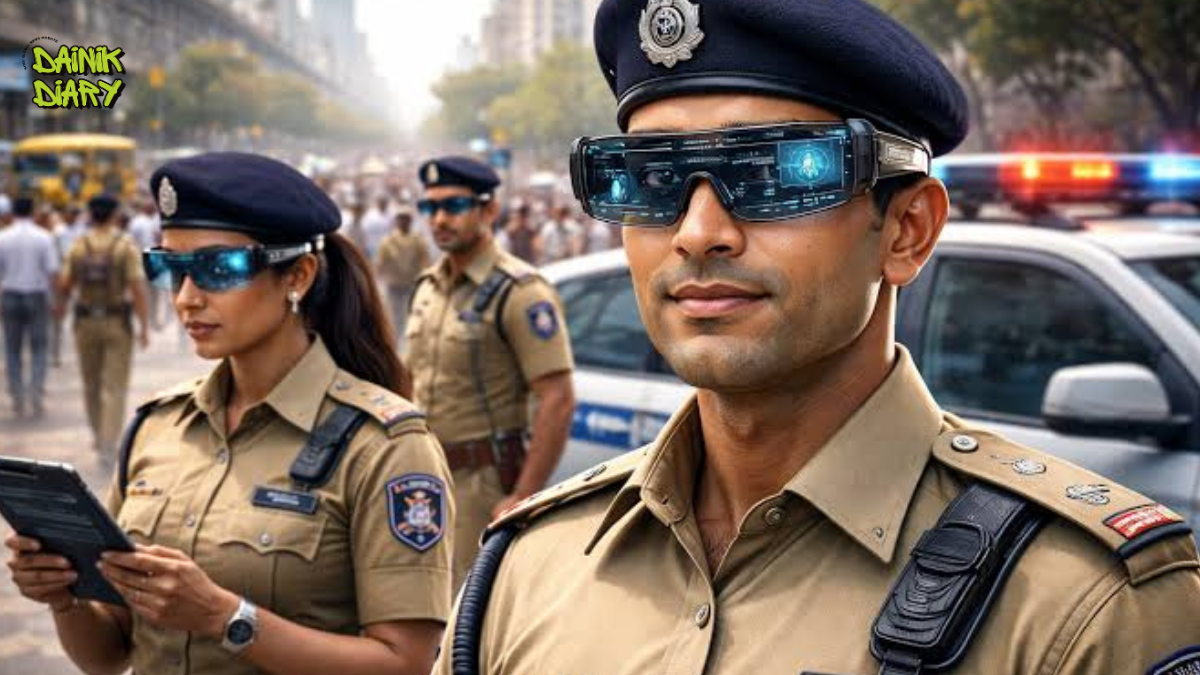
AI Surveillance at Jantar Mantar Triggers Fresh Privacy Debate
The ongoing student protests at Jantar Mantar in New Delhi have taken a new turn after videos showing AI-powered facial recognition technology being used by Delhi Police went viral on social media. The footage has sparked widespread discussion over digital surveillance, privacy rights, and speculation about whether protesters’ identities are being matched with Aadhaar records.
Several clips circulating on X (formerly Twitter) appear to show a mobile surveillance vehicle equipped with 360-degree CCTV cameras and a monitoring system displaying photographs and personal details of certain individuals. The videos have been widely shared by activists and social media users, raising concerns about how the information is being accessed.
However, there is currently no official evidence or confirmation that the surveillance system is linked to the Aadhaar database.
What Is Delhi Police Saying?
According to reports, Delhi Police has deployed two advanced surveillance vehicles near the protest venue.
One vehicle acts as a mobile monitoring unit, collecting live footage from CCTV cameras installed around the protest site. The second vehicle reportedly uses artificial intelligence (AI) to analyse the video feed and compare faces captured on camera with images available in an existing police criminal database.
A senior police officer explained that the system is designed to identify individuals with criminal records, not ordinary protesters.
Officials stated that facial recognition software scans the live footage and alerts authorities only if a face matches photographs already stored in the police database.
Where Did the Aadhaar Speculation Come From?
The viral videos do not display any reference to Aadhaar, yet many social media users questioned whether the technology could be connected to the national identity database because personal details appeared alongside scanned faces.

So far, Delhi Police has neither confirmed nor suggested that Aadhaar data is being accessed.
This has instead raised another important question among legal experts and privacy advocates—if not Aadhaar, then which database is being used to retrieve personal information?
Authorities have not publicly disclosed the exact source of the data visible on the monitoring screens, leaving room for continued public debate.
Read More- Virat Kohli’s ‘Unfinished Business’ at Lord’s… Can the Batting Great Silence Critics in the Series Decider?
The Ikshana AI Surveillance Vehicle
The facial recognition technology is reportedly housed inside the Ikshana surveillance vehicle, which was introduced by Delhi Police ahead of the 2023 G20 Summit as part of enhanced security arrangements.
The AI-equipped vehicle was designed to strengthen public safety by analysing live video feeds and assisting officers in identifying potential security threats during major public gatherings.
Its deployment at a student protest has now brought renewed attention to the growing role of artificial intelligence in law enforcement.
Protesters Voice Privacy Concerns
Many students participating in the demonstrations say the visible presence of surveillance cameras has created an atmosphere of discomfort.
Some protesters have begun covering their faces, fearing that images collected during the demonstrations could remain stored in official records and potentially affect future opportunities, particularly for candidates preparing for government recruitment examinations.
One UPSC aspirant reportedly expressed concern that being identified during a public protest could lead to profiling in the future.
Questions have also emerged over how long the recorded footage will be retained.
Police officials have reportedly indicated that there is no fixed timeline for deleting surveillance recordings, especially if they could become relevant in future investigations.
Legal Challenge Reaches Delhi High Court
The controversy has now moved beyond social media.
A petition before the Delhi High Court argues that continuous videography and AI-based monitoring of peaceful protesters may infringe upon the right to privacy and the constitutional right to peaceful assembly.
Delhi Police, however, has defended the practice, stating that videography at the protest site is conducted solely to maintain law and order, ensure public safety, and document events—not to carry out unlawful surveillance.
A Debate That Goes Beyond One Protest
The incident has reignited a broader national conversation about the balance between public security and individual privacy in an era of rapidly advancing AI surveillance technologies.
While authorities insist the system is intended only for identifying known criminals, the lack of public clarity regarding the databases involved has fuelled questions from citizens, legal experts, and civil rights groups alike.
Until official details are released, speculation regarding Aadhaar remains unverified, making transparency from authorities increasingly important as technology becomes a larger part of policing in India.