
Politics
Who Are the Faces Behind the CJP Movement? Meet the IITian, Lawyer, Journalist and Farm Activist Leading India’s Gen Z Protest
From Abhijeet Dipke to Ashutosh Ranka, Ratna Singh, Saurav Das, and Deepak Baliyan, the Cockroach Janta Party (CJP) has brought together professionals from diverse backgrounds to spearhead one of India’s most talked-about youth-led movements.

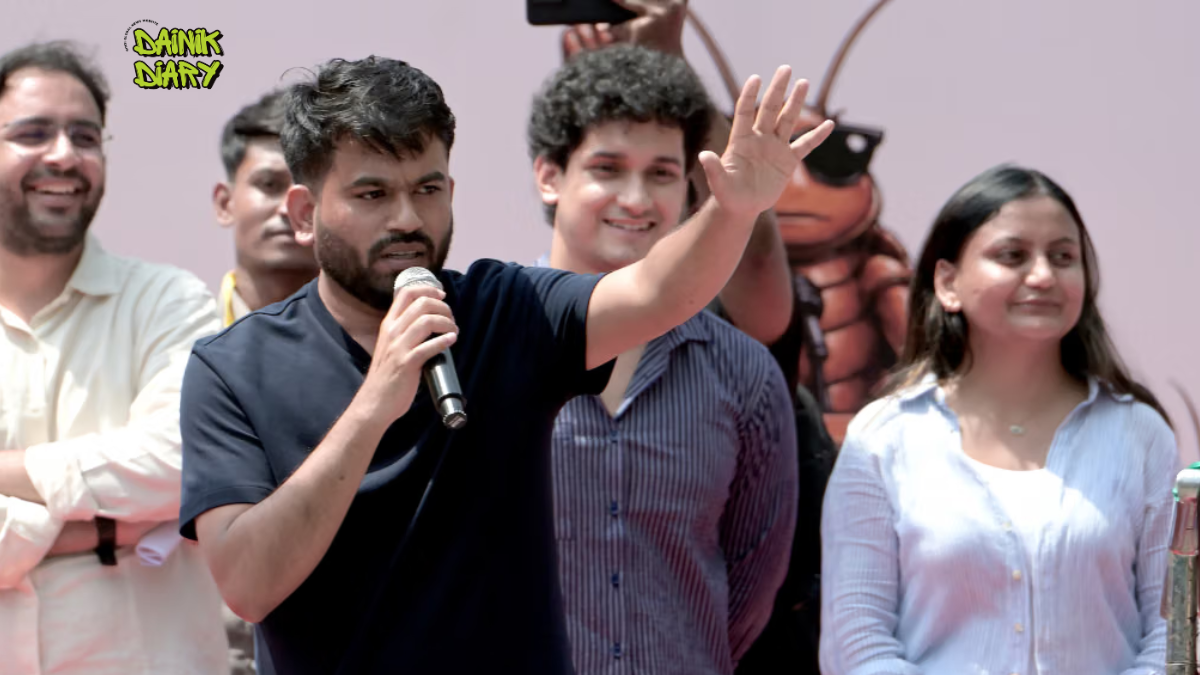
For nearly two months, the Cockroach Janta Party (CJP) has remained at the centre of India’s political conversation. What began as a satirical online campaign soon transformed into a nationwide movement, drawing lakhs of students, job aspirants, and young professionals to protests across the country.
Initially focused on issues such as examination irregularities and unemployment, the movement gradually expanded into a broader campaign demanding greater accountability from the government. While the CJP has consistently maintained that it functions through collective leadership rather than a single supreme leader, a handful of individuals have emerged as the movement’s most recognisable faces.
Together, they represent a unique mix of journalism, law, engineering, public policy, and grassroots activism.
Abhijeet Dipke: The strategist who gave the movement a voice
At the heart of the CJP’s rise is Abhijeet Dipke, the founder who transformed widespread public frustration into an organised digital campaign.
Born in Chhatrapati Sambhajinagar (formerly Aurangabad), Maharashtra, Dipke studied journalism before pursuing a Master’s degree in Public Relations at Boston University in the United States. Before launching the movement, he worked in political communications and was associated with the Aam Aadmi Party (AAP) social media team between 2020 and 2023.
Supporters credit Dipke with recognising growing dissatisfaction among India’s youth and combining constitutional values, social media campaigns, and political satire into a movement that resonated across the country.
However, as the protests expanded beyond online mobilisation, internal organisational challenges also surfaced. Critics questioned his administrative leadership, while supporters argued that his greatest contribution remained his ability to communicate with a new generation of politically aware young Indians.
Despite debates surrounding his earlier political associations, Dipke continues to be regarded as the movement’s most recognisable public face.
Saurav Das: The journalist who became the movement’s communicator
If Dipke shaped the movement’s messaging, Saurav Das became its principal spokesperson.
A trained journalist from New Delhi, Das previously worked with several prominent publications, including The Caravan, The Hindu, The Wire, Article 14, Al Jazeera, and New Lines Magazine.
His background in investigative journalism and legal reporting helped him navigate media engagement during the protests. Das also co-founded Climate Action Front, an organisation focused on environmental governance and sustainability.
Within the CJP, he played a central role in negotiations with Union ministers and regularly addressed the media after key meetings.
Following the resignation of the Union Education Minister, Das faced criticism after videos showing CJP leaders celebrating went viral on social media. He defended the celebrations, describing them as an expression of Gen Z political culture.
Ashutosh Ranka: The IITian behind the policy framework
Among the movement’s leadership, Ashutosh Ranka is widely viewed as its policy architect.
Originally from Jaipur, Ranka studied Materials Science and Engineering at IIT Kanpur, where he also served as President of the Students’ Gymkhana.
After graduation, he worked at McKinsey & Company before earning a Master’s degree in Public Administration from the London School of Economics. He later worked with Gavi, the Vaccine Alliance, before returning to India to focus on governance and public policy.
Before joining the CJP, Ranka was associated with election strategy for the AAP and later founded Parivartan, a citizen-led platform addressing governance, education, and environmental issues in Rajasthan.
Within the movement, he became the chief policy strategist, helping prepare proposals and representing the organisation during discussions with the central government.
Supporters say his experience in governance made him an asset, while critics questioned whether the movement truly represented political outsiders.
Ratna Singh: The lawyer defending the movement
As legal challenges mounted during the protests, Ratna Singh emerged as one of the CJP’s most influential leaders.
A law graduate from Guru Gobind Singh Indraprastha University, Singh began her career as a legal journalist, covering constitutional and judicial affairs for Bar & Bench and later Scroll.in.
She eventually transitioned into litigation, bringing both legal expertise and media experience to the movement.
During the protests, Singh coordinated legal responses to FIRs, arrests, and constitutional issues while explaining the legal basis of the CJP’s demands in public forums.
Her supporters believe she became the movement’s constitutional voice, ensuring that protests remained focused on legal rights and democratic principles.
ALSO READ : ‘Abhijeet Dipke Is an Avatar of Lord Vishnu’: Uddhav Thackeray’s Remark on CJP Sparks Political Storm
Deepak Baliyan: Bringing farmers and rural youth into the movement
Representing grassroots activism within the leadership is Deepak Baliyan, who comes from a farming family in Alwar district, Rajasthan.
Before joining the CJP, Baliyan spent several years working with farmer organisations on issues affecting rural communities and agricultural livelihoods.
He holds a Master’s degree in Political Science from Maharaja Surajmal Brij University and became involved with the CJP through Ashutosh Ranka.
During the protests, Baliyan coordinated the organisation’s Jaipur demonstration, managing volunteers and helping strengthen the movement’s presence across Rajasthan.
As one of the party’s spokespersons, he has consistently argued that unemployment, examination paper leaks, and agrarian distress are deeply interconnected challenges affecting India’s youth.
A movement built on collective leadership
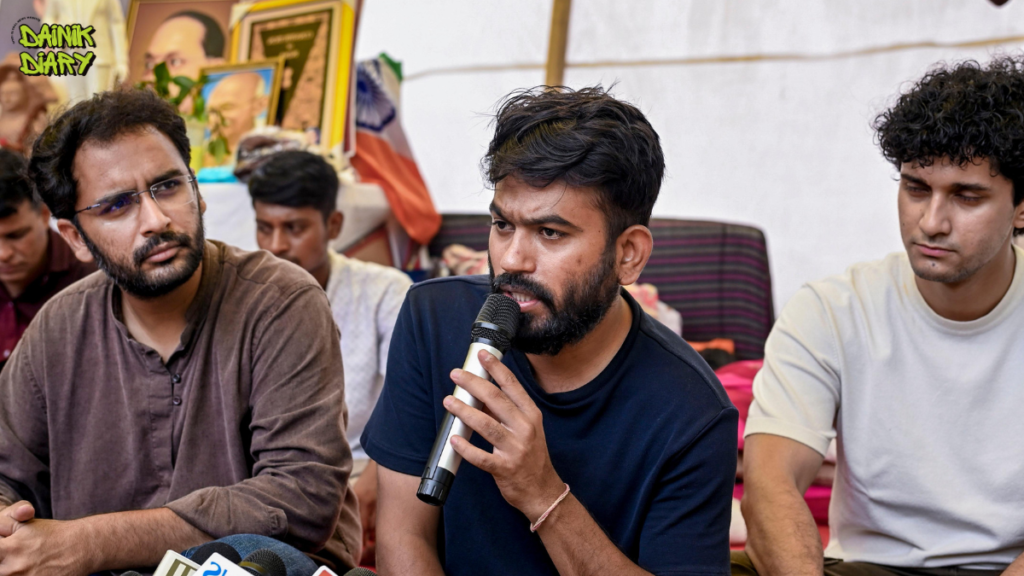
Unlike conventional political parties centred around a single leader, the CJP has repeatedly described itself as a collectively led organisation.
Its leadership combines communication, public policy, legal expertise, journalism, and grassroots mobilisation, creating a structure that differs from traditional political organisations.
While internal disagreements and public criticism have accompanied the movement’s rapid growth, the CJP has undeniably reshaped conversations around youth participation, unemployment, education, and governance.
Whether it ultimately evolves into a lasting political force or remains a defining chapter in India’s recent protest history, the movement has already demonstrated how a digitally connected generation can mobilise around shared concerns and bring new voices into the national political debate.








Pingback: Arvind Kejriwal Alleges BJP 'Threatened' Automakers Over E20 Petrol Debate; BJP Hits Back With Industry Backing - Dainik Diary - Authentic News
Pingback: Ravi Kishan Defends Gorakhpur Waterlogging With Amitabh Bachchan Comparison: 'Even Mumbai Faces Flooding' - Dainik Diary - Authentic News
Pingback: 'Why Is Amit Shah So Scared?': Rahul Gandhi Demands SC-Monitored Probe Into Alleged Crackdown On Student Protesters - Dainik Diary - Authentic News
Pingback: Priyanka Gandhi Breaks Silence On India Hockey Jersey Row, Says ‘No Matter What They Change…’ As Orange Kit Sparks Nationwide Debate - Dainik Diary - Authentic News
Pingback: Kharge Takes A Swipe At PM Modi’s Midnight Instagram Video: “Couldn’t Sleep?” Congress Questions Centre’s Anti-Paper Leak Push - Dainik Diary - Authentic News