
Politics
RSS Leader Atul Limaye Calls CJP Protest a ‘Threat to Democracy’; Abhijeet Dipke Fires Back with Sharp Rebuttal
A fresh political war of words has erupted after RSS leader Atul Limaye questioned the ideology behind the CJP-led NEET protest, prompting founder Abhijeet Dipke to accuse the RSS of lacking the moral authority to label others anti-national.

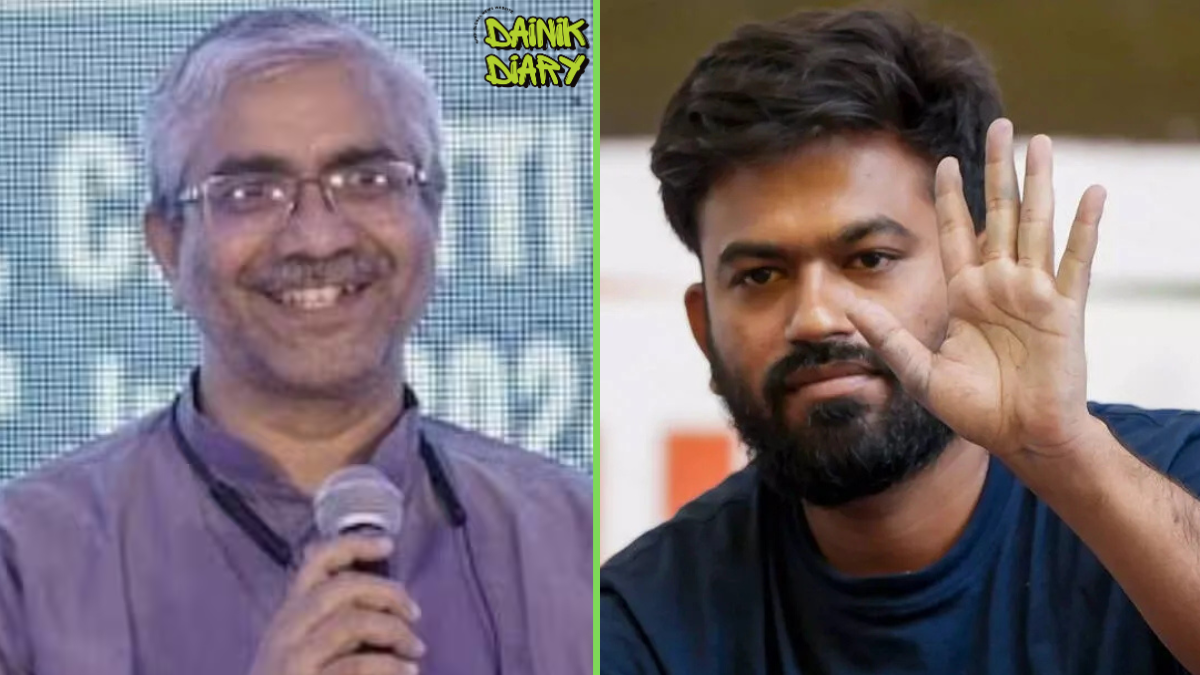
A fresh political controversy has broken out over the Cockroach Janta Party (CJP)-led movement against the NEET-UG examination, with Rashtriya Swayamsevak Sangh (RSS) leader Atul Limaye describing the agitation as a broader political experiment that, according to him, raises concerns about democratic institutions.
The remarks, made during an event organised by the Akhil Bharatiya Vidyarthi Parishad (ABVP) in Chhatrapati Sambhajinagar on July 30, drew a sharp response from CJP founder Abhijeet Dipke, who rejected the allegations and accused the RSS of lacking the moral authority to brand others as anti-national.
Atul Limaye Questions Evolution of CJP Movement
Addressing the gathering, Limaye said the student protest over the alleged NEET-UG paper leak should be examined beyond its immediate demands, arguing that it gradually evolved into a wider political mobilisation.
According to him, the movement initially struggled to gain traction before expanding into a coalition involving multiple student groups, labour organisations and civil society bodies.
Limaye claimed the protest had become a case study in what he described as attempts to challenge democratic institutions through democratic methods. He argued that understanding the movement required analysing its timeline, participating organisations and ideological foundations.
Claims of Wider Political Mobilisation
During his speech, Limaye said that after the CJP launched its campaign in early June, the movement gathered momentum following a sit-in at Jantar Mantar beginning on June 20.
He claimed that several organisations later joined the protest, including student bodies such as the All India Students’ Association (AISA) and the Students’ Federation of India (SFI), along with labour unions, women’s groups and civil rights organisations.
Limaye also referred to the writings of Italian political thinker Antonio Gramsci, suggesting that the movement reflected an effort to reshape political discourse while functioning within democratic structures.
He questioned what he described as anti-Hindu rhetoric during parts of the protest and the participation of leaders from various political parties, arguing that the movement’s evolution deserved closer scrutiny.
These remarks reflect Limaye’s political assessment of the protests.
ALSO READ : ‘PM Enjoys Playing the Victim Card’: Jairam Ramesh Demands Modi’s Apology Over NEET, Ram Mandir Trust Row and Demonetisation
Dipke Rejects RSS Allegations
Responding to the comments, Abhijeet Dipke dismissed Limaye’s criticism and strongly rejected the suggestion that the CJP movement was anti-national.
Dipke also referred to historical controversies surrounding the RSS, saying:“Those who murdered Mahatma Gandhi are calling us anti-national. The murderers of Mahatma Gandhi have no moral right to call anyone else anti-national.”
His remarks were made in response to Limaye’s criticism and reflect Dipke’s position.
Background of the CJP Protest

The Cockroach Janta Party emerged during the nationwide protests over the NEET-UG 2026 controversy.
The organisation led a 37-day protest at Jantar Mantar in New Delhi, demanding action on alleged examination irregularities, compensation for certain affected families, and accountability from the government.
The protest concluded on July 25 after the organisation said it had received assurances from the government regarding several of its demands.
Since then, the CJP has continued to remain active in public discourse, with Dipke stating on multiple occasions that the organisation intends to continue functioning as a people’s movement rather than entering electoral politics.
Political Debate Continues
The exchange between Limaye and Dipke highlights the increasingly polarised debate surrounding the student-led protests.
While RSS leaders have questioned the broader political direction of the movement, CJP leaders maintain that their campaign is focused on examination reforms, student rights and public accountability.
The contrasting narratives are expected to keep the issue in the political spotlight as discussions over education reforms and student movements continue across the country.




Pingback: From Election Strategist To Elected MLA: Prashant Kishor Wins First Poll In Bihar After Years Of Shaping Others' Victories - Dainik Diary - Authentic News
Pingback: ‘If Anyone Resigns, I’ll Accept It In Minutes’: DK Shivakumar Sends Strong Message To Disgruntled Congress MLAs After Cabinet Expansion - Dainik Diary - Authentic News
Pingback: Mohan Bhagwat To Face Gen Z Questions On NEET, Protests And Unemployment... RSS Chief To Break Tradition At Mumbai Youth Event - Dainik Diary - Authentic News
Pingback: US Congressman Calls India’s FCRA Changes A ‘Church Takeover’... Why The Proposed Foreign Funding Law Has Triggered A Diplomatic Debate - Dainik Diary - Authentic News
Pingback: CJP Launches ‘Kya Bolti Public’ Campaign: Abhijeet Dipke Puts Education Costs At Centre Stage, Says ‘Democracy Needs Accountability…’ - Dainik Diary - Authentic News
Pingback: PM Modi’s Foreign Travel Bill Rises 5-fold Since 2021, Tops ₹180 Crore In 2025... MEA Says 316 Agreements Signed - Dainik Diary - Authentic News