Travel News
India’s Bullet Train Plan Gets a Major Upgrade: Mumbai-Ahmedabad Model to Shape 7 New High-Speed Corridors
From Mumbai-Pune to Delhi-Varanasi, India is preparing a common design blueprint for its next generation of bullet train projects — a move aimed at cutting costs, speeding up construction and building homegrown high-speed rail expertise.

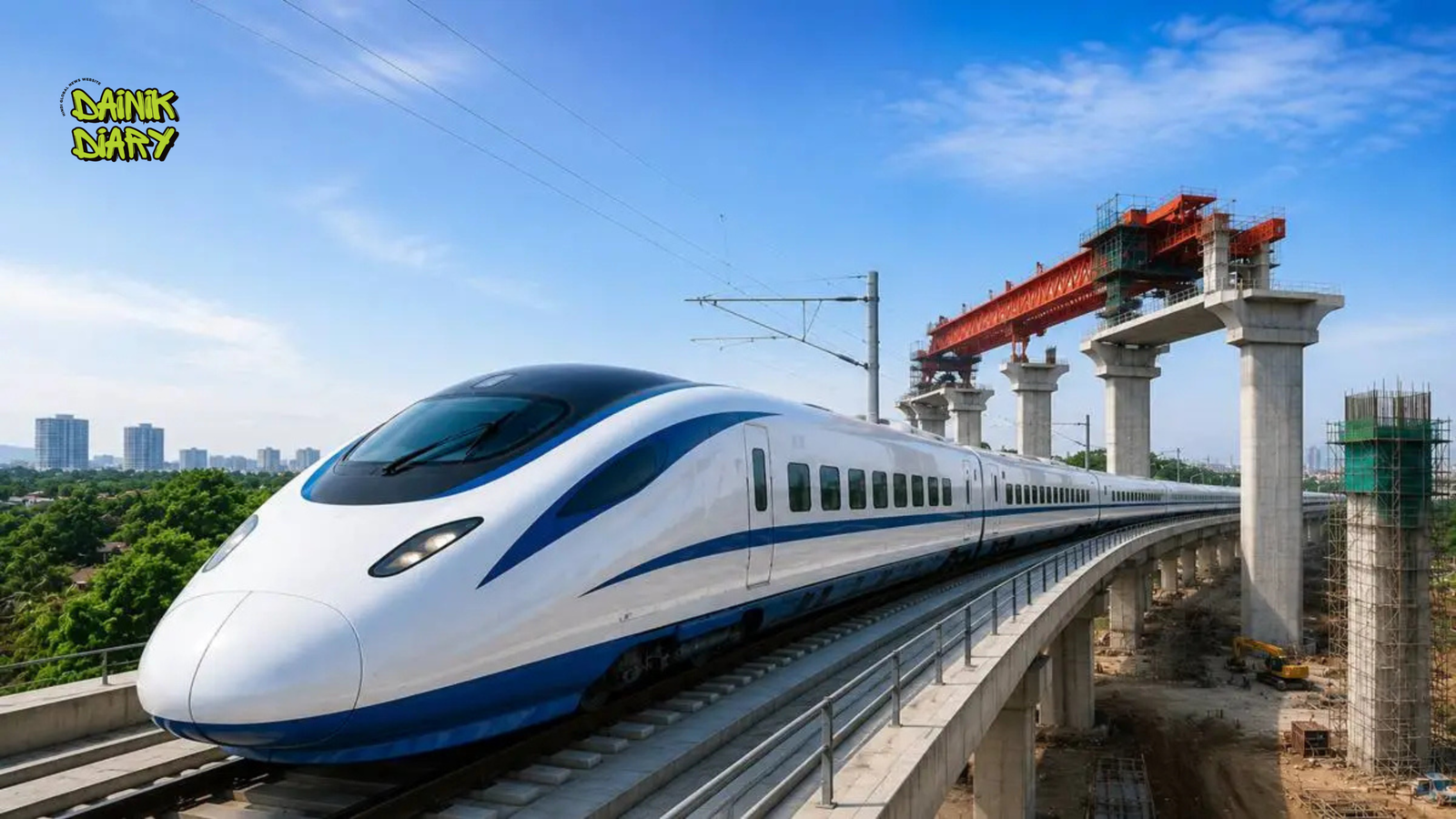
India’s ambitious bullet train network is taking a major step forward, with the government working on a standardised design framework that could shape the country’s next seven high-speed rail corridors.
The move comes as authorities draw lessons from the under-construction Mumbai-Ahmedabad High Speed Rail (MAHSR) project, India’s first bullet train corridor. The aim is to create a common set of technical designs and specifications that can be adapted across future projects instead of starting from scratch every time.
According to information shared by Railway Minister Ashwini Vaishnaw in Parliament, the National High Speed Rail Corporation Limited (NHSRCL) is developing a common design library for upcoming high-speed rail projects. The framework is expected to cover crucial infrastructure including viaducts, bridges, tunnels and railway stations.
The initiative is being developed under the Bharat High Speed Rail Programme, with technical institutions, including the Indian Institutes of Technology (IITs), also involved in the process.
Seven new bullet train corridors on the horizon
The Union Budget 2026-27 announced seven proposed high-speed rail corridors covering approximately 4,000 kilometres.
These include:
- Mumbai-Pune
- Pune-Hyderabad
- Hyderabad-Bengaluru
- Hyderabad-Chennai
- Chennai-Bengaluru
- Delhi-Varanasi
- Varanasi-Siliguri
If implemented, these routes could dramatically reshape intercity travel in India, connecting some of the country’s biggest economic and cultural centres through high-speed rail.
Read More- Mumbai-Ahmedabad Bullet Train Gets a Major Upgrade: India’s First 320 kmph Electrification System Is Here… But When Will You Ride It?
The government is also working on specifications for an advanced train control system capable of supporting speeds of up to 350 kmph. The focus, officials have indicated, is on developing systems that are suited to India’s environmental and social conditions while encouraging the use of Make in India components.
Why a common bullet train design matters
Building a high-speed rail network is a massive engineering and financial undertaking. The government believes that using modular and standardised designs could help address some of the biggest challenges facing such projects.
A common framework could improve safety, quality control and cost efficiency, while also reducing the time required to design and execute each new corridor.
Instead of creating completely different infrastructure specifications for every route, engineers could adapt proven designs to local conditions. This could potentially make construction and future maintenance more consistent across India’s high-speed rail network.
The approach could also help India develop its own high-speed rail standards and strengthen domestic engineering capabilities.
Mumbai-Ahmedabad remains the blueprint
The Mumbai-Ahmedabad High Speed Rail Corridor remains at the heart of India’s bullet train ambitions.
The 508-kilometre corridor is currently under construction, with the government targeting the opening of a priority section by August 2027. Once operational, trains are expected to run at speeds of up to 320 kmph, while the infrastructure has been designed for speeds of around 350 kmph.
The project is being developed with technology and operational practices based on Japan’s famous Shinkansen high-speed rail system.
The corridor will feature advanced traction, electrification, track and operational systems. More than 20,000 overhead electrification masts are planned, while the project will include 30 substations, comprising traction, depot traction and distribution substations.
Another major feature will be the introduction of J-Slab ballastless track technology in India. The project will also have dedicated facilities for storing and handling rails, track slabs, machinery and other equipment.
Three rolling stock depots are planned at Sabarmati, Surat and Thane, strengthening the infrastructure required to operate and maintain the high-speed trains.
How quickly could passengers travel?
The proposed corridors could significantly reduce travel times between major Indian cities.

The estimated journey times include:
- Mumbai-Pune: Around 48 minutes
- Pune-Hyderabad: Around 1 hour 55 minutes
- Hyderabad-Bengaluru: Around 2 hours
- Chennai-Bengaluru: Around 1 hour 13 minutes
- Hyderabad-Chennai: Around 2 hours 55 minutes
- Delhi-Varanasi: Around 3 hours 50 minutes
- Varanasi-Patna-Siliguri: Around 2 hours 55 minutes
These figures are expected to make high-speed rail a potentially attractive alternative to both conventional trains and short-haul flights on several routes.
Projects still face major hurdles
Despite the ambitious plans, the seven proposed corridors are not yet guaranteed to receive final approval.
Following the budget announcement, authorities have started updating project costs, examining possible alignments and preparing Detailed Project Reports (DPRs).
However, the final decision on whether a corridor moves ahead will depend on several factors, including the findings of DPRs, techno-economic feasibility studies and the availability of financing.
High-speed rail projects require enormous investments, and their financial viability can vary significantly depending on passenger demand, construction costs and land requirements.
India’s bigger bullet train vision
The standardisation initiative could prove to be one of the most important developments in India’s high-speed rail journey.
The Mumbai-Ahmedabad project is effectively serving as a learning ground, while the proposed design library could allow future corridors to benefit from the engineering experience gained during its construction.
If the plan succeeds, India could gradually move from importing high-speed rail expertise to developing a larger ecosystem of domestic engineering, manufacturing and technical capabilities.
For millions of passengers, the bigger promise is simple: faster journeys between major cities. But behind that promise lies a much larger ambition — creating a modern, interconnected high-speed rail network that could change the way India travels.rtunity to build a completely new transportation ecosystem that could shape the future of Indian rail travel for decades.