train
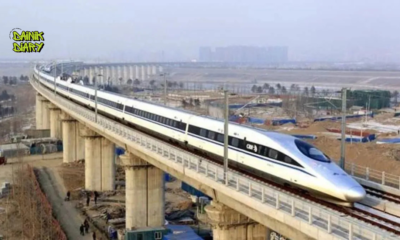
Mumbai to Ahmedabad in Just 90 Minutes? India’s Bullet Train Set for Trials in 2027 as Railways Reveals the Big Plan…
Ashwini Vaishnaw says India’s first indigenous high-speed train could begin trial runs in May or June 2027, bringing the ambitious Mumbai-Ahmedabad Bullet Train project closer to reality.

India’s dream of travelling between Mumbai and Ahmedabad at breathtaking speed is moving closer to reality.
The country’s ambitious high-speed rail project has reached another important milestone, with Ashwini Vaishnaw confirming that trial runs of India’s first indigenous bullet train are expected to begin in May or June 2027.
If the testing programme progresses as planned, passengers could see the service open within a few months after the trials are completed.
The announcement has once again put the spotlight on the Mumbai-Ahmedabad High-Speed Rail Corridor, one of India’s most ambitious infrastructure projects and a key part of the government’s efforts to modernise Indian Railways.
India’s Bullet Train Is Taking Shape
Speaking at the “Namo for Vikasit Bharat” event in Vadodara, Railway Minister Ashwini Vaishnaw said that the first body frame of the indigenous high-speed train has already been completed.
The structure has been sent for squeeze testing, a crucial process designed to examine the strength and structural performance of the train coaches.
Vaishnaw said India’s own bullet train is expected to be placed on the tracks for testing by May or June next year.
According to the proposed timeline, the train could undergo testing for around two to four months before the project moves towards commercial operations and inauguration.
The development represents an important moment for India’s railway ambitions, particularly as the country pushes its Atmanirbhar Bharat vision in advanced transport technology and infrastructure.
Mumbai to Ahmedabad Travel Could Change Dramatically
The Mumbai-Ahmedabad High-Speed Rail Corridor is expected to transform travel between two of western India’s biggest economic centres.
For decades, the journey between Mumbai and Ahmedabad has involved long road trips, conventional train journeys or air travel. High-speed rail aims to create another option—one designed to dramatically reduce travel time while connecting major cities along the route.
The project will not be opened all at once. Instead, the service is expected to be introduced gradually across different sections.
Expected Phased Opening of the Bullet Train Corridor
The rollout is planned in multiple stages:
- Surat-Bilimora: Expected to be the first operational stretch.
- Vapi-Surat: Planned for the second phase.
- Vapi-Ahmedabad: Expected in the third phase.
- Ahmedabad-Thane: Planned as the fourth stage.
- Ahmedabad-Mumbai: The final link completing the full Mumbai-Ahmedabad high-speed route.
The phased approach could allow passengers to experience parts of India’s high-speed rail network before the entire corridor becomes operational.
More Than Just a New Train
For the government, the bullet train project represents more than simply building a faster railway service.
Ashwini Vaishnaw also spoke about wider changes taking place across the Indian Railways system, including improvements in operational systems, passenger reservation technology and construction standards.
The government has increasingly focused on modernising railway infrastructure while expanding capacity across the country.
Vaishnaw pointed to several major projects completed in recent years, including the iconic Chenab Rail Bridge and the expansion of railway connectivity to Mizoram.
According to the minister, hundreds of railway stations have undergone redevelopment, while thousands of kilometres of railway tracks have been added as part of the country’s expanding transport network.
The modernisation drive has also included new-generation trains and technology upgrades, including developments linked to the Vande Bharat Express.
Covid Delays Could Not Stop the Project
Like many large infrastructure projects around the world, the Mumbai-Ahmedabad Bullet Train faced challenges during the COVID-19 pandemic.
Construction activity and project schedules were affected, but work has gathered momentum again as infrastructure development accelerated in recent years.
The latest announcement regarding trial runs suggests that the project is now entering one of its most closely watched phases.
Testing the train on Indian tracks will be a major step before passengers can finally board the country’s first indigenous high-speed rail service.
Seven More Bullet Train Corridors Are Also Being Considered
The Mumbai-Ahmedabad project may only be the beginning of India’s high-speed railway ambitions.
The government has proposed several additional bullet train corridors across different parts of the country, potentially connecting some of India’s biggest cities.
These proposed routes include:
- Delhi-Varanasi Bullet Train Corridor
- Varanasi-Patna-Siliguri Corridor
- Mumbai-Pune Bullet Train Corridor
- Pune-Hyderabad Corridor
- Bengaluru-Chennai Corridor
- Bengaluru-Hyderabad Corridor
- Chennai-Hyderabad Corridor
While these projects remain at different stages of planning and development, they underline the scale of India’s long-term high-speed rail vision.
A New Era for Indian Railways?
For millions of travellers, the real excitement lies in what the Mumbai-Ahmedabad Bullet Train could eventually mean for everyday travel.
A journey that currently requires careful planning could one day become significantly faster and more convenient.
However, the next major milestone will come in 2027, when the high-speed train is expected to finally begin its trial runs.
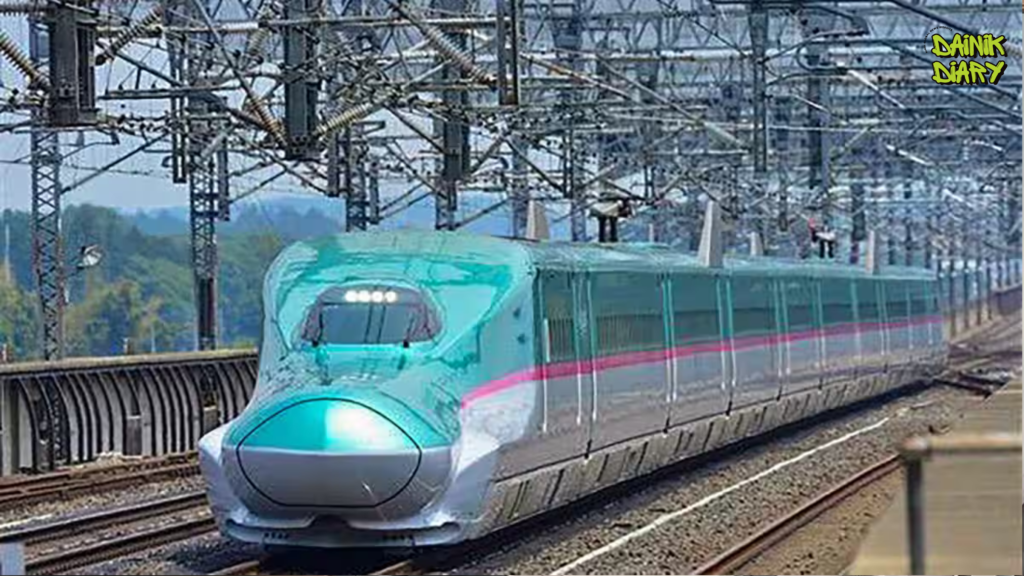
If everything goes according to schedule, India’s railway story could soon enter a completely new chapter—one where high-speed trains are no longer just something Indians see in other countries.
As Ashwini Vaishnaw suggested, the modernisation of Indian Railways is being built with future generations in mind.
For now, all eyes will be on the tracks.