train
India’s First Hydrogen Train Is More Than a Railway Milestone — The Bigger Green Energy Story Behind the Jind-Sonipat Launch
While India’s rail network is already nearly fully electrified, the country’s first hydrogen-powered train signals a much larger ambition: building a green hydrogen economy for industries, energy security, and future exports.


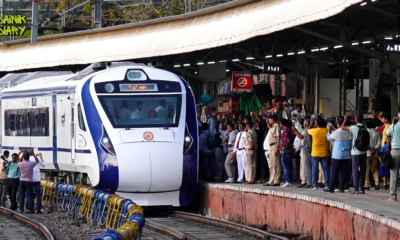
India has officially entered the hydrogen-powered rail era with the launch of its first hydrogen train on the Jind–Sonipat route in Haryana. At first glance, the move may seem surprising, especially since Indian Railways has already electrified more than 99 percent of its broad-gauge network.
However, experts believe the real significance of this project extends far beyond rail transport. The hydrogen train is being viewed as a technology demonstration that supports India’s long-term vision of becoming a global leader in green hydrogen production and clean energy innovation.
According to industry observers, the project is less about replacing electric trains and more about building expertise in hydrogen fuel technology that could transform multiple sectors of the economy.
How India’s First Hydrogen Train Works
The newly introduced train operates on the 89-kilometre Jind-Sonipat route using hydrogen fuel-cell technology instead of conventional diesel engines.
Unlike traditional locomotives, hydrogen fuel cells generate electricity by combining hydrogen with oxygen. The only by-product of this chemical reaction is water vapour, making the train an environmentally friendly alternative with zero direct carbon emissions.
The train features two hydrogen-powered driving coaches, eight passenger coaches, and a dedicated hydrogen refuelling facility at Jind to support its operations.
Why Hydrogen When Railways Are Already Electrified?
This is the question many people have been asking.
Read More- Why Do Vande Bharat and Shatabdi ‘Race’ Every Morning From New Delhi? The Real Reason Behind the Viral Sight
Electric trains remain the most energy-efficient option because they draw power directly from overhead lines. Hydrogen-powered trains, on the other hand, require electricity to first produce hydrogen through electrolysis. The hydrogen must then be compressed, stored, transported and later converted back into electricity inside fuel cells.
Each of these steps results in energy losses.
For this reason, countries around the world generally use hydrogen trains on non-electrified routes. Since India has already electrified almost its entire rail network, this project is not meant to replace electric locomotives but to help develop indigenous expertise in hydrogen storage, fuel cells, safety systems and refuelling infrastructure.
The Real Target: India’s Green Hydrogen Mission
The train is closely linked to India’s Green Hydrogen Mission, which aims to reduce dependence on imported fossil fuels while accelerating the country’s clean energy transition.
Hydrogen is expected to become a key industrial fuel for sectors where direct electrification is difficult, including heavy manufacturing, chemicals and refining.

Instead of importing natural gas to produce industrial hydrogen, India plans to manufacture green hydrogen using renewable electricity generated from solar and wind power.
Why Fertiliser Plants Need Green Hydrogen
One of the biggest beneficiaries of green hydrogen could be India’s fertiliser industry.
Hydrogen is a critical ingredient in the production of ammonia, which is used to manufacture urea and several other fertilisers. Unlike electricity, hydrogen itself becomes part of the final chemical product.
Currently, much of India’s industrial hydrogen is produced using natural gas, which generates significant carbon emissions. Replacing it with renewable hydrogen could significantly lower the environmental footprint of fertiliser manufacturing.
Steel Manufacturing Could Also Change
Hydrogen also has the potential to reshape steel production.
Traditional steelmaking relies heavily on coal, which removes oxygen from iron ore during manufacturing while releasing carbon dioxide. Hydrogen can perform the same chemical function but produces water instead of carbon emissions.
As one of the world’s largest steel producers, India views hydrogen-based steelmaking as both an environmental opportunity and a strategic industrial investment.
Hydrogen Could Solve Renewable Energy Storage Challenges
Hydrogen offers another major advantage.
Solar and wind energy are abundant but intermittent. Electricity generated during periods of surplus often goes unused because storing large amounts of power for weeks or months remains expensive with batteries.
Green hydrogen allows surplus renewable electricity to be converted into hydrogen, stored for long periods and later used for industries, electricity generation or transportation.
This makes hydrogen an effective long-term energy storage solution.
A Boost for India’s Energy Security
India continues to spend billions of dollars every year importing crude oil, liquefied natural gas (LNG) and other fossil fuels.
Producing hydrogen domestically using renewable energy can gradually reduce this dependence, making the country less vulnerable to global fuel price shocks and geopolitical disruptions.
Beyond domestic consumption, India also hopes to become a major exporter of green hydrogen and green ammonia in the coming years, leveraging its vast renewable energy potential.
Why This Train Matters
Viewed only as a railway project, India’s first hydrogen train may appear to have limited impact.
But as a national technology initiative, it represents something much larger.
The project allows Indian engineers and manufacturers to develop expertise in hydrogen production, storage, transportation and fuel-cell systems—technologies that could eventually support industries ranging from steel and fertilisers to shipping, trucking and renewable energy storage.
The Jind-Sonipat hydrogen train is therefore not simply about introducing a new locomotive. It is a symbol of India’s broader ambition to become a major player in the emerging global hydrogen economy.