
World News
“Mega Water War Brewing?” China Starts World’s Largest Dam on Tibet River as India Plans Counter Mega Project in Arunachal Pradesh
Beijing’s massive hydropower push on Yarlung Tsangpo triggers strategic alarm in New Delhi, accelerating India’s Siang Upper Multipurpose Project in Arunachal Pradesh


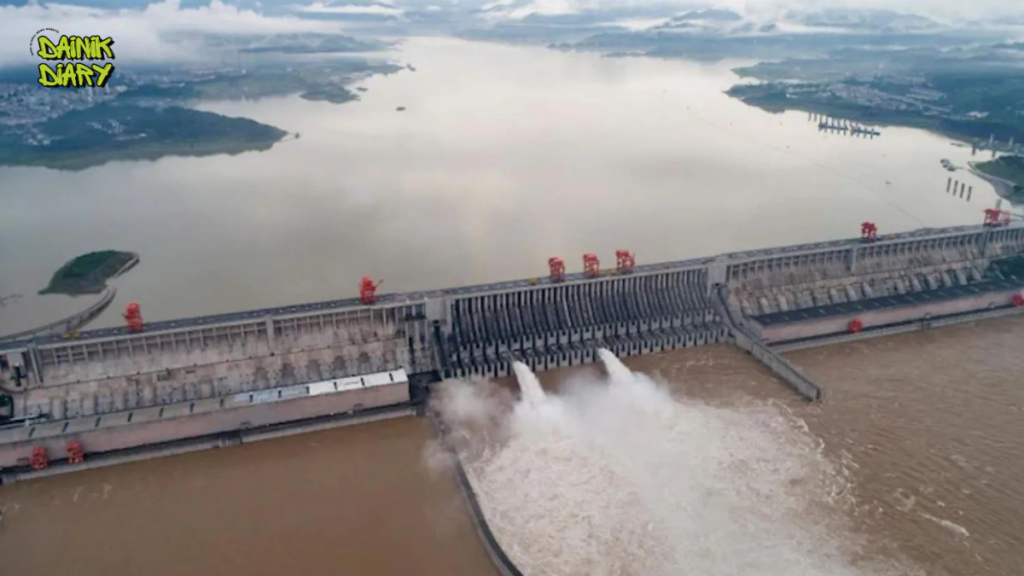
A major geopolitical and environmental flashpoint is emerging in the Himalayas after China officially began construction of what is being described as the world’s largest hydroelectric dam on the lower reaches of the Yarlung Tsangpo River, just around 50 kilometres from the border of Arunachal Pradesh.
The mega infrastructure project, located in Tibet, has triggered concern in India, which is now fast-tracking its own strategic response through a massive counter-plan on the downstream river system.
At the heart of India’s response is the proposed Siang Upper Multipurpose Project (SUMP), an ambitious 11,000 MW hydroelectric and flood-control dam planned on the Siang River in Arunachal Pradesh’s Upper Siang region. If completed, it would become India’s largest hydropower project, generating an estimated 47 billion units of electricity annually.
ALSO READ : Trump Warns Iran ‘We Will Hit Very Hard Tonight’: Why Kharg Island Has Suddenly Become The Center Of A Dangerous New Standoff
The project, being developed with involvement from state-run National Hydroelectric Power Corporation, is estimated to cost nearly US$13 billion (around ₹1.5 lakh crore). However, unlike China’s fast-moving construction, SUMP is still in the early stages of planning and pre-feasibility studies, with actual construction yet to begin.
Meanwhile, China’s broader hydropower expansion on the Tibetan plateau is reportedly far larger in scale, with some estimates placing its planned capacity at around 60,000 MW across multiple projects. The contrast has raised concerns in strategic and policy circles about the growing imbalance in infrastructure development across the sensitive Himalayan region.
The Yarlung Tsangpo, which enters India as the Siang River before becoming the Brahmaputra, is considered a lifeline for millions across Arunachal Pradesh and Assam. Any major upstream alteration in water flow is seen as potentially dangerous for downstream communities.
Experts have warned that a dam of this scale could significantly alter river ecology, disrupt agriculture, and increase the risk of unpredictable flooding in India’s northeast. The strategic implications are equally significant, as both nations view water security as part of broader regional influence.
As China accelerates construction, India is closely monitoring developments while attempting to speed up its own hydropower and flood-control strategy in the region. Officials describe the situation as a delicate balance between development, environmental safety, and national security.
For now, the Himalayas are becoming the stage for a high-stakes infrastructure race—one that could reshape water politics in Asia for decades to come.