World News
China Calls for More Global South Voices at UN, But Still Won’t Back India’s UNSC Seat Why the Contradiction?
Beijing pushes for a fairer global order and stronger representation of developing nations, yet continues to avoid endorsing India’s bid for permanent membership of the UN Security Council.

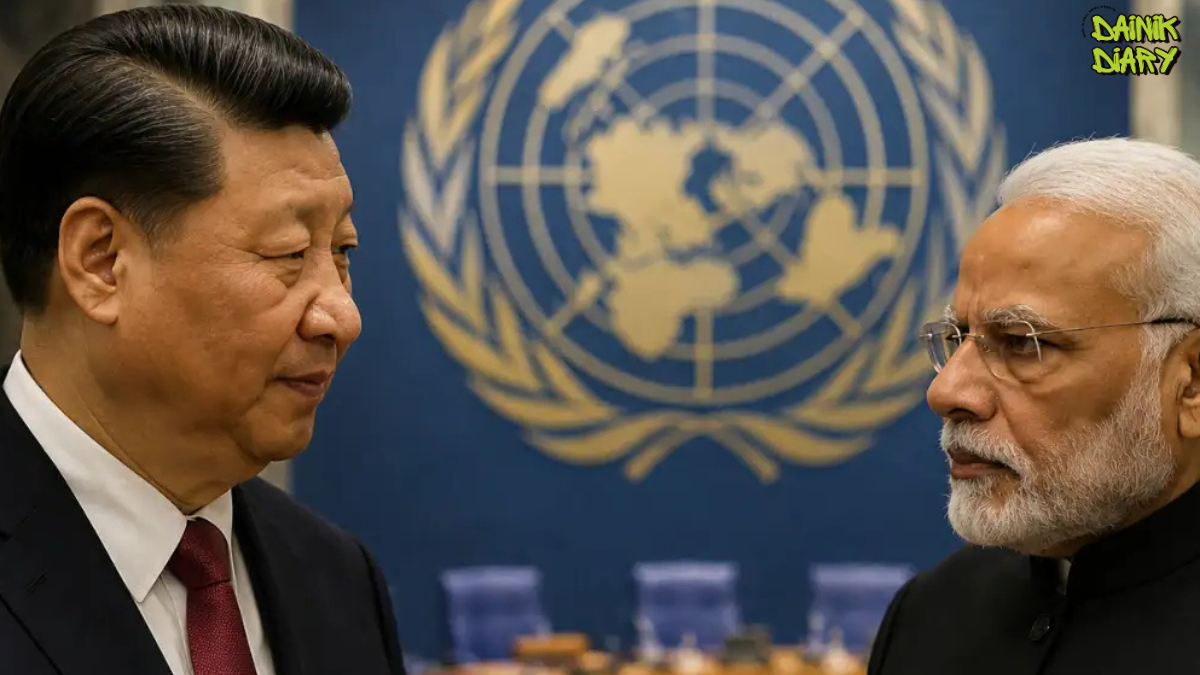
New Delhi: China has once again called for greater representation of developing countries in global institutions and demanded a stronger voice for the Global South at the United Nations. However, Beijing’s latest remarks have also renewed questions about its continued reluctance to support India’s bid for permanent membership of the United Nations Security Council (UNSC).
Speaking at a press briefing in Beijing, Chinese Foreign Minister Wang Yi stressed the need for reforms in global governance and argued that emerging economies deserve a larger role in shaping international decisions.
“Countries, whether large or small, strong or weak, developed or developing, are equal members of the international community,” Wang said while advocating a more balanced and representative international order.
His comments came alongside the release of a Chinese policy document that calls for a fairer global governance system and a stronger role for the United Nations in addressing modern challenges.
China’s Reform Pitch Raises Questions
While Beijing publicly champions greater representation for developing nations, it has stopped short of explicitly endorsing India’s long-standing demand for a permanent seat on the Security Council.
The contrast has drawn attention because India is widely regarded as one of the most influential voices in the Global South. With a population of more than 1.4 billion people, a rapidly expanding economy, and growing geopolitical influence, New Delhi argues that the current structure of the Security Council no longer reflects present-day realities.
Despite China’s recent statement that it “understands and respects” India’s aspirations during bilateral diplomatic discussions earlier this year, official Chinese communications have avoided directly backing India’s candidature.
India’s Case for Permanent Membership
India has consistently maintained that the UNSC requires urgent reform to remain relevant and credible in the 21st century.
The Security Council’s current structure was established in the aftermath of World War II, with five permanent members enjoying veto powers — China, United States, Russia, United Kingdom, and France.
Although the number of non-permanent seats was expanded decades ago, the permanent membership framework has remained unchanged for more than seven decades.
Indian leaders have repeatedly argued that a nation representing nearly one-fifth of humanity and the world’s largest democracy deserves a permanent voice in decisions affecting global peace and security.
Prime Minister Narendra Modi has previously questioned the legitimacy of global institutions that fail to adequately represent large regions of the world, including Africa, Latin America, and emerging powers such as India.
Broad International Support for India
India’s candidature has steadily gained momentum over the years and enjoys support from four of the five permanent members of the Security Council — the United States, Russia, France, and the United Kingdom.
In addition, major nations including Japan, Germany, Brazil, and several African countries have publicly backed India’s claim for permanent membership.
ALSO READ : Trump Warns Iran ‘We Will Hit Very Hard Tonight’: Why Kharg Island Has Suddenly Become The Center Of A Dangerous New Standoff
This widespread support has strengthened New Delhi’s argument that UNSC reform is not merely an Indian demand but part of a broader effort to modernize global institutions.
Why China Remains Cautious
While China officially supports discussions on UN reform, it remains the only permanent Security Council member that has not openly endorsed India’s bid.
Many strategic analysts believe Beijing’s hesitation is linked to geopolitical considerations. As the only Asian country currently holding permanent-member status and veto power, China may be reluctant to support a change that could alter the balance of influence within the Security Council.
Critics argue that this position creates a contradiction between China’s rhetoric on empowering developing nations and its stance on one of the most significant reform proposals currently under debate.
The Larger Debate on Global Governance

The discussion surrounding India’s UNSC bid reflects a broader debate about the future of global governance.
As economic and political power shifts toward Asia, Africa, and other emerging regions, pressure is growing on international institutions to become more representative and inclusive.
While Beijing continues to advocate reforms and greater participation for the Global South, its refusal to explicitly support India’s permanent membership remains a key point of contention.
For many observers, the issue highlights the challenge of translating calls for a more equitable world order into concrete support for structural reforms within the United Nations system.
As demands for UNSC reform gather momentum, China’s position is likely to remain under close scrutiny from both supporters and critics of the existing global order.