
World News
‘We Did It’: Hot Mic Moment Between PM Modi and Keir Starmer Sparks Buzz Over India UK Trade Deal Breakthrough
A candid exchange at the G7 Summit has fueled speculation that India and the United Kingdom have finally cleared the last hurdles holding up their landmark free trade agreement.


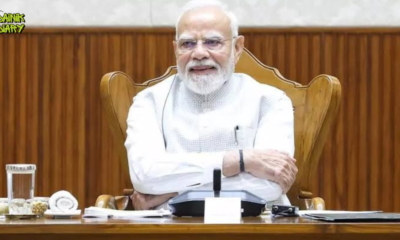
Evian, France: A brief but revealing conversation between Prime Minister Narendra Modi and UK Prime Minister Keir Starmer at the G7 Summit has triggered excitement over what could be a major breakthrough in the long-awaited India-UK Free Trade Agreement (FTA).
The two leaders were caught on a microphone during an informal interaction on the sidelines of the summit, seemingly hinting that key obstacles delaying the implementation of the historic trade pact may have finally been resolved.
As the leaders greeted each other, Prime Minister Modi was heard saying, “We did it.” Starmer immediately responded, “We did it. Yes, yes, yes. We got it over the line. So this is good.”
While neither leader explicitly mentioned the trade agreement during the exchange, the timing and context have led many observers to believe the conversation referred to progress on the India-UK trade deal.
Hot Mic Exchange Raises Expectations
The conversation became even more intriguing when an Indian official reportedly asked how the development should be announced.
“How will we announce it today?” the aide asked.
Starmer replied that a statement could be issued before adding that the two countries could potentially do “something more” and suggested consulting officials on the best way forward.
The exchange has fueled speculation that both governments may be preparing to formally announce a resolution to the issues that have delayed the trade pact’s rollout.
Trade Deal Faced Recent Roadblocks
The India-UK trade agreement, signed last year after more than three years of negotiations, has faced implementation challenges despite being hailed as a landmark economic achievement.
Initially, Indian officials pointed to Britain’s parliamentary approval process as one of the reasons for delays. More recently, concerns emerged over the United Kingdom’s steel safeguard measures, which significantly reduced tariff-free steel import quotas.
India reportedly expressed reservations about the move and indicated that some concessions granted under the trade agreement could be reconsidered if the issue remained unresolved.
The latest developments suggest that both sides may now be closer to finding common ground.
A Landmark Economic Partnership
The India-UK Free Trade Agreement is regarded as one of the most significant economic deals signed by either country in recent years.
For India, it represents the largest trade pact negotiated in over a decade. For Britain, it is among the most important trade agreements concluded since its departure from the European Union.
Under the agreement:
- India will reduce tariffs on nearly 90% of British exports.
- Around 85% of British products will eventually become tariff-free over the next decade.
- The United Kingdom will lower duties on approximately 99% of Indian exports, creating new opportunities for sectors such as textiles, jewellery, engineering goods, and agricultural products.
ALSO READ : Trump Warns Iran ‘We Will Hit Very Hard Tonight’: Why Kharg Island Has Suddenly Become The Center Of A Dangerous New Standoff
Major Benefits for Key Industries
The agreement includes substantial tariff cuts on several high-profile British exports.
Import duties on whisky and gin will gradually fall from current levels to 75% initially, before reducing further to 40% within ten years.
Similarly, tariffs on British automobiles will be brought down to 10% under a quota system, a significant reduction from the existing rates exceeding 100%.
Indian exporters are expected to gain improved market access across multiple sectors, boosting competitiveness in one of the world’s largest consumer markets.
Trade, Technology and Defence Cooperation

The economic agreement is only one part of a broader strategic partnership between the two countries.
Alongside the trade deal, India and the UK have unveiled a long-term Vision 2035 Framework, aimed at strengthening cooperation in areas such as:
- Defence and security
- Technology and innovation
- Climate action
- Healthcare
- Education
- Migration and mobility
- Advanced manufacturing
- Electric propulsion systems
- Jet engine technology
Both governments believe the partnership will significantly deepen bilateral ties over the next decade.
What Happens Next?
During their bilateral meeting at the G7 Summit, Modi and Starmer expressed optimism about the future of the agreement. Official statements from both governments highlighted their desire for the trade pact to come into force at the earliest opportunity.
With bilateral trade already valued at nearly $22 billion annually, experts believe the agreement could unlock billions more in investment and commerce while creating fresh opportunities for businesses and workers in both countries.
For now, a simple three-word exchange — “We did it” — has become the strongest indication yet that one of the world’s most closely watched trade agreements may finally be ready to move forward.







Pingback: Allu Arjun Reacts As PM Modi Uses AA23 Theme, Fans Flood Comments In Frenzy - Dainik Diary - Authentic News
Pingback: Europe’s Deadly Heatwave Explained, How An ‘Omega Block’ Is Trapping 40°C Heat Across The Continent - Dainik Diary - Authentic News