World News
Left in the Dark: Trump’s Surprise Iran Deal Leaves Pakistan Red-Faced, While PM Modi Gets Rare Praise
A dramatic diplomatic twist saw Donald Trump seal a peace deal with Iran without Pakistan, even as he lauded Narendra Modi—reshaping perceptions of power in global geopolitics.


Pakistan has found itself sidelined after playing an early role in facilitating dialogue during the Iran–US tensions—a development that has sparked intense debate across political and strategic circles.
From Center Stage to the Sidelines
For a brief moment, Pakistan appeared to occupy a crucial diplomatic position when preliminary backchannel talks related to the Iran crisis were hosted in Islamabad in April. This led many critics of Narendra Modi’s foreign policy to question India’s global standing.
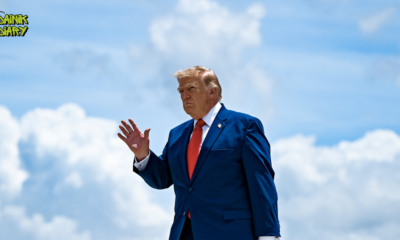
However, events took a dramatic turn when Donald Trump, known for his unpredictable style, signed an interim peace agreement with Iran on June 17 at the historic Palace of Versailles in France—without involving Pakistan in the final stages.
The agreement, reportedly concluded quietly and digitally between Washington and Tehran, left Islamabad completely out of the loop.
Pakistan Prime Minister Shehbaz Sharif and Army Chief Asim Munir were reportedly preparing to attend a formal signing ceremony in Switzerland, only to be caught off guard by the sudden announcement.
Diplomatic Embarrassment for Islamabad
The optics of the situation proved awkward for Pakistan’s leadership. What was initially expected to be a moment of diplomatic recognition turned into a setback, as the agreement—now being referred to as the “Versailles Agreement”—overshadowed Islamabad’s earlier involvement.
Sharif, who had hoped for a larger global role, was left to respond from Islamabad, publicly endorsing the deal while cancelling his planned visit.
Meanwhile, Qatar, another mediator, maintained a low profile—choosing quiet diplomacy over public positioning.
Trump’s Praise for India Raises Eyebrows
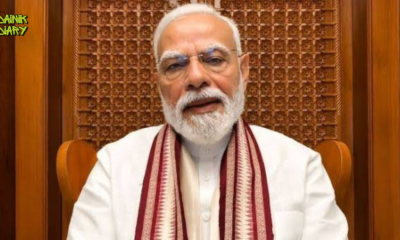
On the same day, in a move that surprised many observers, Donald Trump publicly praised Narendra Modi, calling India a key global player and even suggesting that the US would support India if faced with future threats.
He further noted that it was India’s choice whether to take on a more active role in Middle East peace efforts—an acknowledgment of New Delhi’s growing geopolitical influence.
ALSO READ : Trump Warns Iran ‘We Will Hit Very Hard Tonight’: Why Kharg Island Has Suddenly Become The Center Of A Dangerous New Standoff
At the G7 Summit, Modi was seen engaging with several global leaders, including Emmanuel Macron, Ursula von der Leyen, Keir Starmer, Giorgia Meloni, and UAE President Mohamed bin Zayed Al Nahyan.
The optics reinforced India’s steady positioning as a major global stakeholder, even as it maintained a measured and balanced diplomatic tone.
India’s Strategic Balancing Act
India’s approach to the evolving situation has been cautious yet pragmatic. While acknowledging Trump’s efforts in securing a temporary peace arrangement with Iran, New Delhi has continued to engage with Washington on broader issues such as trade and regional stability.

Both nations remain aligned on key concerns, including the Iran nuclear question and ensuring freedom of navigation through the Strait of Hormuz—a critical global energy route.
India’s strategy appears to be one of steady engagement—adapting to shifting geopolitical dynamics without overcommitting to unpredictable alliances.
A Lesson in Global Diplomacy
The episode underscores the volatile nature of modern geopolitics, where alliances can shift overnight and strategic calculations often outweigh symbolic gestures.
For Pakistan, the experience may serve as a reminder of the risks involved in dealing with unpredictable global powers.
For India, however, the moment reinforces its growing stature—where influence is built not on sudden visibility, but on consistent and calibrated diplomacy.