International News
China Quietly Cut 3 Million Barrels a Day And It’s the Only Reason Your Petrol Bill Didn’t Skyrocket After Iran Shut the Strait of Hormuz…
When Iran closed one of the world’s most critical oil passages, experts feared a catastrophic price surge. What actually happened next will surprise you.


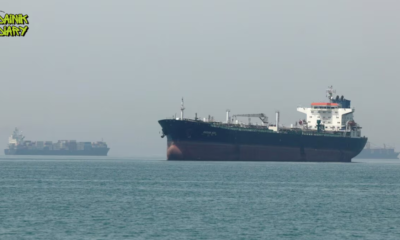
When Iran slammed shut the Strait of Hormuz in response to the escalating war in the Middle East, the world held its breath. Nearly 10 million barrels per day of oil — flowing through one of the most strategically critical waterways on the planet — were suddenly cut off. Fuel prices shot up to a staggering $126.41 per barrel, and energy analysts feared the worst was yet to come.
But then, something unexpected happened. The markets calmed. And no, it wasn’t a ceasefire, a diplomatic breakthrough, or a miracle supply surge from somewhere else. It was China.
The Quiet Decision That Changed Everything
According to a report by The Wall Street Journal, as quoted by the New York Post, the primary reason global energy markets avoided a far more devastating shock was a simple but massive economic decision made in Beijing: China chose to stop buying.
ALSO READ : Suresh Raina’s Big 2027 World Cup Warning: Why India Must Find Hardik Pandya’s Backup Before It’s Too Late
Rather than absorbing the skyrocketing prices, China made the calculated call to slash its oil imports from 11 million barrels a day down to just 7.7 million barrels a day — a reduction of roughly 3 million barrels daily, according to Beijing’s own customs data. That number might sound abstract until you consider this: 3 million barrels is roughly the combined daily oil consumption of Italy and France — two of the largest economies in Europe.
In other words, China effectively erased the equivalent of two major nations’ daily energy appetite from global demand — and in doing so, it softened what could have been a brutal blow to international oil prices.
Oil is now trading near $90 per barrel — a far cry from the triple-digit fear many had predicted.
No Panic on the Streets of Shanghai or Shenzhen
Perhaps the most astonishing part of this story isn’t even the numbers. It’s the fact that China’s sharp reduction in imports has caused virtually no visible disruption to everyday life on the ground.
Tourists are still filling up airports and train stations. Factories across Guangdong, Zhejiang, and Jiangsu — the industrial heartlands of the country — are humming along as usual. Store shelves remain stocked with everything from electronics to essentials like toilet paper. Life in China, on the surface at least, looks entirely normal.

This raises a critical question that economists are now grappling with: Was China simply sitting on enormous strategic reserves? Or has its domestic demand structurally declined faster than anyone realised?
What This Means for the World
The global oil market is a beast that runs on fear as much as it runs on supply and demand. The OPEC+ alliance, led by Saudi Arabia and Russia, has long held the levers of price control. But what the current crisis has revealed is a new, quiet lever — one held by China’s National Development and Reform Commission and its state-owned energy giants like Sinopec and CNOOC.
China’s ability — and willingness — to voluntarily reduce demand during a supply crisis has, in effect, become a global economic stabiliser. That’s a level of economic power and discipline that even the most optimistic observers hadn’t fully anticipated.
For India, which imports roughly 85% of its crude oil, this development carries serious implications. A more stable global oil price directly impacts Indian Oil Corporation, the fuel prices at every petrol pump from Mumbai to Meerut, and ultimately the inflation numbers that hit the common man’s monthly budget.
The Bigger Picture
The war in the Middle East is far from over. The Strait of Hormuz remains a flashpoint — a narrow passage through which roughly 20% of the world’s oil supply normally flows. Any further escalation could change the calculations overnight.
But for now, the world has gotten a rare, unscripted lesson in how global economics actually works: sometimes, the most powerful move isn’t who produces the most — it’s who decides to consume less.
And right now, that decision belongs to China.