World News
Pakistan Defence Minister Calls PoJK Protesters ‘Enemies Like India’ After Deadly Crackdown; Amnesty Raises Alarm
Pakistan Defence Minister Khawaja Asif defended the security crackdown on protesters in Pakistan-occupied Jammu and Kashmir, while Amnesty International USA expressed concern over reports of violence and urged authorities to restore communication access.


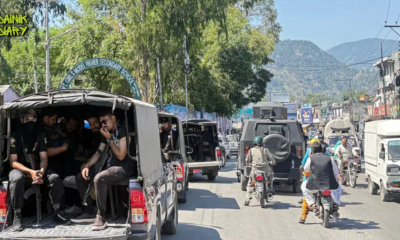
Pakistan Defence Minister Khawaja Asif has triggered fresh controversy after describing protesters in Pakistan-occupied Jammu and Kashmir (PoJK) as “enemies”, comparing them to India, following a violent crackdown that reportedly left more than 30 protesters dead.
Responding to questions about the escalating unrest, Asif said he viewed those participating in the protests in the same category as India’s adversaries.“I put the protesters of PoJK in the same category as India and consider them as enemies,” Khawaja Asif said.
His remarks have drawn widespread attention as tensions continue to rise across the region.
Amnesty International Expresses Concern
Reacting to reports of the violence, Amnesty International USA described the situation as “disturbing” and urged the Pakistani government to ensure transparency.
In a statement posted on X, the human rights organisation called on Islamabad to restore communication services and allow independent observers and media access to the affected areas.“The disturbing reports emerging from Rawalakot are consistent with the Pakistani authorities’ long history of unlawful violence against protesters in PoJK. We urge the Pakistani authorities to restore all communications access and allow media and independent observers into the area,” Amnesty International USA stated.
Protests Intensify After Talks Collapse
The unrest intensified after negotiations between the Joint Awami Action Committee (JAAC) and Pakistani authorities reportedly broke down.
Thousands of demonstrators subsequently marched towards Muzaffarabad, demanding action on longstanding public grievances.
The situation prompted election officials to postpone legislative assembly elections in two districts, citing the deteriorating security environment.
Election Campaigns Disrupted
The political crisis unfolded during the first phase of polling across 13 constituencies in the Mirpur division.
ALSO READ : Will Trump Strike Iran Again? Donald Trump Sends Mixed Signals With ‘Can Avoid If…’ Warning
According to political parties and local reports, the prolonged protests have severely disrupted election campaigns.
Campaign rallies, public meetings and door-to-door outreach activities have reportedly been affected by strikes and sit-ins, while candidates have expressed uncertainty about voter turnout if the unrest continues.
Residents Prioritise Public Issues Over Elections
Several residents told local media that public interest in the elections had declined significantly.
Many reportedly believe that issues such as basic rights, governance and long-pending public grievances should be addressed before any electoral process moves forward.

According to local accounts, the ongoing protest movement has overshadowed the election campaign, with enthusiasm for voting said to be “almost non-existent.”
Tensions Have Been Building for Weeks
The current crisis follows weeks of growing political tensions in the region.
On June 30, the Joint Awami Action Committee criticised Pakistani authorities after an opposition delegation was reportedly prevented from entering PoJK.
The committee also alleged that authorities had restricted food supplies and limited access to certain parts of the region, claiming the measures reflected broader restrictions on democratic rights and political dissent.
Pakistani authorities have not publicly responded to all of the allegations made by the committee.
International Attention on the Situation
The developments have once again drawn international attention to the political and human rights situation in Pakistan-occupied Jammu and Kashmir.
With protests continuing, election activities disrupted and concerns raised by human rights organisations, the situation remains closely watched both within the region and internationally.