
Politics
Kerala’s PM SHRI U Turn: How a Political Flashpoint Turned Into a Governance Necessity
Once fiercely debated as an ideological issue, the PM SHRI scheme has now become a test of political consistency in Kerala as both UDF and LDF swap their positions.


Thiruvananthapuram: The political battle over the PM SHRI (PM Schools for Rising India) scheme has once again taken centre stage in Kerala, but this time with a striking twist—both the ruling United Democratic Front (UDF) and the opposition Left Democratic Front (LDF) appear to have reversed their earlier positions.
What was once projected as an ideological fight over the Centre’s education policies has now evolved into a larger debate over political consistency, governance realities, and the practical need for central funds.
From Opposition to Acceptance
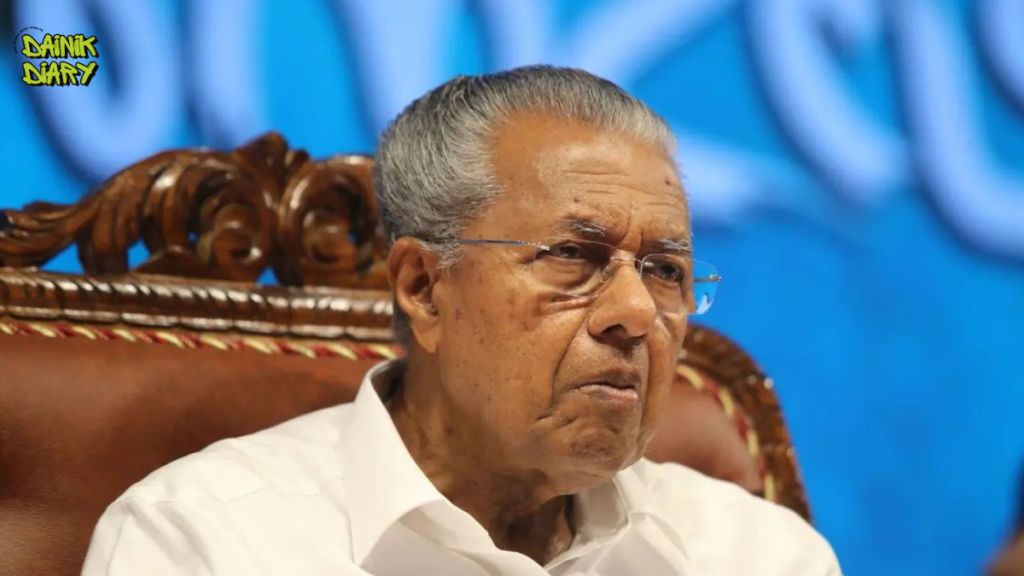
The fresh controversy erupted after the UDF government, led by Chief Minister VD Satheesan, decided to move ahead with the PM SHRI scheme—an education initiative launched by Prime Minister Narendra Modi aimed at upgrading schools across India.
The decision is notable because Satheesan, during his time as Leader of Opposition, had sharply criticised the previous LDF government for signing the PM SHRI agreement.
At the time, he questioned the transparency of the move and alleged that the decision had been taken without proper consultation within the Cabinet and coalition partners.
He had even demanded an explanation from then Chief Minister Pinarayi Vijayan, asking what “pressure” or “mystery” led to the agreement.
Now, as Chief Minister, Satheesan has chosen to proceed with the same scheme.
LDF’s Position Also Shifts
The political irony does not stop there.
Former Education Minister V Sivankutty, who had strongly defended the PM SHRI scheme while in office, has now argued that Kerala was under no obligation to seek funds through it.
This marks a clear shift from his earlier stand.
During the LDF government, Sivankutty had maintained that the PM SHRI funds belonged to the people and not the Centre alone. He had argued that Kerala was entitled to nearly 1,500 crore under the scheme and that rejecting such funds would be against the state’s interest.
He had also defended the scheme despite opposition to aspects of the National Education Policy (NEP), saying the two issues could be treated separately.
Money Matters in Debt-Ridden Kerala
The current UDF government’s decision to proceed appears to be shaped by financial realities.
Chief Minister Satheesan recently revealed that 90 crore has already been sanctioned for Kerala under the scheme, with another 106 crore reportedly in the pipeline.
In total, PM SHRI could bring nearly 1,200 crore into Kerala’s education sector if the state remains aligned with the Centre’s framework.
For a government grappling with debt and fiscal constraints, such funding is hard to ignore.
Political observers note that governance often forces leaders to make practical choices, even if they contradict earlier political rhetoric.
ALSO READ : ‘Massive Joke, Politically Immature’: DMK’s Explosive Attack on Rahul Gandhi Reveals Deep INDIA Bloc Rift
An Ideological Battle That Became Political Ammunition
The PM SHRI scheme had become far more than an education policy issue in Kerala.
During the Assembly and local body elections, both UDF and LDF used it as part of a broader ideological battle over the Centre’s increasing role in education and the implementation of the National Education Policy.
The issue was frequently used to mobilise anti-BJP and anti-RSS sentiment, making it a potent political weapon.
Now, with the UDF embracing the scheme after previously criticising it, the LDF is expected to question whether the ruling front is guilty of the same political flip-flop it once accused others of.
Kerala Joins, Tamil Nadu Remains the Holdout
With Kerala now moving ahead, the number of states outside the PM SHRI scheme is shrinking.
West Bengal, which had also stayed out earlier, is now expected to join after its recent political transition.
That leaves Tamil Nadu as the last major state yet to fully align with the programme, making its future decision politically significant.
Politics Meets Reality
The PM SHRI debate in Kerala has become a textbook example of how opposition politics and governance realities often collide.
While political parties may oppose central schemes when out of power, the pressures of administration, financial management, and development priorities often force a reassessment.
For Kerala, the focus has now shifted from whether the scheme should be adopted to why political parties that once stood on opposite sides now seem to have exchanged roles.
In the end, one message is becoming increasingly clear: ideology may dominate election speeches, but governance is often driven by economics and necessity.








Pingback: "‘I’ll Lay Down My Weapon If My Demands Are Met’: Bihar Man’s Final Facebook Live Ends In Tragic Police Encounter - Dainik Diary - Authentic News
Pingback: Sanjay Raut Issues Stern Warning To Absent Shiv Sena (UBT) MPs Amid Defection Buzz - Dainik Diary - Authentic News