
Automobile
Hyundai, Kia Lose Market Share in India Despite Higher Sales… Here’s Why the Korean Auto Giants Are Under Pressure
The combined market share of Hyundai and Kia declined in the first quarter of FY27 as India’s passenger vehicle industry expanded at a significantly faster pace, according to SIAM data.


Hyundai and Kia, two of India’s leading passenger vehicle manufacturers, witnessed a decline in their combined market share during the first quarter of FY27, despite posting higher domestic sales.
According to the latest data released by the Society of Indian Automobile Manufacturers (SIAM), the Korean automakers together sold 218,798 passenger vehicles in the domestic market between April and June FY27, registering a 10.05% year-on-year (YoY) growth compared to 198,822 units during the same period last year.
However, the broader Indian passenger vehicle (PV) market grew at a much faster rate, resulting in the Korean duo losing ground in terms of market share.
Market Share Slips Despite Sales Growth
While Hyundai and Kia recorded positive sales growth, the overall passenger vehicle industry expanded by 25.89% YoY, with domestic wholesales rising to 1,273,811 units during the April–June quarter.
As a result, the combined market share of the two companies declined to 17.18% in Q1 FY27, down from 19.65% in the corresponding quarter of FY26.
The figures indicate that although both brands sold more vehicles than last year, competitors grew at a significantly faster pace.
Hyundai Faces Production Setback
Hyundai Motor India sold 139,374 vehicles in the domestic market during the first quarter, marking a 5.38% YoY increase over 132,259 units sold in the same period last year.
However, the growth remained well below the industry’s overall expansion.
The company’s performance was also affected by a production disruption after a fire at one of its supplier’s manufacturing facilities caused a production loss of approximately 13,900 vehicles in June.
Hyundai has stated that production resumed from June 22, and it expects to recover the lost output during the July–September quarter.
Kia Performs Better but Trails Industry Growth
Among the two brands, Kia India delivered stronger growth.
ALSO READ : Land Rover Discovery Sport’s 11-Year Journey Ends… Production to Stop in 2026 as Company Prepares for Electric Future
The automaker recorded domestic wholesales of 79,424 units during Q1 FY27, reflecting a 19.32% YoY increase compared to 66,563 units in the same quarter last year.
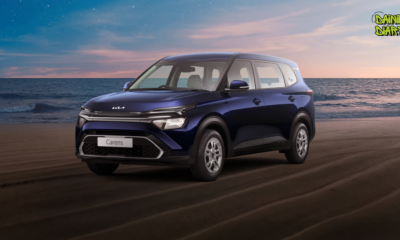
Kia attributed its performance to continued demand for popular models such as the Seltos, Sonet, and Carens Clavis.
Despite the improvement, Kia’s growth also remained below the industry’s overall growth rate, preventing it from fully offsetting Hyundai’s slower performance.
Pressure Building Since FY26
The latest quarterly data continues a trend that began in the previous financial year.

During FY26, Hyundai and Kia together accounted for 18.82% of India’s passenger vehicle market, compared to 19.85% in FY25.
Combined domestic wholesales increased modestly to 873,941 units, up from 853,873 units a year earlier.
In contrast, the overall Indian passenger vehicle market expanded by 7.94%, reaching 4,643,439 units, allowing rival manufacturers to capture a larger share of the market.
Competition in India’s Auto Market Intensifies
The latest numbers highlight the increasingly competitive nature of India’s passenger vehicle industry.
While Hyundai and Kia continue to remain among the country’s top-selling automobile brands, faster growth from competing manufacturers has reduced their overall market presence.
With Hyundai aiming to recover lost production and both companies preparing new product launches, the coming quarters will be crucial in determining whether the Korean automakers can regain market share in one of the world’s fastest-growing automobile markets.






Pingback: Audi Q9 Unveiled As The Brand's Biggest SUV Ever: India Launch Confirmed, But Here's What Makes It Stand Out… - Dainik Diary - Authentic News
Pingback: Mercedes-AMG E 53 Hybrid Review: 612 PS, 100km EV Range & Everyday Practicality Has AMG Finally Found The Perfect Balance…? - Dainik Diary - Authentic News
Pingback: Honda Rebel 500 Price Leaked Before India Launch… Set To Take On Royal Enfield Super Meteor 650 - Dainik Diary - Authentic News