Technology
5 Last-Gen Flagship Phones That Are Now Massive Bargains in India And You Won’t Miss the New Models…
As flagship smartphone prices climb sharply, last year’s premium devices are emerging as some of the smartest buys. From the Galaxy S25 to the Galaxy Z Fold 7, these phones still pack serious hardware at significantly lower prices.

The smartphone market has entered an era where buying the latest flagship can put a serious dent in your wallet. New premium devices are arriving with increasingly ambitious price tags, making last-generation flagships a far more attractive option for buyers who want high-end performance without paying the launch premium.
For many consumers, this has created a sweet spot: last year’s flagship phones with flagship-grade processors, premium displays and powerful cameras are now available at much more tempting prices.
Take Samsung’s latest foldable lineup as an example. The Galaxy Z Fold 8 starts at around ₹1.79 lakh, while the previous-generation Galaxy Z Fold 7 remains a compelling alternative for buyers who want the full foldable experience without stepping into the newest price bracket.
If you’re looking for raw performance, premium cameras, AI features or a large foldable workspace, here are five last-generation powerhouses worth considering right now.
Samsung Galaxy S25
The Samsung Galaxy S25 has become one of the most attractive compact flagship smartphones for buyers who don’t want an oversized device.
At a time when smartphone screens are increasingly crossing the 6.7-inch mark, the Galaxy S25 takes a different approach. Its compact and lightweight design makes it easier to carry, while the Snapdragon 8 Elite processor provides the kind of performance expected from a premium flagship.
Samsung also brings its collection of Galaxy AI features, along with an LTPO display capable of dynamically reducing the refresh rate down to 1Hz to improve efficiency.
The company has also promised six years of OS updates, adding to the phone’s long-term appeal.
At around ₹60,000, the Galaxy S25 can be a particularly compelling choice for users who want flagship performance without carrying a massive phone.
Apple iPhone 16
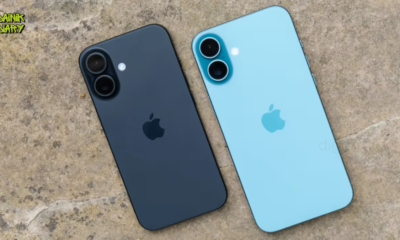
The iPhone 16 continues to offer a premium experience while now sitting in a considerably more attractive price bracket.
Its design remains modern enough that the average user may not immediately distinguish it from newer iPhone models. The Action Button adds customisation, while the Camera Control button provides additional control over photography and video features.
Powering the device is Apple’s 3nm A18 chip, which is designed to handle demanding applications, gaming and Apple Intelligence workloads.
The iPhone 16 also delivers strong battery life and impressive video-recording capabilities, making it a well-rounded option for users who don’t necessarily need the additional hardware found on the Pro models.
With prices falling below ₹70,000, the iPhone 16 becomes much easier to recommend for buyers looking for a premium Apple experience without paying the latest-generation premium.
Google Pixel 10
The Google Pixel 10 may no longer be the newest Pixel in the lineup, but its biggest strength has never been raw benchmark performance alone.
Google’s flagship approach focuses heavily on software optimisation, computational photography and artificial intelligence. The Pixel 10 is powered by Google’s Tensor G5 processor and comes with 12GB of RAM as standard, helping it handle on-device AI and Gemini-related features smoothly.
The phone also features a redesigned rear camera setup with a triple-camera system, including a dedicated zoom camera.
Google’s promise of seven years of Android updates and feature drops adds significant long-term value, while built-in magnetic wireless charging further enhances the premium experience.
For buyers looking for a clean Android interface and Google’s AI ecosystem, the Pixel 10 can stand out at under ₹75,000.
Samsung Galaxy S25 Ultra
If you’re after maximum Android flagship hardware without moving to a foldable, the Samsung Galaxy S25 Ultra remains a formidable option.
The phone combines a premium Titanium frame with a large 6.8-inch Dynamic AMOLED display featuring an anti-reflective coating designed to improve outdoor visibility.
Under the hood sits a customised Snapdragon 8 Elite processor, while Samsung’s integrated S Pen turns the phone into a productivity-focused device.
Photography is another major attraction. The flagship features a versatile multi-camera system led by a massive 200MP primary sensor, giving users plenty of flexibility across different shooting scenarios.
With the Galaxy S25 Ultra now available for less than ₹1 lakh in some deals, it offers a significant portion of the premium Samsung experience without requiring buyers to pay for the newest generation.
Samsung Galaxy Z Fold 7
For buyers who specifically want a foldable phone, the Galaxy Z Fold 7 remains one of the most interesting last-generation options.
Samsung refined the folding mechanism and overall construction with this generation, resulting in a thinner and lighter profile that makes the device feel more like a conventional smartphone when folded.
Open the device, however, and it transforms into a tablet-sized workspace. Users can run multiple applications simultaneously, work on large documents, browse the web and consume wide-format media on the expansive inner display.
ALSO READ : Vivo S2 India Launch on August 6: 7,050mAh Battery, 120Hz AMOLED Display and Dimensity Power Revealed Before the Big Reveal
The device also starts with 512GB of storage, giving users plenty of room for large files, applications, photos and high-resolution videos.
Although it uses the previous-generation Snapdragon 8 Elite processor, the Galaxy Z Fold 7 still delivers the kind of performance and versatility expected from a premium foldable.
For anyone tempted by the newest Galaxy Z Fold but unwilling to spend the highest asking price, the Fold 7 could be the smarter deal.

Why Last-Generation Flagships Make Sense Right Now
The biggest advantage of buying an older flagship isn’t simply the lower price. These phones were already designed as top-tier devices, meaning buyers aren’t necessarily giving up the premium build quality, powerful processors, advanced cameras or high-end displays associated with flagship smartphones.
The difference between generations is also becoming less dramatic for everyday users. A slightly newer processor or a handful of additional AI features may not justify paying tens of thousands of rupees more for everyone.
That makes discounted models such as the Galaxy S25, iPhone 16, Pixel 10, Galaxy S25 Ultra and Galaxy Z Fold 7 worth considering.
Of course, prices and offers can change frequently, so buyers should compare the latest discounts, storage variants and warranty terms before making a purchase.
But if the goal is to get flagship-level technology without paying flagship launch prices, last year’s premium smartphones may currently offer the better deal…