World News
‘Targeting of Commercial Shipping Must Cease’: India Lodges Strong Protest After Indian Sailor Killed in Hormuz Tanker Attack
MEA summons Iran’s Deputy Chief of Mission after deadly Strait of Hormuz strike leaves one Indian seafarer dead, several injured, and raises fresh concerns over maritime security in West Asia.

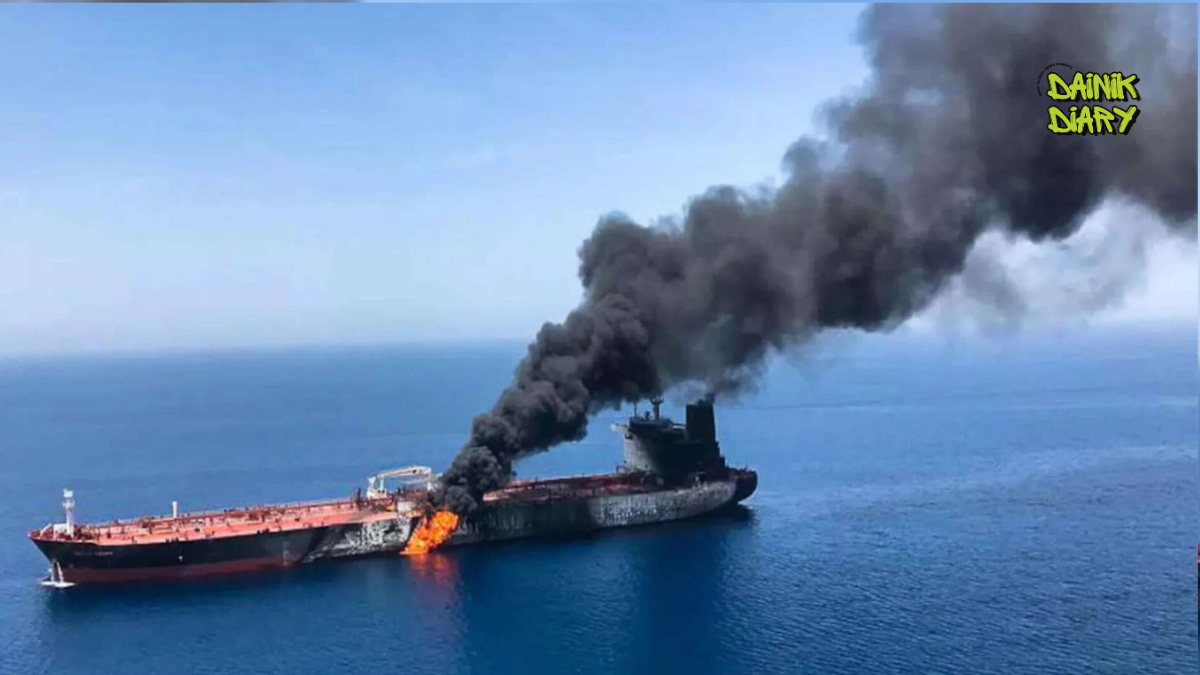
New Delhi: India has strongly condemned the recent attacks on two commercial oil tankers in the Strait of Hormuz, calling for an immediate end to violence targeting civilian shipping after an Indian sailor lost his life and several others were injured during the incident.
The Ministry of External Affairs (MEA) on Tuesday summoned Iran’s Deputy Chief of Mission, Mohammad Javad Hosseini, to formally register a strong protest over the strikes on commercial vessels passing through one of the world’s most strategically important maritime routes.
The attacks reportedly targeted MT Mombasa and MT Al Bahiyah while the vessels were sailing through the southern passage of the Strait of Hormuz, a crucial global shipping corridor that handles nearly 20% of the world’s oil trade during peacetime.
According to official information, the strike claimed the life of an Indian crew member aboard MT Mombasa. Eight others sustained injuries, including six Indian nationals and two Ukrainian crew members. Reports indicate that four of the injured remain in critical condition.
India Condemns Violence Against Commercial Shipping
Following the diplomatic meeting, the MEA issued a strongly worded statement condemning attacks on commercial vessels and seafarers.
The ministry stressed that violence against merchant ships not only threatens innocent lives but also disrupts global maritime trade and regional stability.
India also voiced deep concern over the renewed escalation of hostilities in West Asia, urging all parties involved to exercise restraint and return to dialogue instead of conflict.

The government reiterated that the protection of civilian vessels and uninterrupted navigation through international waterways must remain a global priority.
Hormuz Shipping Route Remains Under Pressure
The Strait of Hormuz is among the world’s busiest maritime passages, connecting major oil-producing nations in the Gulf with global markets. Any disruption in this narrow waterway has far-reaching consequences for international energy supplies, shipping costs, and global trade.
ALSO READ :Air India Climbs Into World’s Top 5 Most Punctual Airlines… Here’s the Ranking That Has Everyone Talking
The latest attack has once again highlighted the growing security risks faced by commercial ships operating in the region amid escalating geopolitical tensions.
Indian Seafarers Face Rising Risks
The incident adds to a series of deadly attacks affecting Indian nationals working aboard merchant vessels in conflict-prone waters.
Official figures indicate that 11 Indian citizens have lost their lives since violence in the region intensified. Several Indian sailors have also been rescued after commercial ships came under attack during recent months.
Just last month, three Indian seafarers were killed in a strike on the Palau-flagged tanker MT Settebello, underlining the increasing dangers faced by maritime workers navigating through the conflict zone.
India Calls for Peace and Safe Navigation
India has urged all stakeholders to immediately halt attacks on commercial shipping and civilian infrastructure while emphasizing the importance of restoring free, safe, and uninterrupted navigation in accordance with international law.
As tensions continue to rise across West Asia, the safety of global shipping routes and thousands of seafarers—including a significant number of Indians working in the merchant navy—remains a matter of growing international concern.