World News
Between War and Peace: Trump Signed an Iran Deal… But Why Did He Quietly Order More Missiles Days Earlier?
As President Donald Trump moves toward a peace agreement with Iran, a previously signed order boosting America’s missile production is raising fresh questions about the true cost of the conflict and the state of US military preparedness.

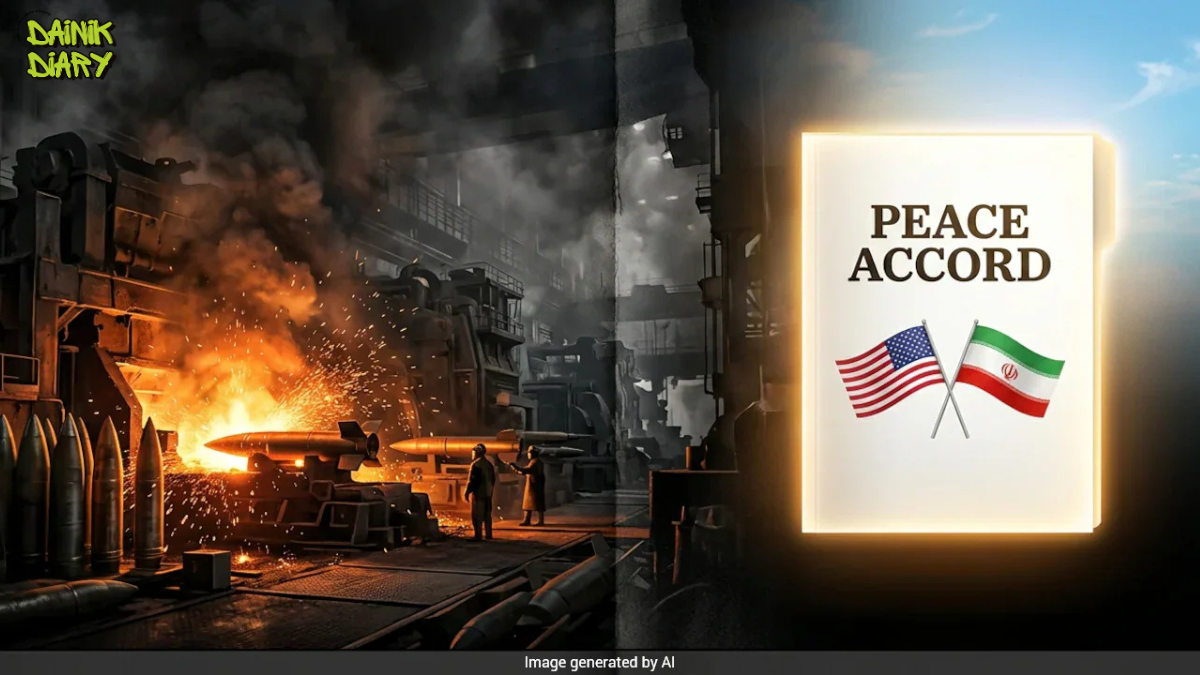
Washington, D.C.: Just days before unveiling a framework for peace with Iran, US President Donald Trump took a striking step that has drawn global attention. While negotiations were moving toward ending months of conflict, the White House simultaneously pushed for a significant increase in domestic weapons production, highlighting the enormous military and economic toll of the war.
According to estimates from the Pentagon, the conflict involving the United States, Israel, and Iran has cost Washington approximately $111 billion, with a substantial portion of the spending dedicated to missiles, interceptors, rockets, military operations, and logistical support across the Middle East.
On Wednesday, Trump signed the framework of a peace agreement aimed at ending hostilities that began earlier this year. The deal is expected to reduce tensions in a region that has remained at the center of global security concerns for decades.
ALSO READ : ‘They Broke Open the Lock’: Political Storm Erupts After Police Raid Abhishek Banerjee’s Residence
However, what has sparked debate among defence analysts is a separate decision made by the president just days before the agreement.
Trump reportedly invoked emergency powers to accelerate the production of missiles, bombs, and other critical military munitions. The move came amid concerns that America’s defence stockpiles had been significantly depleted during months of military operations.
In the executive order, the administration warned of challenges within the US defence manufacturing sector. These concerns included limited production capacity, fragile supply chains, and manufacturing bottlenecks that could affect the nation’s ability to quickly replenish military inventories during future crises.
The order emphasized that these industrial constraints could pose risks to America’s national security preparedness, particularly at a time when global geopolitical tensions remain high.
Military experts note that modern warfare consumes enormous quantities of advanced weaponry. Precision-guided missiles, air defence interceptors, and long-range munitions can cost millions of dollars each, making sustained military campaigns increasingly expensive even for the world’s largest defence budget.

The timing of Trump’s actions has fueled speculation. While the peace agreement suggests a desire to de-escalate tensions, the push to expand weapons production reflects concerns about future military readiness and the lessons learned from months of conflict.
Supporters argue that rebuilding stockpiles is a practical necessity after any large-scale military operation. Critics, however, question whether the war achieved objectives that justified such massive expenditures and resource commitments.
For many observers, the story highlights a modern reality of international conflicts: even when peace agreements are signed, the economic, strategic, and military consequences often continue long after the fighting ends.
As the United States enters a new phase of diplomacy with Iran, attention is now shifting from the battlefield to the defence industry, where the effort to rebuild military reserves may become one of the most significant legacies of the conflict.
Whether the peace agreement delivers lasting stability remains uncertain. What is clear, however, is that the war has left behind a complex balance between diplomacy, deterrence, and defence preparedness that will shape policy decisions for years to come.