India News
CJP Pauses Parliament March After Centre Opens Talks; Abhijeet Dipke Ends Hunger Strike on Sonam Wangchuk’s Appeal
A breakthrough emerged in the students’ protest as the Centre initiated dialogue with Cockroach Janta Party leaders, while founder Abhijeet Dipke ended his fast after an emotional request from activist Sonam Wangchuk.

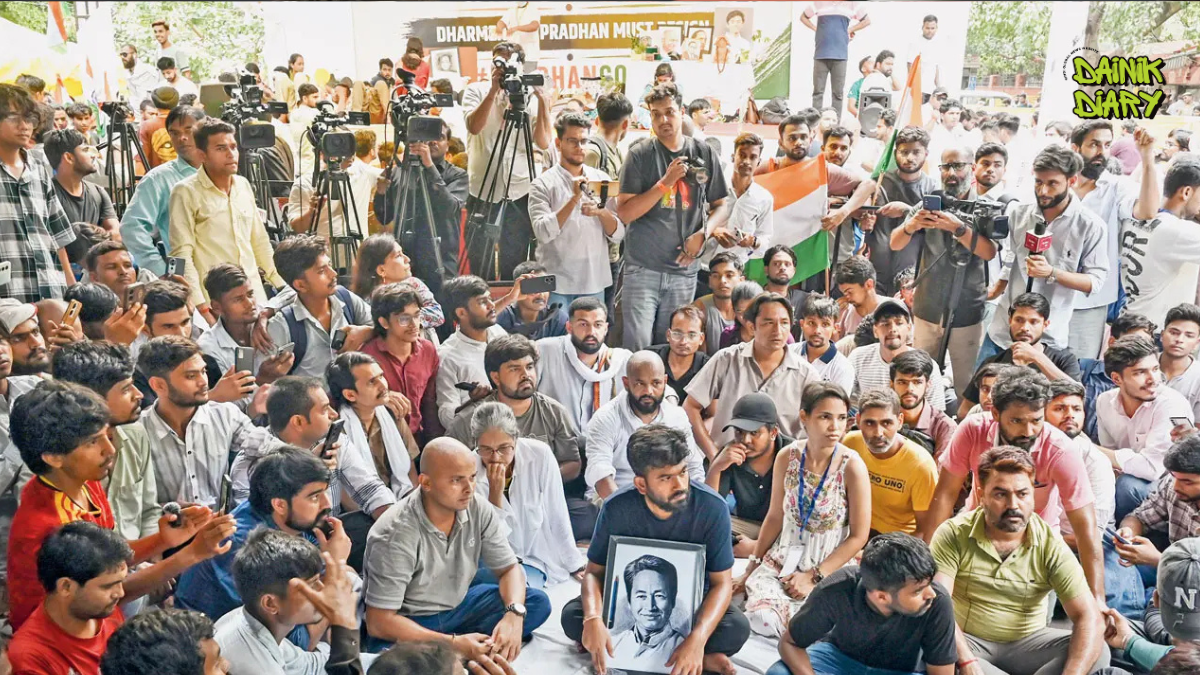
New Delhi: A significant development unfolded in the ongoing nationwide movement demanding accountability over alleged examination paper leaks after the Cockroach Janta Party (CJP) temporarily suspended its planned march to Parliament on Monday. The decision came shortly after the Central Government reportedly initiated discussions with party representatives, raising hopes for a possible resolution.
The biggest moment of the day came when CJP founder Abhijeet Dipke ended his hunger strike following an appeal from social activist Sonam Wangchuk, who is currently receiving medical treatment after his prolonged fast.
The announcement was made at Jantar Mantar, where educator Gitanjali Angmo, Wangchuk’s wife, addressed thousands of supporters gathered for the protest. She conveyed Wangchuk’s message, urging Dipke to preserve his health and continue leading the movement rather than risking his life through an extended fast.
Responding to the appeal, Dipke broke his hunger strike by drinking juice, drawing applause from the crowd. Moments later, he joined fellow protesters in the march towards Parliament, travelling on a slow-moving vehicle alongside Angmo and the father of a NEET aspirant who had died by suicide.
Despite ending his fast, Dipke maintained a strong political stance, raising slogans demanding the resignation of Union Education Minister Dharmendra Pradhan over the alleged irregularities in competitive examinations, particularly NEET-UG.
The protest witnessed another major turning point after CJP spokesperson Saurav Das revealed that the Centre had reached out for formal discussions. According to Das, he and fellow spokesperson Ashutosh Ranka were scheduled to meet BJP president J.P. Nadda to present the protesters’ demands.
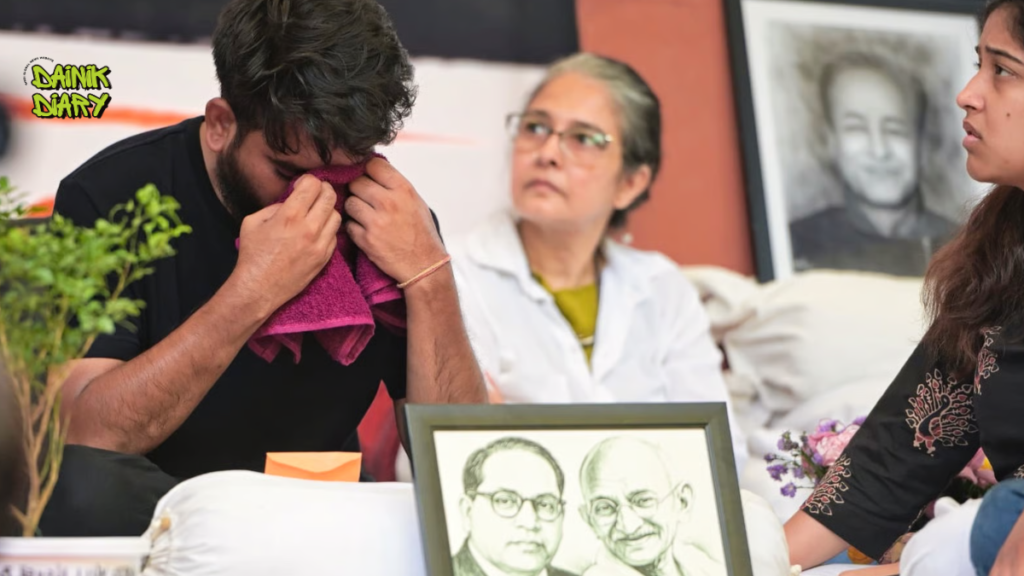
Addressing supporters, Das said the movement had gained remarkable momentum with thousands of young people joining from different parts of the country. He reiterated that the organisation’s demands remain unchanged despite the government’s outreach.
Following this development, Dipke announced that the planned march to Parliament would remain on hold until the delegation returned from its meeting with government representatives.
ALSO READ :‘I Will Stay Alive Till July 20 at Any Cost…’: Sonam Wangchuk Loses 9.5 Kg on 20th Day of Hunger Strike
The protest movement has intensified over the past month amid allegations of repeated question paper leaks affecting major competitive examinations. Dipke had launched his hunger strike after Delhi Police removed Sonam Wangchuk from the protest venue on Saturday and shifted him to Safdarjung Hospital, citing concerns over his deteriorating health and compliance with directions issued by the Delhi High Court.
Wangchuk himself has been on a 21-day fast, making the demand for greater transparency and accountability in India’s examination system the centrepiece of the campaign.
As the Monsoon Session of Parliament commenced on Monday, thousands of students and youth marched through Delhi, expressing frustration over what they described as repeated failures in protecting the integrity of national entrance examinations.
Authorities maintained strict security arrangements around the Parliament complex. Delhi Police, supported by 32 companies of paramilitary personnel, established multiple security layers to prevent demonstrators from entering high-security zones. Several Delhi Metro stations near Parliament were also temporarily closed as a precautionary measure.
Before the march, CJP spokesperson Ashutosh Ranka appealed to participants to remain calm and avoid any confrontation.
He reminded protesters that the movement had remained peaceful throughout its month-long campaign and urged everyone to maintain discipline despite the emotionally charged atmosphere.
The government’s willingness to engage in dialogue has temporarily eased tensions, but the outcome of the talks is expected to determine the future course of the protest. For thousands of students demanding reforms in India’s examination system, Monday’s developments represent a crucial moment in a movement that continues to attract national attention.