Automobile
Tata Avinya Is Coming in 2027, But There’s a Bigger Challenge: Can It Finally Make Tata Feel Truly Premium?
The Avinya was conceived as Tata’s premium EV breakthrough. With Mahindra already changing expectations in the segment, Tata now has to make sure its upcoming electric flagship feels like far more than an expensive Tata.


Tata Motors has taken the long road with the Avinya.
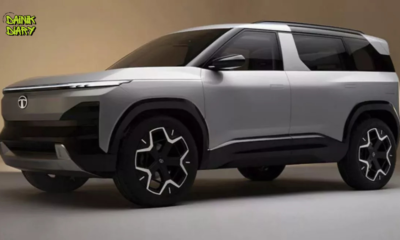
First unveiled as a concept in 2022, the electric vehicle is now expected to enter production and reach Indian roads in 2027. By then, however, Avinya will have a much bigger responsibility than simply becoming another addition to Tata’s growing electric vehicle portfolio.
It needs to prove that Tata can build a genuinely premium EV.
That is a considerably harder task than launching another electric SUV.
Tata already has a strong EV portfolio
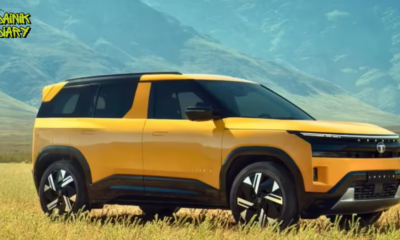
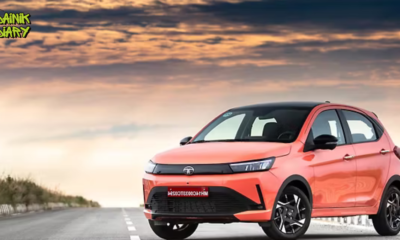
Tata has one of the widest electric vehicle portfolios among Indian carmakers, with models such as the Punch EV, Nexon EV, Curvv EV and Harrier EV.
The company deserves considerable credit for helping bring electric mobility to a much larger section of Indian buyers. Tata’s EV strategy has played an important role in making electric cars more accessible.
But there is a perception challenge.
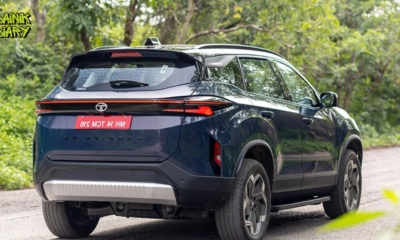
Most Tata EVs are still seen as mainstream products rather than premium vehicles. The Harrier EV has arguably taken the biggest step towards changing that perception, with its larger dimensions, more sophisticated cabin, advanced driver assistance features, technology and available all-wheel-drive capability.
Avinya, however, needs to go much further.
Avinya cannot simply become the most expensive Tata
This may be the single most important challenge facing the project.
Tata cannot simply take the formula of an existing EV, add more equipment, increase the power and battery capacity, raise the price and call it premium.
The customer has to immediately understand that Avinya sits above the existing Tata range.
The difference should not be limited to specifications. It needs to be visible and, more importantly, felt from the moment someone enters the car.
A buyer should not walk into an Avinya thinking, “This is a very well-equipped Tata.”
The reaction Tata wants is closer to:
“This feels completely different.”
The original JLR connection was a major attraction
When Tata unveiled the Avinya concept, one of the most interesting aspects of the project was its planned connection to Jaguar Land Rover’s Electrified Modular Architecture (EMA).
That immediately gave the project an obvious technological connection to the premium automotive world.
However, the plan has reportedly changed.
Tata is now expected to use the Freelander platform developed through the Chery-Jaguar Land Rover joint venture ecosystem, with the first production model understood to be the Avinya X, targeted for 2027.
There is a practical reason behind such a move.
Developing a completely new premium EV architecture for relatively limited production volumes can be extremely expensive and time-consuming. Using an existing platform could allow Tata to bring Avinya to market faster while improving the project’s commercial viability.
But there is an important caveat.
The platform cannot become the product’s selling point.
Mahindra has already shown Tata what is possible
This is where Mahindra becomes particularly relevant.
The company’s electric vehicles, including the XEV 9e, XEV 9S and BE 6, have demonstrated that an Indian automaker can create an aspirational EV without putting a traditional luxury badge on the bonnet.
Built around Mahindra’s dedicated INGLO electric architecture, these vehicles were designed to look and feel fundamentally different from the company’s previous products.
The market response was significant.
The XEV 9e and BE 6 together reportedly generated 30,179 bookings on the first day, with the top-end 79kWh Pack Three accounting for 73% of bookings.
But the more important achievement was arguably psychological.
Mahindra changed the way some buyers perceived its electric vehicles.
The XEV 9e does not simply feel like an expensive version of an existing Mahindra SUV. It has its own identity, design language and cabin experience.
That is precisely the challenge Tata faces with Avinya.
Avinya needs its own identity
Tata has an opportunity to take a different approach.
The original Avinya concept did not look like a conventional SUV loaded with technology. It had a minimalist, spacious and almost lounge-like character.
That could become the production model’s biggest advantage.
Rather than trying to beat competitors purely through bigger numbers, Tata could make Avinya stand out through comfort, refinement and experience.
A genuinely premium Avinya should deliver excellent seats, a quiet cabin, high-quality materials, polished software and effortless performance.
Charging capability and driving range will obviously matter, but premium buyers increasingly expect these things as a baseline.
The difference will come from how well everything works together.
The JLR connection should remain in the background
The association with JLR and the broader Chery-JLR ecosystem remains interesting because it potentially gives Tata access to technology and expertise connected to premium electric vehicles.
JLR and Chery are developing EVs under the revived Freelander name, with Chery providing the underlying electric vehicle architecture and JLR contributing design expertise.
That ecosystem could benefit Avinya.
But Tata should be careful about how heavily it relies on the connection while marketing the car.
If Tata has to repeatedly tell customers that Avinya is premium because it has links to JLR or Chery, the product itself may not be doing enough.
The car should communicate its quality without needing a presentation about its platform.
What should make Avinya feel premium?
Tata’s biggest opportunity is to focus on the details buyers actually experience every day.
That means:
ALSO READ : Mahindra Scorpio N Pickup teased ahead of August 14 debut… Here’s what the rugged lifestyle truck could offer
- Exceptional seat comfort
- A quiet and refined cabin
- High-quality materials and fit-and-finish
- Smooth, intuitive software
- Strong charging performance
- Competitive real-world range
- A refined powertrain
- Sophisticated ride and handling
- A distinctive design that does not resemble another Tata EV
These things may not look as impressive on a specification sheet as horsepower or battery capacity, but they are precisely what can make a car feel expensive.
2027 will be a much tougher market
Avinya’s launch timing could make its mission even more difficult.
By 2027, India’s EV market is expected to be considerably more competitive. Mahindra has already demonstrated the potential of premium-oriented electric vehicles, while Tata has spent years building its position in the mass-market EV segment.
New players and existing manufacturers are also likely to push further into the premium electric space.

That means Avinya cannot arrive simply as another new EV.
It needs to establish a new category within Tata’s own portfolio.
Tata’s biggest EV test may not be about range
After years of anticipation, Avinya’s real test will not necessarily be whether it has the biggest battery or the longest claimed range.
Its success will depend on whether people see it as a premium product first and a Tata product second.
That does not mean Tata needs to abandon its identity. Quite the opposite.
The company needs to demonstrate that its own design, engineering and product philosophy can deliver an experience buyers are willing to pay significantly more for.
Mahindra has already shown that an Indian manufacturer can make buyers aspire to an EV from a home-grown brand.
Now Tata has the chance to go one step further.
Avinya does not need to be the most expensive Tata ever made. It needs to be the Tata that finally makes the brand feel premium.
If it manages that, the long wait for Avinya could prove worthwhile.
If it does not, the car risks becoming just another electric vehicle in what will be an increasingly crowded Indian market.