
Entertainment
Shruti Haasan Feared Doctor Would Say ‘Dukaan Bandh Ho Gaya’… How PCOS Shaped Her Motherhood Journey
The 40-year-old actor revealed that she had worried about her chances of becoming a mother since being diagnosed with PCOS as a teenager, until a supportive gynaecologist offered her a more hopeful perspective.

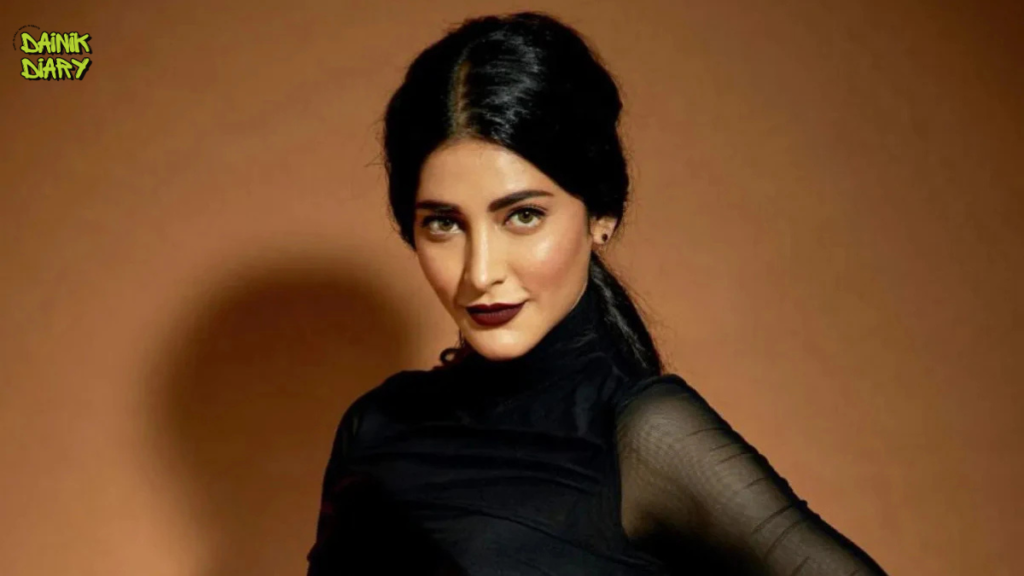
Shruti Haasan has opened up about her hopes of becoming a mother and the fears she carried for years after being told that Polycystic Ovary Syndrome, commonly known as PCOS, could make conception difficult.
The actor, who turned 40 in January, said she would still like to experience motherhood someday. However, the possibility once appeared so uncertain that she had prepared herself to consider adoption.
Speaking on Soha Ali Khan’s podcast, Shruti recalled that she had been hearing discouraging things about PCOS and childbirth since the age of 14. Those early conversations left her believing that conceiving naturally might be extremely difficult or even impossible.
‘I thought she would say dukaan bandh ho gaya’
Shruti candidly admitted that she approached her gynaecologist expecting an age-related warning. Using humour to describe her anxiety, she said she feared the doctor might effectively tell her, “dukaan bandh ho gaya” a colloquial expression suggesting that her opportunity for motherhood had passed.
Instead, her interaction with Dr Dhrupti Dedhia gave her an entirely different perspective.
According to Shruti, the doctor explained her reproductive options without frightening her or presenting motherhood as a race against time. The reassurance was simple: whenever Shruti felt emotionally ready, they could assess the situation and explore the available possibilities together.
For someone who had spent years hearing that PCOS could close the door on pregnancy, the conversation proved deeply comforting. Rather than making promises, the doctor helped her understand that the condition did not automatically rule out motherhood.
Cameron Diaz’s motherhood journey gave her hope
Shruti also mentioned Cameron Diaz, who welcomed her third child at 53, as an example that gave her hope about becoming a parent later in life.
However, one person’s journey cannot be treated as a medical prediction for another. The circumstances surrounding later-life parenthood can differ significantly and may involve fertility treatment, donor eggs, surrogacy or adoption. Individual reproductive health also depends on several factors beyond age and PCOS.
Shruti’s comments were ultimately about hope and choice not a guarantee that every woman will have the same experience.
Does PCOS make pregnancy impossible?
Medical experts stress that PCOS can make conception more difficult, but it does not necessarily make pregnancy impossible.
ALSO READ : ‘Awards Changed After PM Modi Came’: Anant Nag Claims ‘Nepotism, Favouritism’ Were Rampant Earlier
The condition can interfere with regular ovulation. In a typical menstrual cycle, one follicle develops and releases an egg. With PCOS, several follicles may begin developing, but an egg may not be released regularly. As a result, someone with long or unpredictable menstrual cycles may have fewer opportunities to conceive during a year.
The World Health Organization describes PCOS as one of the most common causes of anovulation and a leading cause of infertility. It estimates that the condition affects approximately 10–13 per cent of women of reproductive age, with many cases remaining undiagnosed.
At the same time, the WHO notes that lifestyle support, medication and fertility treatments can improve fertility outcomes. Depending on an individual’s condition, doctors may recommend medicines to stimulate ovulation or assisted reproductive technologies such as IVF.
A conversation beyond celebrity headlines
Shruti’s disclosure highlights the emotional burden created when teenage girls are told about fertility difficulties without receiving clear, compassionate explanations.
A PCOS diagnosis can be distressing, particularly when conversations immediately focus on infertility. Yet symptoms and reproductive outcomes can vary considerably from one person to another. Some women with PCOS conceive without medical assistance, while others may require treatment.
For Shruti, meeting a doctor who discussed the condition with empathy helped replace years of fear with a sense of possibility.
“I would really just love to be a mum,” she said during the conversation, while also acknowledging adoption as a meaningful path to parenthood. Her remarks presented motherhood not as a fixed biological deadline, but as a deeply personal decision that can take different forms.
The actor’s experience also underlines why personalised medical guidance matters. PCOS may complicate fertility, but it should not be treated as an automatic end to someone’s hopes of becoming a parent.
Disclaimer: This article is intended for general informational purposes and is not a substitute for professional medical advice. Anyone concerned about PCOS, fertility or pregnancy should consult a qualified gynaecologist or fertility specialist.