Entertainment
DC Movie Review: Lokesh Kanagaraj Makes a Confident Acting Debut, But Anirudh Ravichander Steals the Show…
Arun Matheswaran’s gritty retelling of Devdas blends romance, revenge and brutal action, with Lokesh Kanagaraj delivering a surprisingly assured performance and Anirudh Ravichander’s music emerging as the film’s biggest strength.


DC arrives with an unusual combination of talent. Behind the camera is filmmaker Arun Matheswaran, while in front of it is one of Tamil cinema’s most successful contemporary directors, Lokesh Kanagaraj, making his debut as a lead actor.
The result is a dark, violent and visually stylised romantic action drama that takes inspiration from the familiar Devdas template and gives it a distinctly modern, blood-soaked makeover.
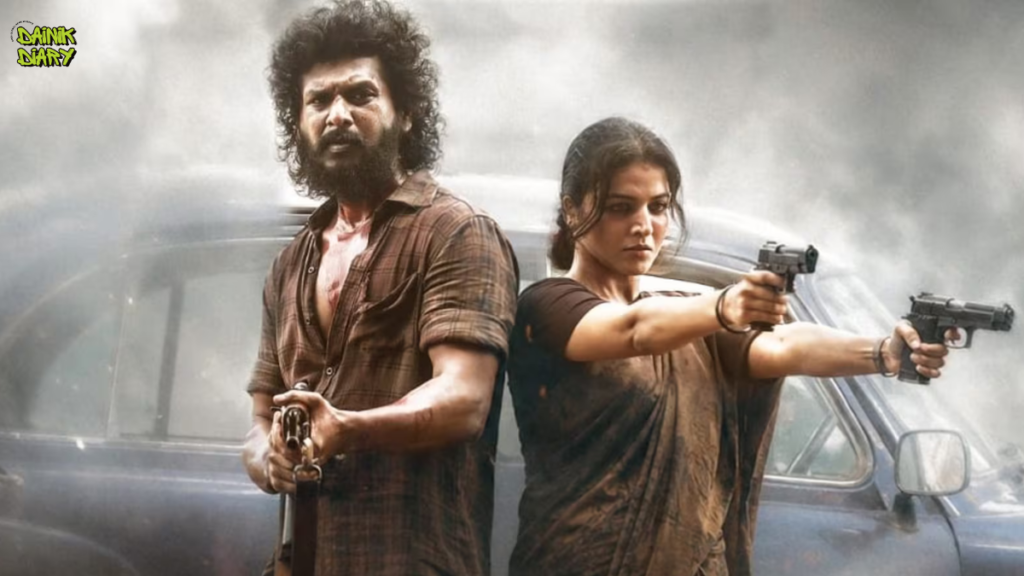
Also starring Wamiqa Gabbi and Sanjana Krishnamoorthy, the film follows Devadas and Chandra through a dangerous world of love, violence, loyalty and survival. The film was directed by Matheswaran and features music by Anirudh Ravichander.
But while Lokesh’s acting debut was always going to be the headline attraction, the film’s biggest surprise comes from somewhere else.
Anirudh Ravichander’s background score repeatedly takes centre stage.
Lokesh Kanagaraj surprises as an actor
The biggest question before the film’s release was obvious: Can Lokesh Kanagaraj actually act?
The answer is largely yes.
Playing Devadas, Lokesh does not attempt to imitate the larger-than-life heroes commonly associated with Tamil commercial cinema. Instead, his performance is built around intensity, physicality and a certain rawness that fits Matheswaran’s world.
There are moments when the performance feels deliberately restrained, allowing his body language and expressions to do most of the work.
ALSO READ : Chiranjeevi accidentally reveals Mega 158 title before official launch: ‘I can’t stop myself’
That approach works particularly well during the film’s action-heavy portions.
Lokesh may be best known for creating cinematic worlds behind the camera, but DC demonstrates that he can occupy one convincingly from the other side of the lens too.
His performance is not flawless, and some emotional moments could have benefited from greater depth. Yet for a first outing as a lead actor, it is considerably more confident than many might have expected.
Wamiqa Gabbi brings emotional weight
If Lokesh provides the film with its rugged energy, Wamiqa Gabbi supplies much of its emotional core.
Her character Chandra is not simply positioned as a romantic interest. She has her own motivations and emotional journey, giving the central relationship greater substance than a straightforward love story.
Gabbi handles the character with intensity and conviction, particularly in scenes where romance gives way to danger.
The chemistry between her and Lokesh is important to the film because the violence surrounding the characters needs an emotional foundation.
At its best, DC manages to make that relationship feel meaningful rather than merely using it as an excuse for action sequences.
The Devdas connection gets a violent makeover
Matheswaran’s film takes a familiar literary template and places it inside a much harsher universe.
The classic themes of love, separation, obsession and tragedy remain present, but they are surrounded by guns, bloodshed and criminal rivalries.
This is very much in keeping with the director’s filmmaking style. His previous films have often explored violent worlds through striking visuals and morally complicated characters.
With DC, that sensibility is applied to a story that audiences already know in broad terms.
The approach works when the film focuses on atmosphere and character relationships. At times, however, the underlying story can feel familiar even when the presentation is anything but conventional.
Anirudh Ravichander is the real star
If there is one element that consistently elevates DC, it is the music.
Anirudh Ravichander’s background score gives the film an energy that the screenplay occasionally struggles to create on its own.
Action scenes gain considerably more impact because of the music, while quieter moments receive an additional emotional layer.
This is not simply background music accompanying the visuals. In several sequences, the score becomes an active storytelling device.
The effect is especially noticeable during the film’s major action passages and climactic moments.
Reviews and audience reactions have repeatedly singled out Anirudh’s work as one of the film’s strongest aspects, with viewers describing the score as a major reason the action sequences land with such force.
It is therefore fair to say that while Lokesh Kanagaraj may be the film’s biggest marketing attraction, Anirudh is its musical hero.
Arun Matheswaran’s visual world remains impressive
Matheswaran’s direction gives DC a distinct visual identity.
The film embraces darkness, violence and stylised action without attempting to make the world look polished or comfortable.
The cinematography by Mukesh G complements that approach, while the editing by Prasanna GK keeps the film moving at a brisk pace for much of its runtime.
The action is among the film’s major strengths.
Rather than relying exclusively on conventional mass moments, Matheswaran gives the violence a rougher and more physical quality.
That will not appeal to everyone, particularly viewers looking for a traditional romantic drama. But audiences who enjoy dark action cinema are likely to find plenty to appreciate.
Where DC falls short
For all its technical strengths, DC is not without weaknesses.
The biggest issue is the familiarity of its basic story.
The film looks fresh, sounds powerful and stages its action effectively, but beneath that surface lies a narrative structure that does not always offer enough surprises.
Some emotional beats also arrive without receiving enough time to fully develop.
The film’s violence can occasionally overpower its emotional storytelling, meaning that certain character moments do not land with the same force as the action sequences surrounding them.
That imbalance becomes more noticeable in the quieter portions of the film.
Still, the screenplay remains engaging enough to keep the momentum alive, and the technical execution prevents the film from becoming dull.
A theatrical experience built around sound and action
DC is clearly designed for the big screen.
The combination of Anirudh’s booming score, Matheswaran’s action choreography and the film’s visual scale benefits from a theatrical environment.
Audience reactions have similarly highlighted the film’s packed-theatre energy, particularly during major action sequences and the climax.
It is also worth noting that the film carries an A certificate, reflecting its mature themes and graphic violence.
This is not a film aimed at viewers looking for a light romantic entertainer.
It is darker, bloodier and considerably more aggressive.
Final Verdict
DC is an imperfect but entertaining experiment.
Lokesh Kanagaraj proves that his talents are not limited to directing, delivering a surprisingly assured lead performance. Wamiqa Gabbi adds emotional depth, while Arun Matheswaran creates a distinctive visual world that fits the film’s violent reinterpretation of the Devdas story.
But the film’s biggest standout is undoubtedly Anirudh Ravichander.
His background score gives several scenes the extra punch they need and repeatedly transforms good action sequences into memorable theatrical moments.
The story may not always be as fresh as the filmmaking around it, and some emotional beats could have been stronger. Yet DC succeeds as a gritty, stylish and energetic theatre experience.
For fans of raw action, dark romance and Anirudh’s music, DC is worth considering on the big screen.