
World News
Bashar al-Assad Sentenced to Death in Syria: Ex-President and Brother Maher Convicted in War Crimes Case…
A Syrian court has sentenced former President Bashar al-Assad and his younger brother Maher al-Assad to death in absentia over crimes against humanity and war crimes linked to the country’s devastating 14-year conflict.

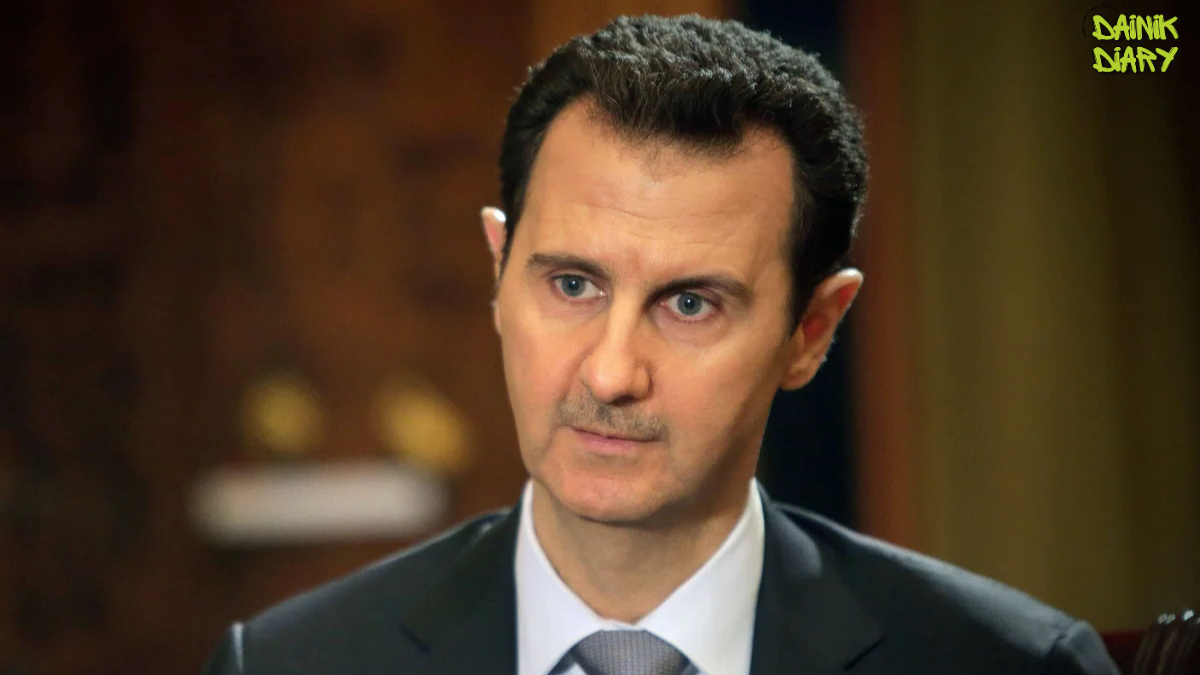
The fall of Bashar al-Assad has now been followed by one of the most dramatic legal developments in Syria’s recent history. A Syrian court has sentenced the former president and his younger brother Maher al-Assad to death in absentia over crimes against humanity and war crimes linked to the country’s long-running conflict.
The verdict was delivered on Tuesday, August 11, 2026, in a case connected to the violence that engulfed Syria for more than a decade. The conflict is estimated to have killed around half a million people and displaced millions.
Bashar al-Assad, who ruled Syria for nearly 24 years after succeeding his father Hafez al-Assad, lost power after opposition forces advanced into Damascus in December 2024. He subsequently fled the country and has been living in Russia along with Maher, meaning neither brother was present in court when the death sentence was announced.
The case also resulted in a death sentence for Assad’s maternal cousin Atef Najib, a former Syrian army brigadier general who headed the Political Security Branch in Daraa in 2011.
Najib was accused of playing a leading role in the crackdown in Daraa, where protests erupted during the early stages of the Syrian uprising. The violent response to those demonstrations became one of the events that helped push the country towards a full-scale civil war.
Unlike Assad and Maher, Najib was present during the proceedings. Reports said he appeared in a tightly secured courtroom wearing a prison uniform and standing inside a cage as the judge read out the verdict. He is among the highest-ranking former Assad-era officials to face trial in Syria since the fall of the regime.
ALSO READ : Trump Warns Iran ‘We Will Hit Very Hard Tonight’: Why Kharg Island Has Suddenly Become The Center Of A Dangerous New Standoff
Why the verdict matters
The death sentence marks a significant moment in Syria’s attempt to address alleged crimes committed during the country’s conflict. For years, accusations of torture, killings, enforced disappearances and attacks on civilians were central to international investigations into the Assad government.
The prosecution of former regime figures has gathered pace since Assad’s government collapsed. International investigations have also previously focused on alleged war crimes and crimes against humanity committed during the conflict, including allegations involving chemical weapons attacks.
For victims and families who spent years seeking accountability, the verdict could be seen as a major step toward justice. At the same time, the fact that Assad and Maher remain outside Syria presents a major obstacle to enforcing the sentences.
Assad’s whereabouts remain crucial

The court’s decision does not mean the former president is immediately facing execution. Because Bashar al-Assad and Maher al-Assad were sentenced in absentia and remain in Russia, any attempt to enforce the verdict would depend on their detention and eventual transfer to Syrian custody.
Their presence in Russia is therefore likely to remain a central issue in the aftermath of the ruling.
For Syria, however, Tuesday’s verdict carries significance beyond the punishment itself. It represents another chapter in the country’s difficult effort to confront the legacy of a conflict that transformed its political landscape and left deep scars on millions of Syrians.
The death sentence against Assad, his brother and their cousin is therefore likely to fuel a much larger debate over justice, accountability and what comes next for a country still attempting to rebuild after years of war.