
Politics
Rude Wake-Up Call for ’: Shashi Tharoor Says Gen Z Could Decide India’s 2029 Election Here’s Why It Matters
Congress MP Shashi Tharoor believes the rise of youth-led protests has changed India’s political landscape, warning parties that Generation Z is on track to become the country’s most influential voting bloc by 2029.

New Delhi: Senior Congress leader and MP Shashi Tharoor has described the recent CJP (Cockroach Janta Party) protests as a “rude wake-up call” for India’s political establishment, arguing that the country’s young voters can no longer be ignored.
Speaking about the growing influence of Generation Z, Tharoor said political parties must start paying serious attention to the concerns of young Indians, particularly issues related to education, employment, transparency, and governance. He stressed that the youth are not merely spectators in the democratic process anymore—they are emerging as a decisive force capable of shaping the nation’s political future.
The remarks come in the backdrop of the rapidly growing CJP movement, a youth-driven campaign that began as a social media phenomenon before evolving into a nationwide protest demanding accountability on issues affecting students and young job seekers. The movement captured widespread attention and highlighted the frustrations of a generation that feels increasingly disconnected from traditional political structures.
According to Tharoor, the protests should not be viewed merely as isolated demonstrations but as a signal that India’s younger citizens want their voices heard. He suggested that political leaders who fail to engage with this demographic risk becoming irrelevant in the years ahead.
ALSO READ : ‘PM Enjoys Playing the Victim Card’: Jairam Ramesh Demands Modi’s Apology Over NEET, Ram Mandir Trust Row and Demonetisation
Why Gen Z Matters More Than Ever
Demographic projections indicate that Gen Z could become India’s largest adult generation by 2029, with nearly 380 million people expected to fall within the voting-age bracket. This massive population segment is digitally connected, politically aware, and increasingly willing to mobilize around issues that directly affect their future.
Unlike previous generations, many young voters consume information primarily through social media and online platforms. Their political preferences are often shaped by issues rather than long-standing party loyalties, making them one of the most unpredictable yet influential voter groups in the country.
Political analysts believe that the growing prominence of Gen Z is already influencing campaign strategies. From digital outreach initiatives to youth-focused policy discussions, parties across the political spectrum are beginning to recognize the importance of engaging younger voters ahead of the next general election.
A Changing Political Landscape
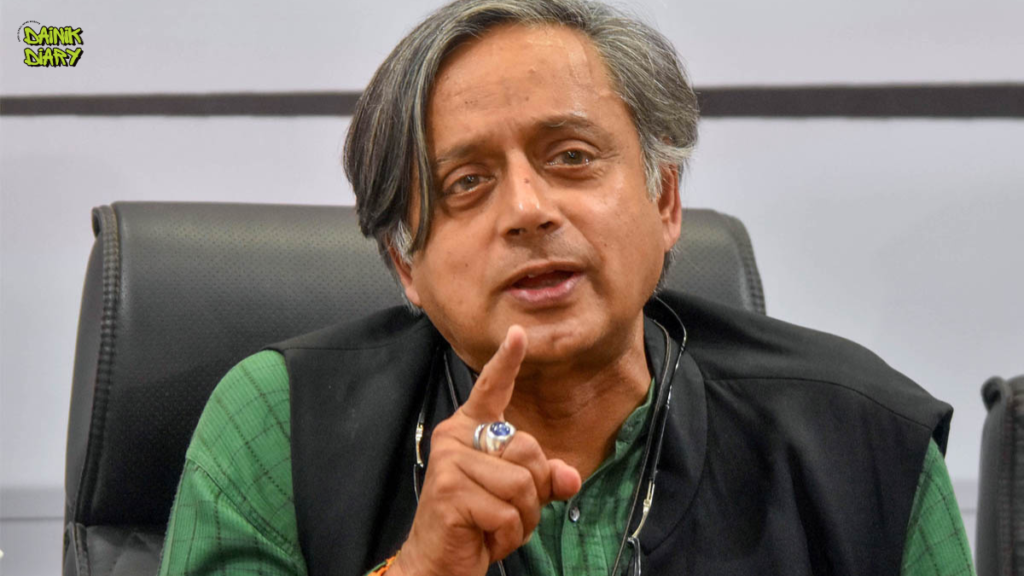
Tharoor has consistently spoken about the need for mainstream politics to respond to the aspirations of young Indians. In previous comments on the CJP movement, he described it as evidence of widespread frustration among citizens who feel unheard by existing institutions. He argued that the challenge for political parties is to convert this growing discontent into meaningful democratic participation.
The recent wave of youth activism has demonstrated the power of collective action in the digital age. What began as online conversations quickly transformed into a national movement capable of influencing public debate and forcing political responses.
As India moves closer to the 2029 general election, Tharoor’s warning serves as a reminder that the battle for the country’s future may well be decided by a generation that refuses to remain silent.
Whether political parties are prepared for that reality remains an open question. But one thing is becoming increasingly clear: Gen Z is no longer the future of Indian politics—it is rapidly becoming its present.






Pingback: Evening News Wrap: Rahul Gandhi Sets 3 Demands For Parliament… Vande Mataram To Echo From Red Fort And More - Dainik Diary - Authentic News
Pingback: ‘Vande Mataram’ And Tiranga Welcome For PM Modi At NDA Meet: Amit Shah Row Takes Centre Stage In Parliament - Dainik Diary - Authentic News
Pingback: Dharmendra Pradhan Calls Rahul Gandhi A “habitual Liar” Over Jharkhand Protests: “Why Is He Silent Today…?” - Dainik Diary - Authentic News
Pingback: ‘I Am Ready To Discuss Everything’: Amit Shah Sets 3 PM Deadline For Opposition As Parliament Standoff Escalates… - Dainik Diary - Authentic News
Pingback: ‘Undemocratic’: Akhilesh Yadav Hits Back At Amit Shah’s Parliament Deadline, Says ‘Country Is Not In The Mood To Listen To Speeches’… - Dainik Diary - Authentic News
Pingback: “Vaisa Nahi Ho, Aap Thoda Sa Badal Gaye Ho…”: Kharge’s Remark To PM Modi Sparks Smiles At Supriya Sule’s Daughter’s Reception - Dainik Diary - Authentic News