Sports
Rodri Beats Lionel Messi for FIFA World Cup Golden Ball Despite No Goals or Assists… Here’s What Made the Difference
Spain midfielder Rodri walked away with the FIFA World Cup 2026 Golden Ball after a tournament defined by leadership, control and consistency, while Lionel Messi’s emotional campaign ended without another title.

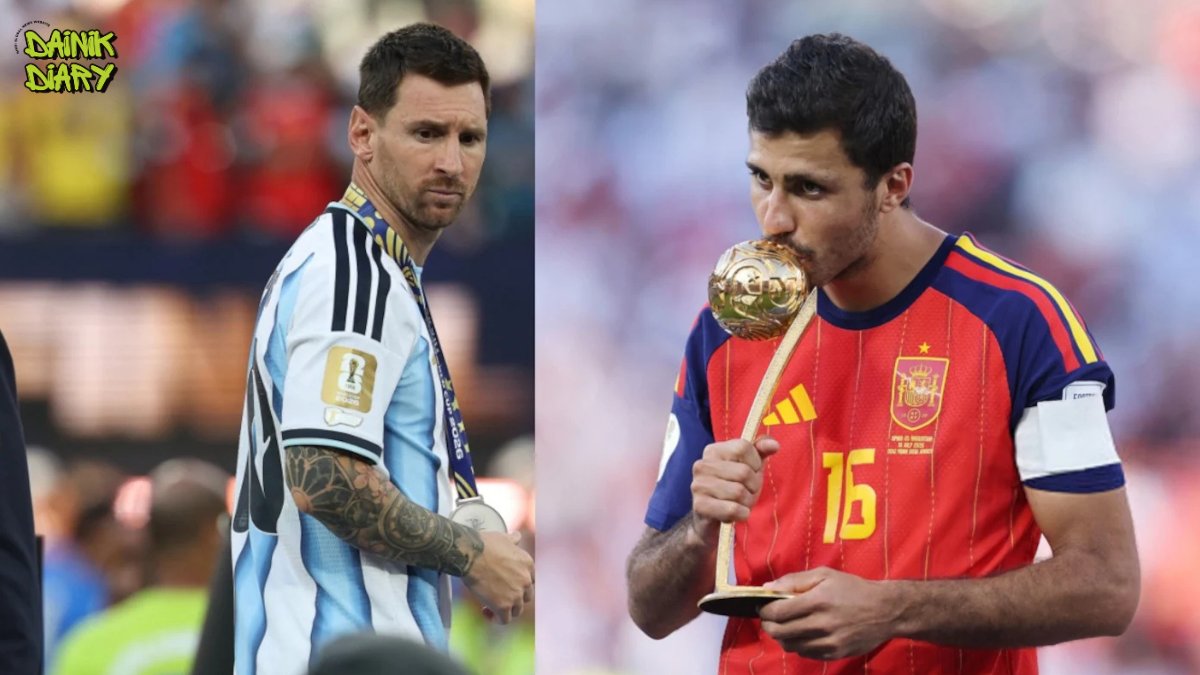
The conclusion of the FIFA World Cup 2026 brought not only a new world champion but also one of the tournament’s biggest talking points. While many expected Lionel Messi to be among the strongest contenders for the Golden Ball, the prestigious award for the tournament’s best player instead went to Spain midfielder Rodri.
The decision surprised many football fans, especially considering that Rodri finished the tournament without scoring a single goal or registering an assist. However, football experts and analysts pointed to his overall influence on Spain’s successful campaign as the key reason behind the honour.
Rodri’s Impact Went Beyond Statistics
Modern football is no longer judged solely by goals and assists. As Spain’s midfield anchor, Rodri dictated the tempo of matches, controlled possession, shielded the defence and played a crucial role in transitioning the team from defence to attack.
ALSO READ : ‘I’m Going to Play Against Messi… I Can Retire’: Switzerland Star’s Viral Remark Adds Extra Buzz to Argentina World Cup Clash
Throughout the tournament, the Spanish midfielder consistently delivered calm and composed performances, allowing his teammates to flourish while maintaining balance across the pitch. His tactical intelligence and leadership became vital as Spain navigated difficult knockout-stage fixtures before lifting the World Cup trophy.
The Golden Ball is awarded to the player considered to have had the greatest overall impact on the tournament—not necessarily the highest goal scorer or assist provider. In Rodri’s case, his influence was reflected in Spain’s cohesion, defensive stability and ability to control matches against top-quality opposition.
Messi’s Campaign Ends on an Emotional Note
For Lionel Messi, the 2026 World Cup ended in disappointment after Argentina fell short in the final against Spain. The Argentine captain once again inspired his side with his experience and leadership, but his dream of adding another World Cup title to his remarkable career came to an emotional end.
Messi, who celebrated his 39th birthday in June, now faces growing uncertainty over his international future. By the time the next FIFA World Cup arrives in 2030, the football legend will be 43 years old—an age at which very few outfield players have competed at the highest level.
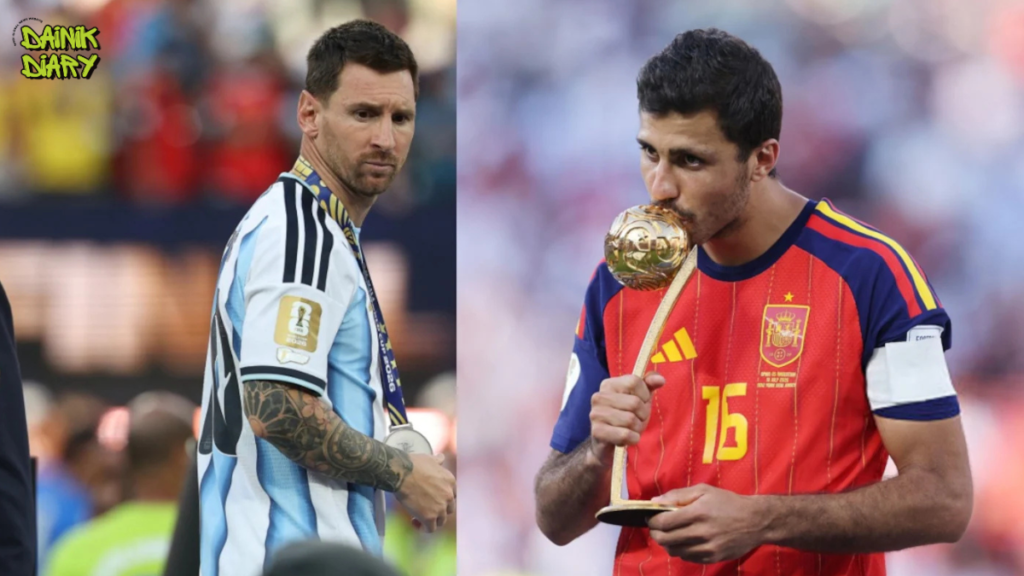
Although Messi has not officially announced his retirement from international football, many believe the 2026 tournament could mark his final appearance on football’s biggest stage.
A Decision That Sparked Debate
The announcement of Rodri as the Golden Ball winner immediately divided football fans worldwide. Some supporters felt Messi’s influence and leadership deserved greater recognition, while others argued that Rodri embodied everything required from a world-class midfielder during Spain’s triumphant campaign.
Regardless of differing opinions, the award highlighted an important aspect of modern football: a player’s value is often measured by their overall contribution rather than attacking numbers alone.
As the celebrations continue for Spain, Rodri’s Golden Ball victory is likely to remain one of the defining stories of the FIFA World Cup 2026, while Lionel Messi’s emotional farewell has left millions reflecting on the extraordinary legacy of one of football’s greatest-ever players.