Automobile
Honda Super-N drops a surprise punch: Tiny EV with “BOOST mode”… is this the return of fun driving or just nostalgia on wheels?
Honda’s new compact electric hatch blends retro inspiration, lightweight design and hot-hatch energy—challenging the idea that EVs must be boring

In a global EV market increasingly dominated by oversized batteries and silent, predictable performance, Honda has taken a different road—one that feels closer to emotion than efficiency.
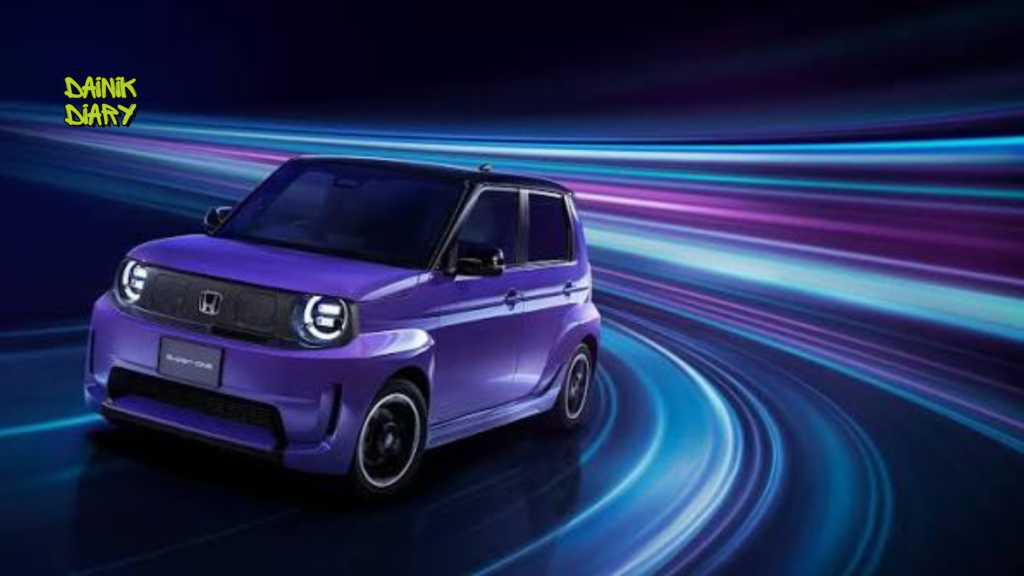
Meet the Honda Super-N, a compact electric hatchback that is already turning heads for one simple reason: it refuses to be boring.
Inspired by the iconic Honda City Turbo of the 1980s and built on design cues from Japan’s Kei car philosophy, the Super-N is a reminder of an era when small cars were playful, not just practical.
At just 3,599 mm in length, it is tiny by global standards—but Honda insists it still fits real-world life. The cabin can seat four adults, and the brand’s signature Magic Seats transform the luggage space from a modest 162 litres to a surprisingly generous 967 litres. For a car this small, that flexibility is a major talking point.
Read More- 2026 Tata Tigor Facelift Leak: Is This India’s Budget Sedan Comeback Story? Tiago-Inspired Design Revealed in Patent Images
Under the hood—or rather, beneath the floor—the Super-N packs a 29.6 kWh battery. In normal driving mode, it produces 47 kW of power, but the real twist comes with its “BOOST Mode”, which pushes output to 70 kW. That translates into a 0–100 kmph sprint in around 10 seconds, giving the little EV an unexpected sense of urgency.
Weighing just 1,097 kg, the Super-N benefits from its light footprint. Honda claims a WLTP range of 206 km, which stretches to around 320 km in city conditions. Fast charging also keeps it practical, with an 80% top-up possible in roughly 30 minutes.
But numbers alone don’t explain the buzz. What makes the Super-N stand out is its intent.
In a segment where most EVs are designed to feel like efficient appliances, Honda has deliberately engineered something with personality. The tuning, lightweight structure, and simulated driving feel—including a “gearbox-style” driving experience—are all aimed at recreating the emotional engagement of a traditional hot hatch.
At its UK price of around £18,995 (roughly ₹22 lakh), the Super-N sits far above entry-level Indian EVs like the MG Comet EV, Tata Tiago EV, and Citroën ë-C3. But Honda is clearly not chasing that segment.
Instead, it is targeting drivers who miss the feel of old-school compact performance cars—buyers who want something small, electric, but still emotionally alive.
In many ways, the Super-N feels like a statement more than a product: that the electric future doesn’t have to be sterile, silent, or serious all the time.
And if this experiment succeeds, it could quietly reopen a question the industry has almost stopped asking—can EVs still make you smile?