
India News
‘People Have Lost Faith in Politics’: Abhijeet Dipke Rules Out Turning CJP Into Political Party, Says ‘What Will We Do…?’
Cockroach Janta Party founder Abhijeet Dipke says there is no immediate plan to enter electoral politics, arguing that public trust in political institutions has weakened and the movement is better placed as a people-driven platform.

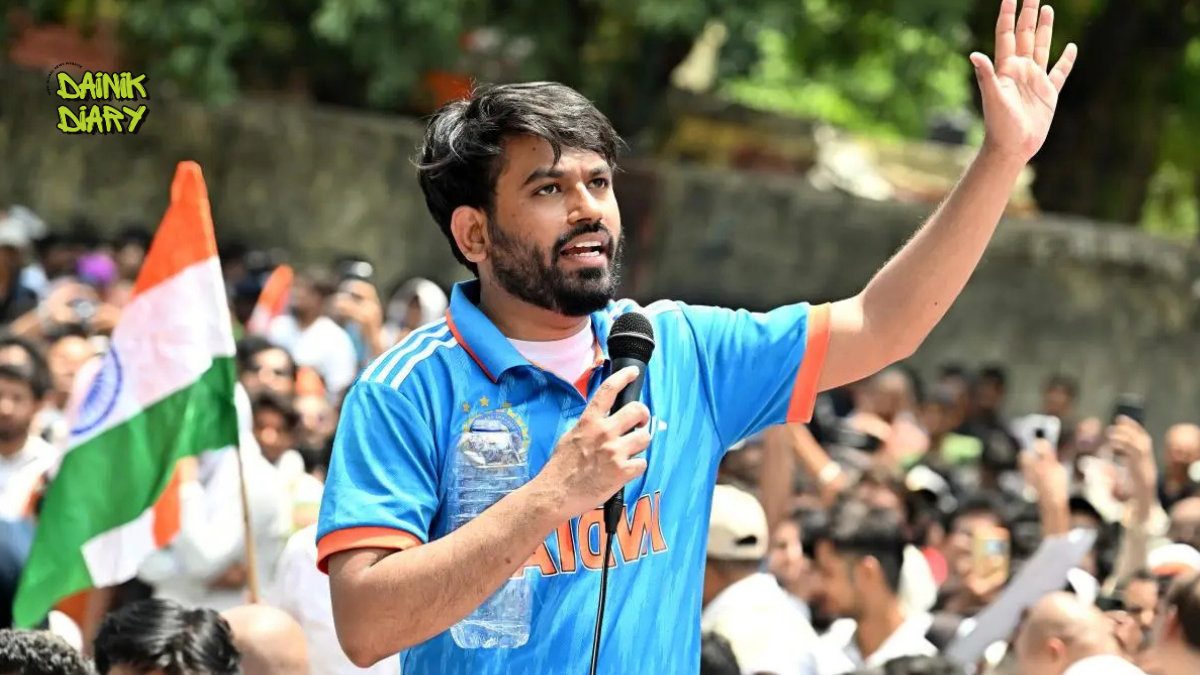
NEW DELHI: The Cockroach Janta Party (CJP) may have emerged as one of the most talked-about youth-led movements in India, but its founder Abhijeet Dipke has made one thing clear — he is not looking to turn the platform into a conventional political party anytime soon.
Speaking to ANI, Dipke said the organisation has no immediate intention of entering electoral politics, questioning the purpose of creating another political outfit at a time when, according to him, many people have lost faith in the existing political system.
“We have no such intention,” Dipke said when asked whether the CJP could eventually become a formal political party. He pointed to concerns over the functioning of political institutions and alleged misuse of investigative agencies and electoral processes.
“At this point, when people have lost faith in politics, what will we do by forming a political party?” he said.
CJP Chooses Protest Politics Over Electoral Politics
Dipke’s comments mark an important distinction between the Cockroach Janta Party and a conventional political organisation. While the CJP carries the word “party” in its name and has developed a significant following among young Indians, its activities have largely revolved around protests, public campaigns and political commentary rather than preparing for elections.
The movement gained national attention after Dipke turned a controversial remark about unemployed youth into a satirical campaign. What began largely as an online response rapidly developed into a wider youth movement focused on issues such as unemployment, examination irregularities, accountability and political representation.
The sudden rise of the CJP also sparked questions over whether it would eventually contest elections. Earlier, Dipke had indicated that the movement did not want to become associated with established political parties, saying it would remain independent from them.
‘People Have Lost Faith’ — Dipke’s Political Argument
At the heart of Dipke’s latest statement is his argument that India’s political dissatisfaction goes beyond one particular party.
He questioned the usefulness of creating another political organisation when sections of the public are already disillusioned with the existing political establishment.

Dipke also alleged that political parties are being split through the use of agencies such as the Enforcement Directorate (ED) and Central Bureau of Investigation (CBI). He further raised concerns about alleged deletion of votes during elections.
These are serious political allegations, and Dipke’s comments reflect the broader criticism that has increasingly become part of the CJP’s public messaging.
ALSO READ : ‘PM Enjoys Playing the Victim Card’: Jairam Ramesh Demands Modi’s Apology Over NEET, Ram Mandir Trust Row and Demonetisation
The movement has positioned itself as a youth pressure group, rather than simply another electoral competitor. In earlier interviews, Dipke described its protests as democratic and peaceful and stressed that the movement wanted to remain within constitutional boundaries.
From Satire to a National Youth Movement
The rise of Abhijeet Dipke has been unusually rapid. The CJP initially gained attention through social media, using humour and satire to express frustration among young Indians.
Within a short period, the campaign moved beyond memes and online posts and became associated with street protests and demands concerning education, jobs and government accountability. International media have also described Dipke as the face of a significant youth protest movement in India.
However, the decision not to enter electoral politics could prove significant for the movement’s future.
Political parties require an organisation, candidates, funding, grassroots workers and a long-term electoral strategy. By staying outside that system, the CJP can continue functioning as a pressure group without immediately taking on the responsibilities and compromises associated with electoral politics.
What Lies Ahead for the CJP?
For now, Dipke appears more interested in keeping the focus on public mobilisation and accountability than on winning seats.
The CJP has continued to remain active on issues involving students and young people. Recent developments have included support for student protests over recruitment examinations in Jharkhand, while Dipke has also warned of renewed agitation over unresolved demands linked to the NEET protests.
Whether the movement can maintain its momentum without becoming a formal political party remains an open question.
For Dipke, however, the immediate answer appears straightforward: the CJP does not need an election symbol to make its voice heard.
And as his latest remarks suggest, the bigger battle may not be about forming another political party — but about rebuilding the public’s confidence in politics itself