
Tech
Vivo X300 FE Review: The Compact Flagship That Does Everything Right… But Is the Price Quietly the Real Problem?
With a powerful Snapdragon 8 Gen 5 chip, Zeiss cameras, and a massive 6,500mAh battery, the Vivo X300 FE redefines compact smartphones—but its premium pricing raises tough questions.


New Delhi: The compact smartphone segment has long been treated as a compromise zone—smaller devices often meant weaker batteries, average cameras, and throttled performance. But the new Vivo X300 FE seems determined to challenge that old assumption head-on.
At first glance, it feels like a refreshing departure from the oversized “slab” flagships dominating the market. But spend a little more time with it, and a more complicated story begins to emerge—one where brilliance and pricing tension sit side by side.
A Compact Phone That Finally Feels Comfortable
Measuring just 150.83mm × 71.76mm and weighing 191g, the X300 FE is genuinely one of the most comfortable modern flagships to use one-handed. Its matte finish, rounded aluminium frame, and subtle curves make it easy to grip—something increasingly rare in today’s smartphone world.
Design-wise, the pill-shaped camera island placed at the top echoes premium aesthetics seen in ultra-thin flagships like the imagined “iPhone Air” concept styling trend. The 3D glass camera bump blends smoothly into the rear panel, available in Olive, Purple, and Black, giving the phone a refined identity rather than flashy aggression.
It also brings serious durability credentials with IP68 and IP69 ratings, making it resistant to both dust and high-pressure water exposure.
Display: Familiar, But Still Flagship-Grade
Vivo hasn’t tampered with what already worked. The X300 FE retains its 6.31-inch LTPO AMOLED display with a 1–120Hz refresh rate and 1.5K resolution, offering excellent sharpness and fluidity.
Brightness peaks at an impressive level, ensuring outdoor visibility remains strong even under harsh sunlight. Colours remain balanced, contrast is deep, and HDR10+ content looks punchy without going overboard.
Stereo speakers also surprise positively, delivering loud and clear audio for media consumption.
Performance Gets a Serious Upgrade
Where the phone truly steps forward is under the hood. The device is powered by the Qualcomm Snapdragon 8 Gen 5 processor, paired with 12GB LPDDR5X RAM and up to 512GB UFS 4.1 storage.
This is not just “compact phone performance”—it is full flagship territory.
A large vapour chamber cooling system ensures sustained gaming performance without noticeable throttling, even during extended sessions. Everyday multitasking feels effortless, and heavy apps load instantly.
Battery Life That Breaks the Compact Phone Myth
Another major highlight is the 6,500mAh silicon-carbon battery, which easily pushes the device to a day-and-a-half of heavy use.
Charging is equally aggressive, with 90W wired FlashCharge and 40W wireless charging support, placing it firmly among the fastest-charging premium devices in its class.
OriginOS 6: Feature-Packed But Not Perfect
The phone runs OriginOS 6, which continues its heavily iOS-inspired design language while offering deep customisation options. AI-powered tools such as image editing, audio enhancement, and smart notes add practical value.
However, one familiar issue persists—pre-installed bloatware. While Vivo promises 5 years of OS updates and 7 years of security patches, the software experience still carries small but noticeable friction points.
Zeiss Cameras Deliver Strong Results—Mostly
The camera system is co-engineered with Zeiss and includes a triple rear setup:
- 50MP Sony IMX921 primary sensor
- 50MP IMX882 telephoto with 3x optical zoom
- 8MP ultrawide lens
- 50MP front camera
In real-world use, the primary camera delivers excellent dynamic range and detail, while the telephoto lens shines in portrait photography, producing some of the most natural depth effects in the segment.
The ultrawide sensor, however, lags behind, especially in low light where detail drops noticeably.
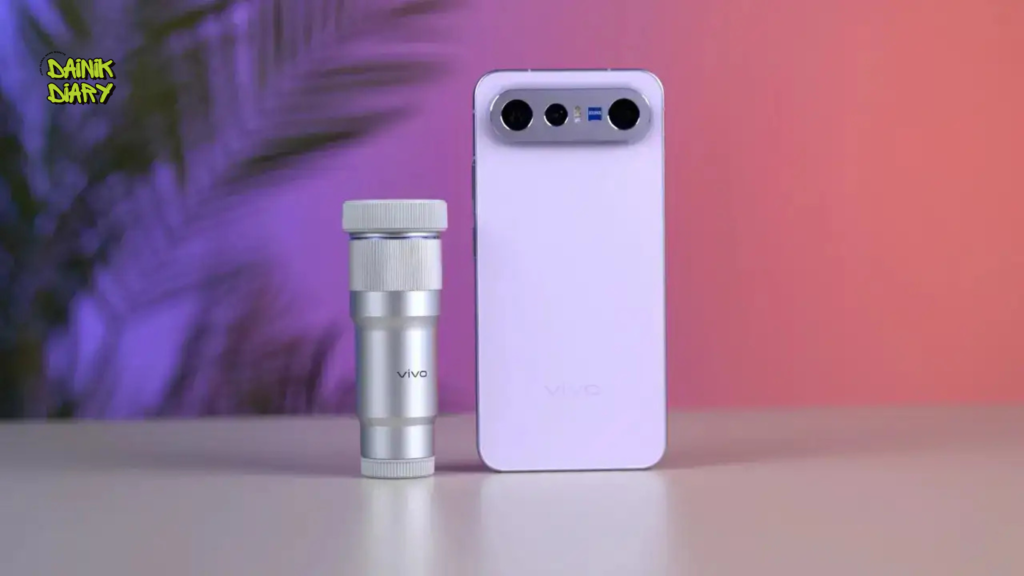
The Wild Card: Zeiss Telephoto Extender
The biggest talking point is the optional Zeiss Telephoto Extender Gen 2, which boosts zoom capability to 200mm equivalent (2.35x optical extension).
But there’s a catch.
The accessory requires a dedicated mounting case, weighs 153g, blocks other lenses while in use, and significantly increases the overall cost—pushing the base setup close to ₹95,997.
While innovative, it transforms the X300 FE from a “compact flagship” into an expensive photography kit rather quickly.
The Real Question: X300 FE or X300?
Here’s where the dilemma begins. The standard X300 series offers a 200MP primary sensor and similar zoom capabilities at a comparable—or sometimes lower—price point.
That puts the X300 FE in a tricky position. It is excellent on its own, but not necessarily the most value-driven option in Vivo’s own lineup.
Final Verdict
The Vivo X300 FE is one of the most complete compact smartphones ever made. It delivers flagship performance, strong battery life, refined design, and versatile cameras in a form factor that feels genuinely comfortable.
But there’s a catch—it doesn’t feel like a bargain. And in a market where pricing can define perception more than specs, that may be its biggest challenge.
For users who prioritise compact design and premium usability, it’s a rare gem. For everyone else, the bigger question remains: is it worth stretching the budget when alternatives inside Vivo’s own ecosystem exist?








Pingback: MacBook Vs PC In 2026: Which One Truly Deserves Your Money? The Surprising Pros And Cons Buyers Often Ignore - Dainik Diary - Authentic News