
World News
58,000 Buildings May Be Gone, NASA Data Reveals Venezuela’s Earthquake Devastation Is Far Worse Than Feared
Preliminary satellite analysis suggests massive destruction as death toll crosses 1,700 and thousands remain unaccounted for

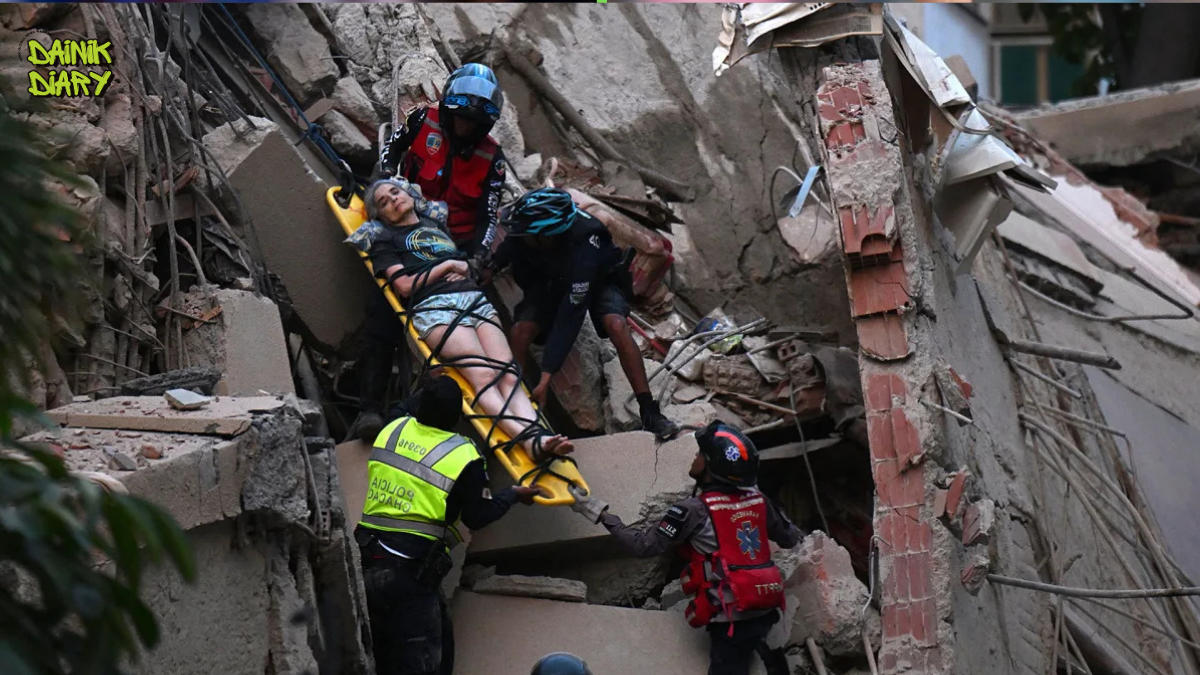
The full extent of destruction caused by last week’s deadly earthquakes in Venezuela is beginning to surface — and the numbers are far more alarming than initial ground reports suggested.
According to satellite-based analysis supported by NASA, nearly 58,000 buildings may have been damaged or completely destroyed in the aftermath of the twin quakes that struck the country.
The earthquakes, measuring 7.2 and 7.5 on the Richter scale, are being described as the strongest to hit Venezuela in more than a century. So far, authorities have confirmed around 1,700 deaths, while thousands of people remain missing — a figure that continues to raise concerns among rescue teams.
The satellite assessment was conducted by researchers Corey Scher and Jamon Van Den Hoek from Oregon State University. Their findings are based on radar data captured just a day after the disaster.
Using imagery from the European Space Agency’s Sentinel-1 satellite, the researchers noted “approximately 58,870 buildings were likely damaged or destroyed across the affected region.”
They also cautioned that “this is a preliminary, rapid assessment… it reflects abrupt surface change consistent with damage,” meaning the figures are not yet verified through on-ground surveys.
ALSO READ : Oil Prices Slide Nearly 20% in June, Markets Bet Big on Doha Talks Despite Ongoing Tensions
Interestingly, official numbers released by National Assembly of Venezuela paint a very different picture — at least for now. Assembly President Jorge Rodriguez stated that 855 buildings have been confirmed damaged, including 189 total collapses.
However, experts believe the real number could rise sharply as rescue operations expand into remote and severely hit regions.

Meanwhile, NASA has confirmed that its satellites are actively supporting relief efforts. The agency said it is “providing critical support, capturing imagery and data to help teams on the ground assess impacts and guide response efforts.”
On the ground, the situation remains grim. Rescue teams are working around the clock, often facing blocked roads, unstable structures, and continuing aftershocks. Entire communities have reportedly been flattened, leaving thousands without shelter, food, or medical assistance.
As Venezuela struggles to cope with one of its worst natural disasters in recent history, the coming days will be crucial — both for saving lives and for understanding the true scale of this tragedy.


